

A New Style of Dwelling is
Rising in Popularity in Essex County
Story by Matthew St. Amand
Photography by Michael Pietrangelo
The Word of the Day is “Barndominium,” a mash-up of “barn” and “condominium”—also known by its shortened appellation “barndo.” Although the word is reasonably new in Essex County, the concept of this new living paradigm has grabbed hold of the region. Over the past few years, the barndominium trend has swept across the area—barns being reconverted into living quarters or hybrid structures that serve partly as a traditional barn (with animals, farm equipment, tools) and living quarters for people.
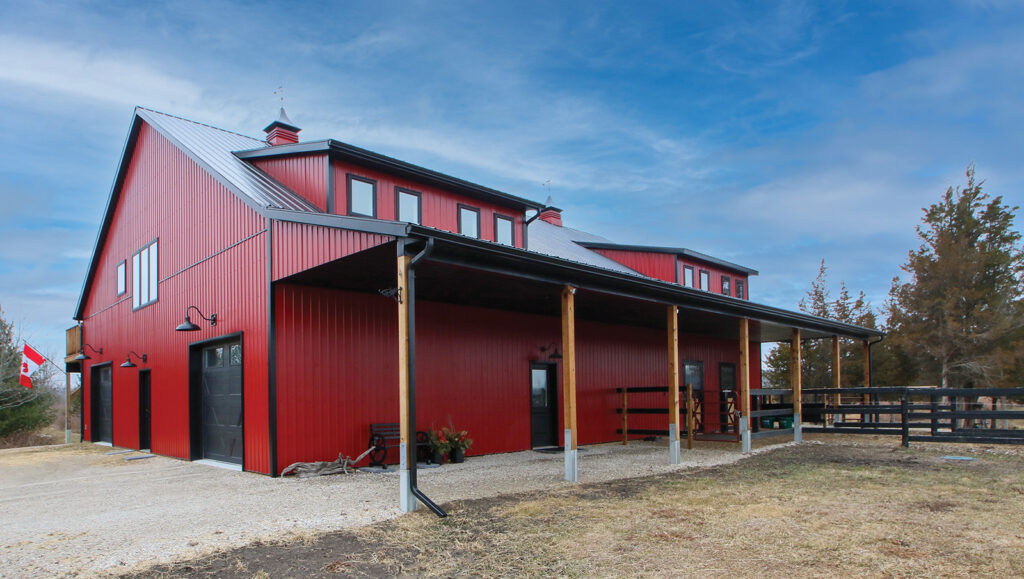
“We’ve built them from Amherstburg to Stoney Point,” says Jeff Sylvestre of JSE James Sylvestre Enterprises. “Barndominiums are unique because they can be multi-use, tailored to whatever the homeowner wants. On a practical level, barndominiums save the cost of a foundation because they are post-frame structures. The rest of the elements are the same as what you would find in a home.”
One barndominium owner moved to Essex County in the summer of 2023 with her husband and mother.
“We were living up north, looking to retire with our horses,” she explains. “We came down here to look at a property. We liked the barn, but the house didn’t work for us. The realtor mentioned that Jeff Sylvestre had built the barn. We initially planned to buy a home and build a barn on the property. My mother lives with us, so we planned on building a suite in the basement for her. The problem was; to do that required reconfiguring the existing layout and she would not have her own entrance, which was inconvenient.”
After contacting Jeff, the thought of building a barndo on the property was presented to the homeowners. It sounded like a good idea. The homeowner said to her mother: “Would you mind living with the horses?”
“She gave me a look,” she remembers.
The space that comes with a barn affords many possibilities for layout and architecture.
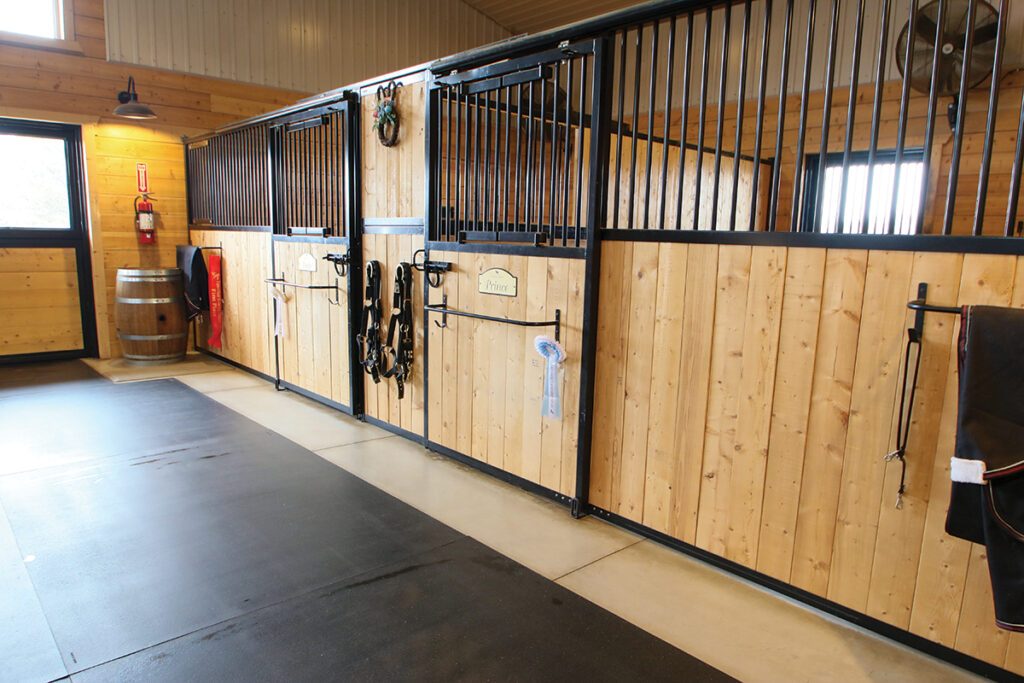
“Barndominiums cover all the bases,” Jeff says. “Anything you can do within the standard framing of a traditional home, we can do with a pole barn (barndo). In fact, the barndominium gives homeowners more latitude with open spaces. They are, of course, bigger—we can span that space with roof trusses. There is more flexibility where the second floor opens to the main floor. As well, an eighteen-foot pole barn is no problem. In a traditional home, where the homeowner wants an eighteen-foot-high ceiling in their great room… that would be a problem because of the limitations of wall framing. It’s not a problem in a barndominium.”
The second floor of the homeowner’s barn is where her mother’s living quarters were built. But, how does it differ from a traditional home?
“It is no different,” she says. “It is self contained. She has her own utilities—not embedded in the unit, but in a separate storage area, which is good because it does not take up any of her square footage.”
The living space is 1,100 square feet. The homeowner’s mother has a full kitchen, a walk-in pantry, her own laundry, and large 12 x 24 patio where she can read, or barbecue, or even take her binoculars to take in the landscape. She has her own garage with direct access and even a separate man door. And she feels safe living on the second floor.
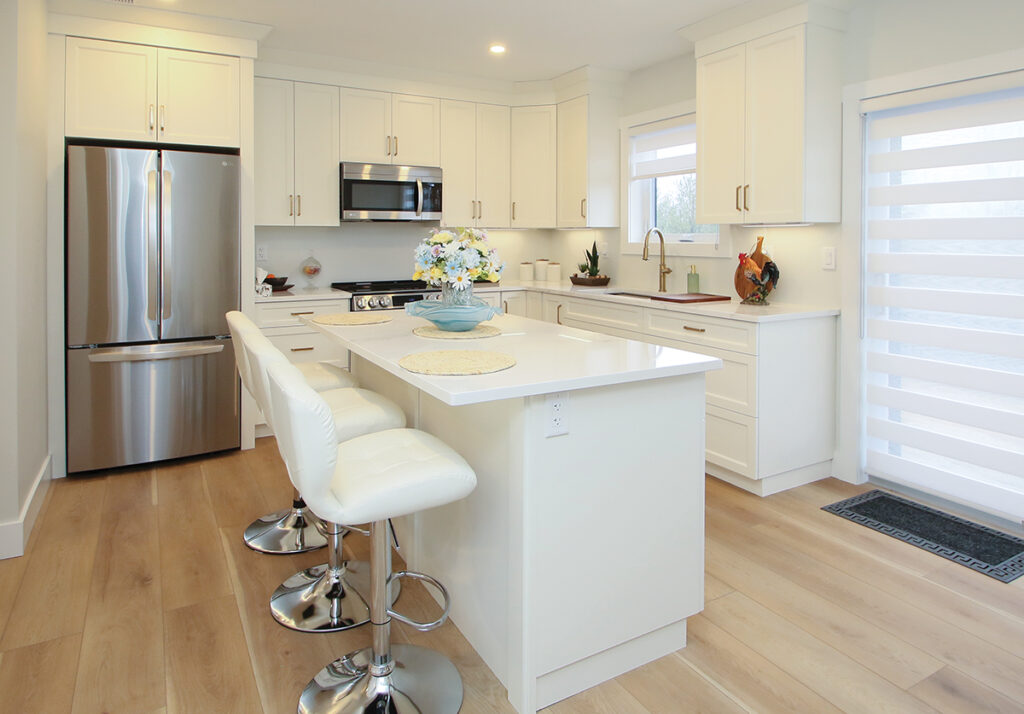
The apartment is impeccably finished including wide plank luxury vinyl flooring by A&A Flooring as well as a customized pantry, a personalized entry, broom closets and the bedroom closets all by Amazing Closets.
“At first, we had concerns about noise and odor transfer—the horses are right below her,” she continues. “Her unit is soundproof and its sealed and separate so there is no issue with odor. My mom loves her space. It’s warm in the winter. Cool in the summer. She has a bird’s eye view of the area. She can go downstairs and be with the horses whenever she feels like it.”
“We’ve built a strong and trusted relationship with Encore Mechanical, and it’s been great to collaborate on multiple successful projects across the region,” says Jeff. “They were able to customize a solution with separate hvac units for the apartment and the barn to insulate the horse smells while keeping the temperature comfortable all year round.”
Who do barndominiums appeal to? They generally appeal to people who grew up in rural settings, or “urban cowboy” types.
“Anyone would buy this—even people from cities,” Jeff says. “Barndominiums are more economical than traditional buildings. We used perma columns, cement-based posts, which have the longevity of a concrete foundation but the cost savings of a post frame building. And, as you can see, it definitely does not look like a cookie cutter home. We finished the building with materials that make it look agricultural: metal siding, metal roofing, looks like a pole barn, which disguises that it’s a home.”
Although the spaciousness of a barndo lends itself well to open concept, the homeowner’s mother preferred that her space be divided like a traditional home.
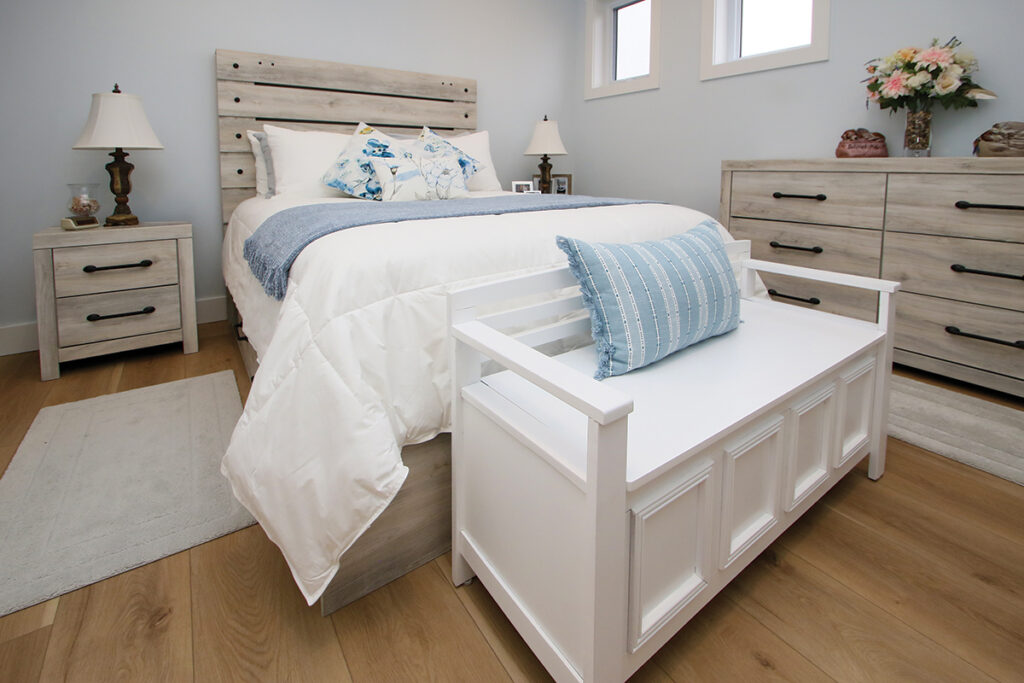
“You walk through the door and you are in the foyer,” the homeowner explains. “She has a bedroom with an ensuite. There is a spacious living room with a vaulted ceiling, a den, full kitchen with a center island. Mom has complete independence, which is very important to us. When she moved in, she said, ‘I’ll miss you guys!’ She is two hundred feet from our house.”
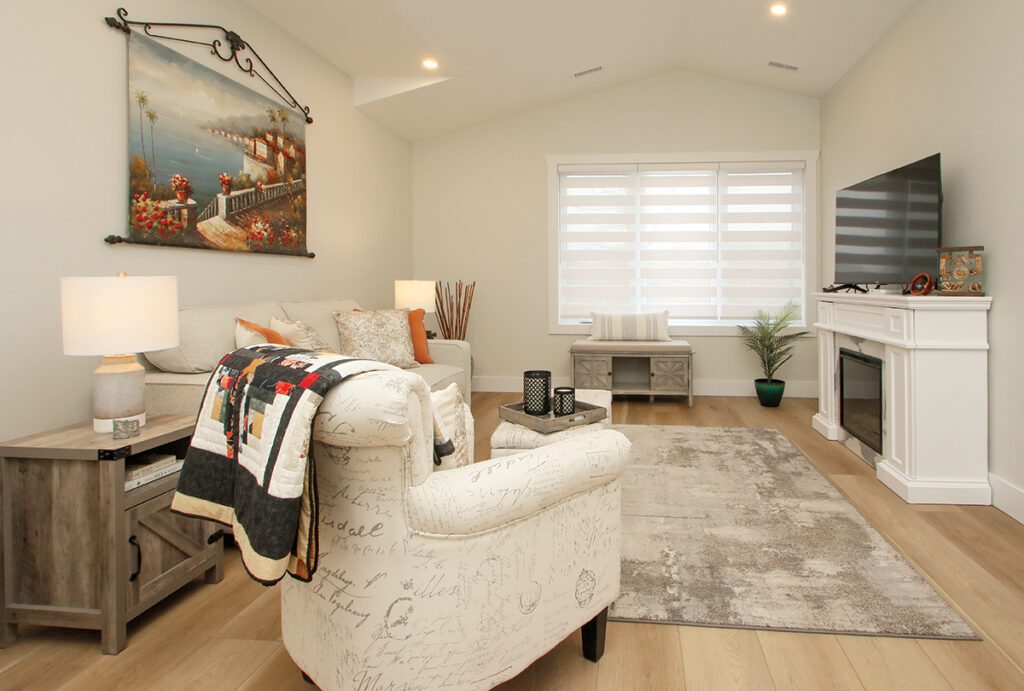
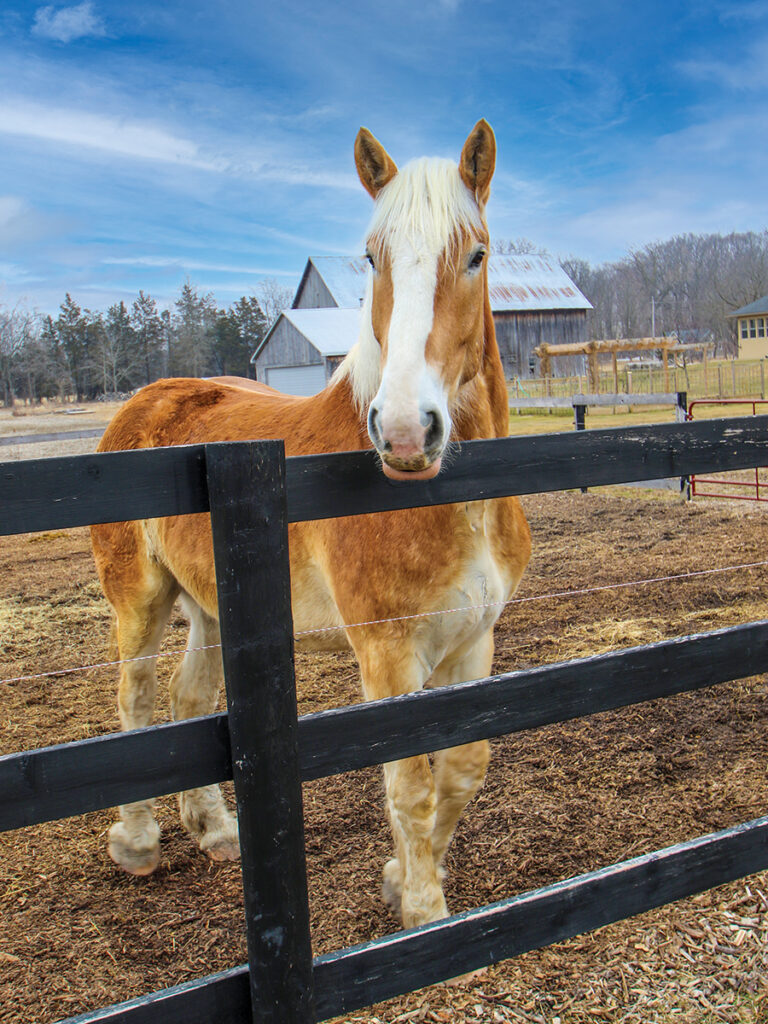
She continues: “We were unsure about moving here. Unsure how it would work out, but it’s been great. My mom is very active. She loves being near the horses. She helps maintain the property.”
Barndominiums have become so popular in the United States, they were included in a national survey of single-family home builders beginning in 2024, in which seven percent of the builders said they had constructed at least one in the past year.
Would she recommend barndo living to others?
“One hundred percent,” she says, “especially in Ontario—there are benefits to having multiple generations living on a property. With the cost of living, it’s well worth exploring these options if you have the space for it. It would be a great space for a grown child who can’t afford their own space.”
Jeff says: “Barndos are very functional, very down to earth living. We can make them as fancy as the homeowner desires, but they do not have to be fancy to be functional.”
And the homeowners plan to work their farm. “We want to plant hay,” she says. “But right now, it’s just the horses.”
Windsor Life Magazine is always searching for interesting homes, landscaping, gardens, patios and water features to show our readers what others in the community are doing with their living spaces. If you have a home that you feel would be interesting please email photos to info@windsorlife.com. Photos need to be for reference only. If your home is chosen we will arrange for a complete photo shoot. If you wish, you may remain anonymous and the location of your home will not be disclosed.
Published in the Your Place Or Mine? 2026 Edition.

Add comment