

A Local Traveller Goes on the
Adventure of a Lifetime, For the Second Time
Story by Matthew St. Amand
Photography by Silvia Rammelaere
It’s the land of iceberg graveyards and stone thieves. On average, it is the coldest, driest, and windiest continent on earth. It is primarily a polar desert and utterly inhospitable to human life. The journey to its nearest port is arduous and the journey to its shore can be deadly.
Antarctica.
For most people, a single journey to Antarctica crowns a lifetime of travel adventures. Tecumseh resident Sylvia Rammelaere and her traveling companion, Janet Stinson, found the White Continent so compelling after visiting in sixteen years ago that they decided to return in January of this year.
“Janet and I went in November 2014 the first time because that is when all of the penguins go to the islands to build their nests,” Sylvia says. “It was such an interesting experience, we wanted to go back when their babies were starting to hatch.”
The travel deities smiled upon their journey. The expedition is utterly at the mercy of weather conditions in one of the most meteorologically grouchy regions on the planet.
“On a scale of one to ten—ten being the worst weather,” Sylvia says, “the weather we experienced this time was between a one and a three.”
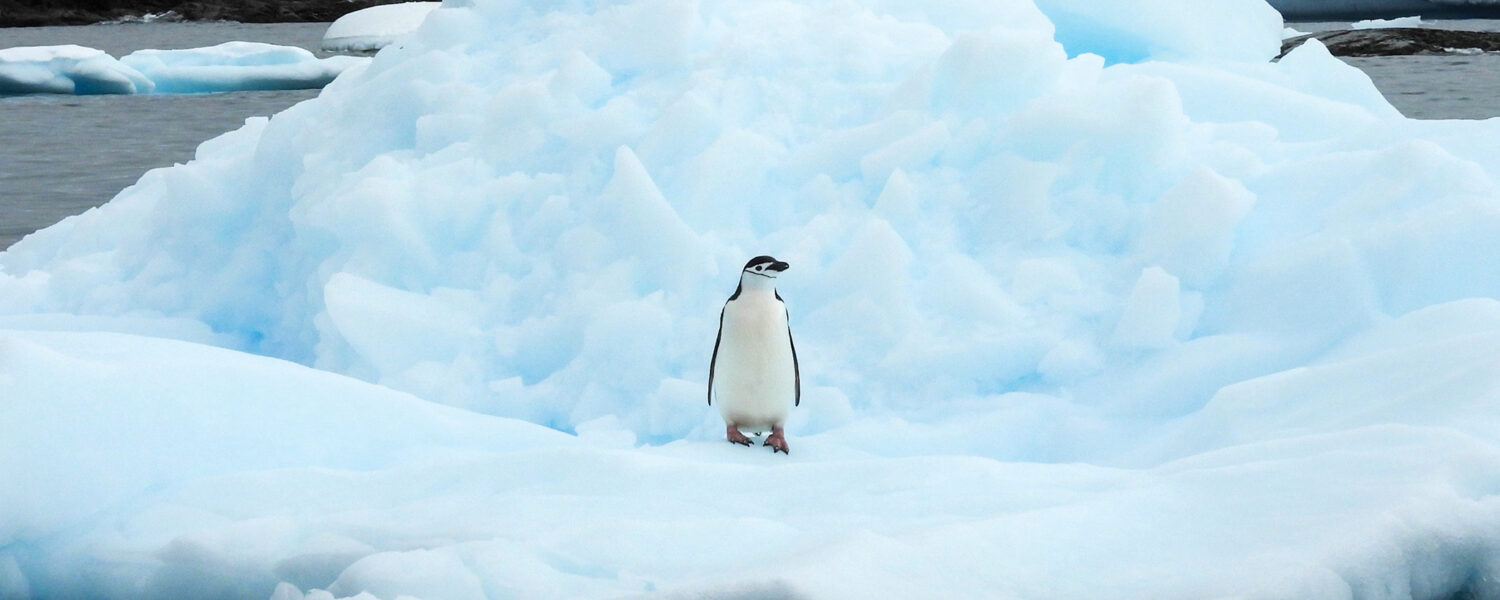
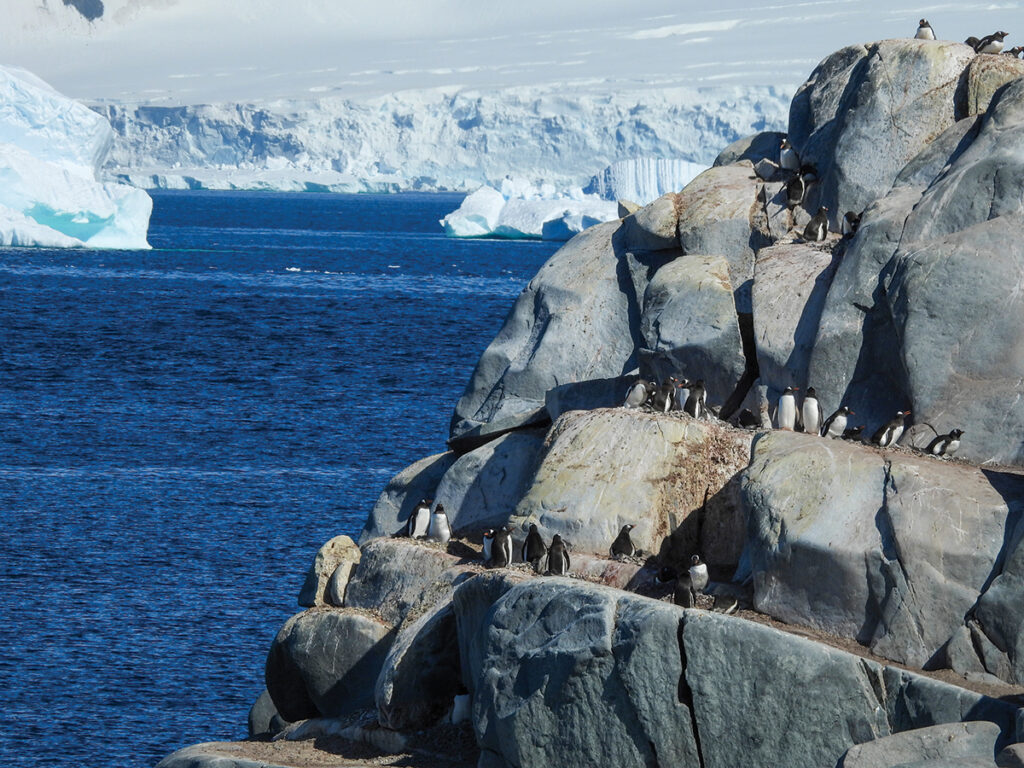
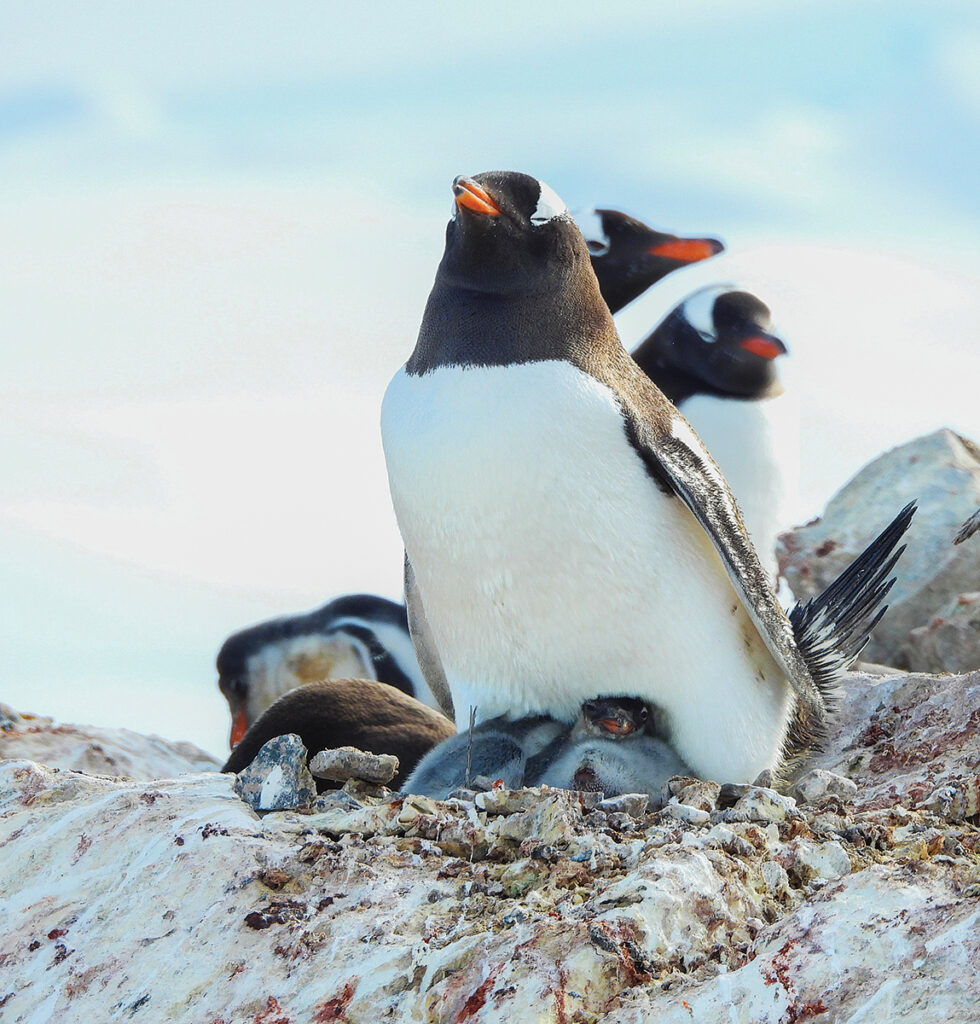
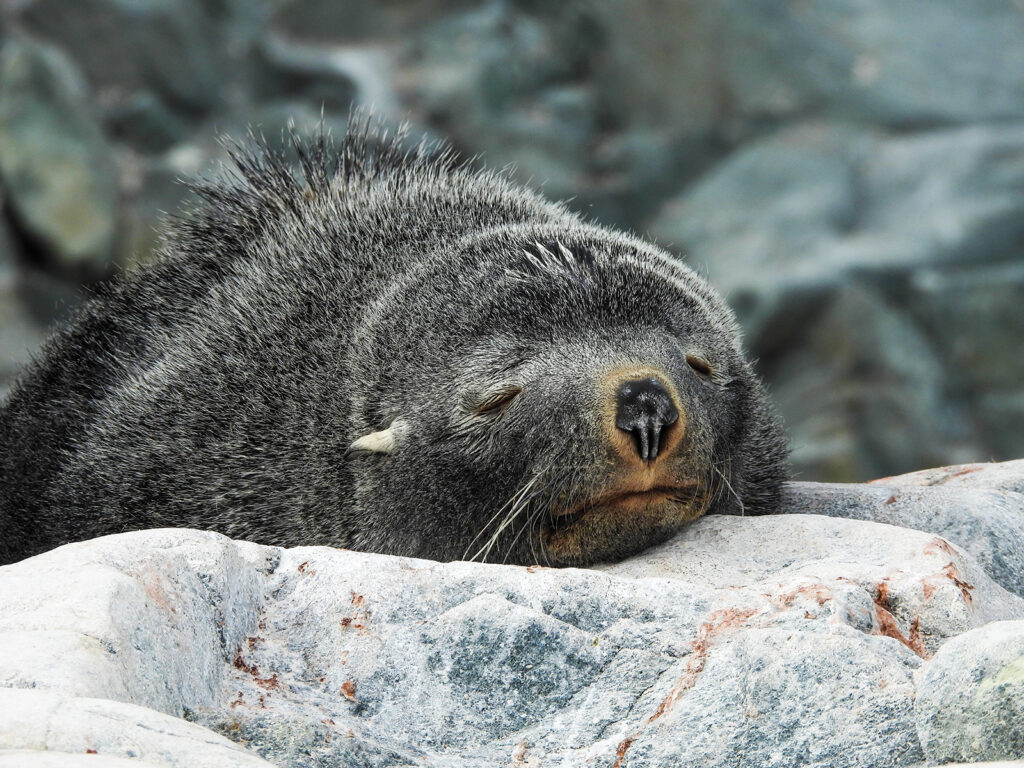
Which afforded Sylvia and Janet numerous opportunities to make landings upon various islands. Their photographs tell the story: “We saw all kinds of seals: Weddell, crabeaters, leopard seals, southern elephants,” Sylvia says. “There were 11,000 penguins on one island. They build their nests out of little stones and steal the stones from each other. We heard a story of someone at a research station painting the stones of one nest blue and then seeing blue stones everywhere soon after.”
When the weather is uncooperative, the voyage and its landings, kayaking and other experiences are curtailed in the interest of passenger safety. Sylvia and Janet encountered, virtually, a best case scenario.
“If weather permits, kayaks are available—though if you kayak, you can’t also go on a landing,” Sylvia says.
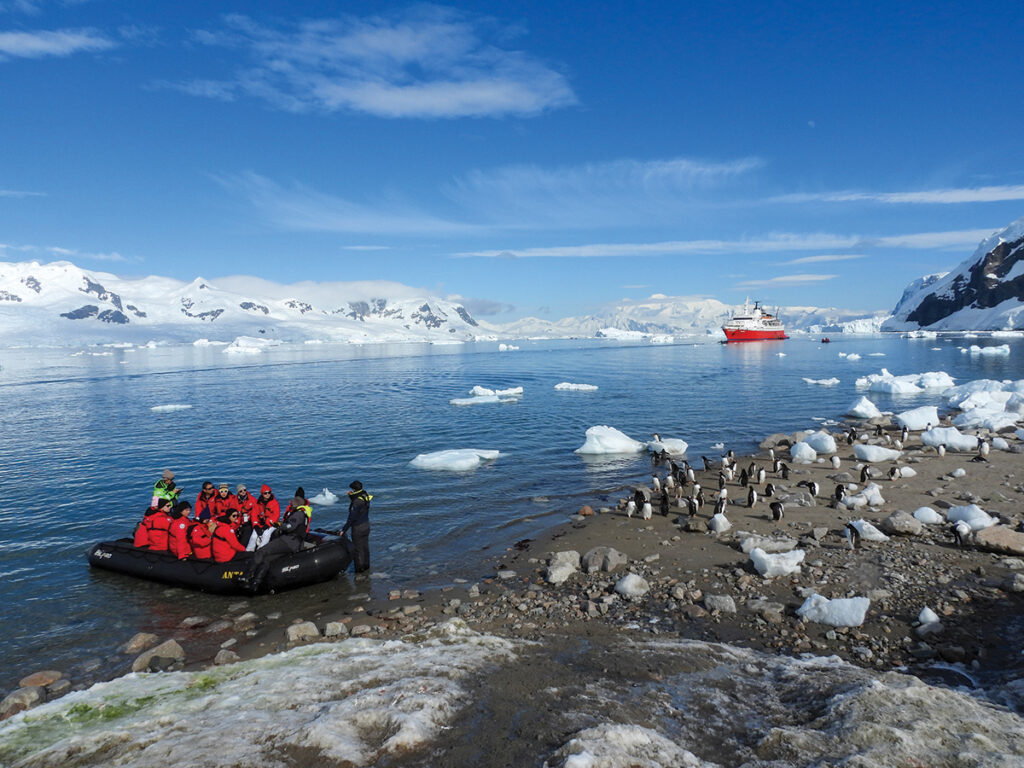
Regarding the landings: “The tour company does bio checks before we go to each island to avoid any avian flu issues or other contamination. They provided us with jackets and boots. Before going to the islands, all of our outer wear was inspected by staff to make sure we’d leave nothing foreign behind. As we left the boat, we each stepped into a plastic container filled with an anti-bacterial solution. On the islands, we weren’t permitted to kneel, sit, or lie down in the snow.”
She continues: “We had great weather this year, very calm. We didn’t experience any rough ocean during landings. It was much colder in 2014. We got to land every day—morning and night. We went to one location at the very end that they had never gone to because the weather was calm.”
Among the awe-inspiring sights, the group encountered numerous icebergs.
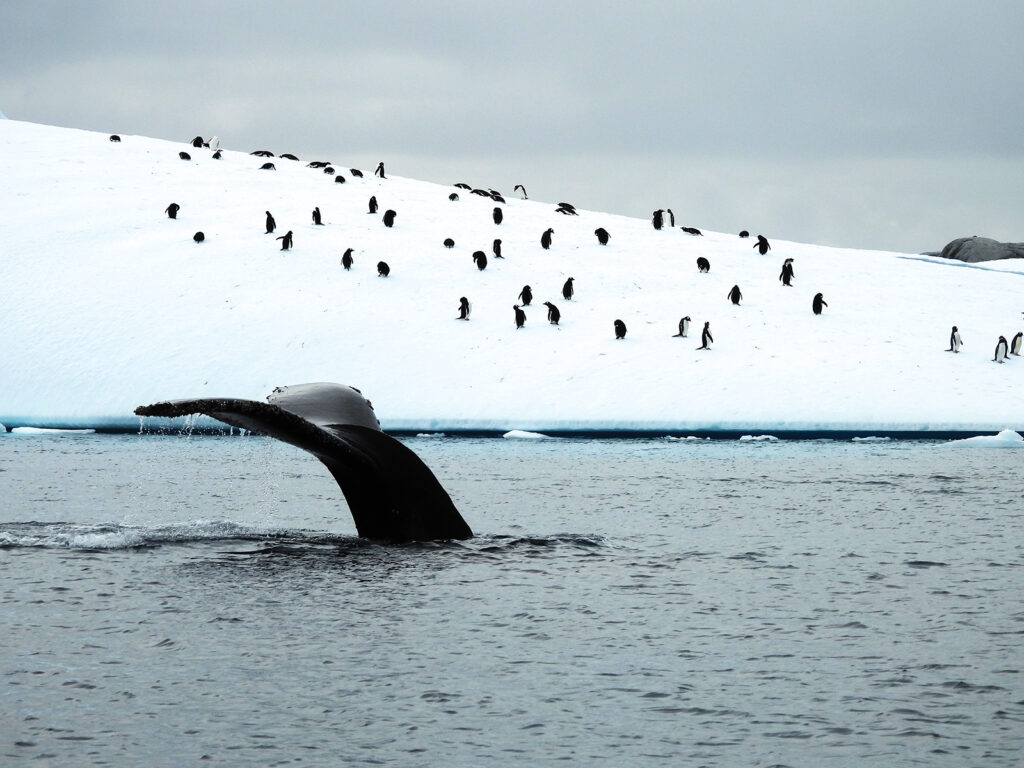
“The pictures don’t do them justice,” Sylvia says. “Going down this one section, the crew had a route in mind, but finally announced: ‘It’s like an iceberg graveyard,’ and we had to go around another way. Still, we saw many different shapes and colours—the older ice is more compact and bluer. And this time we also saw more whales.”
It goes without saying that a journey to Antarctica is not for the faint of heart. Sylvia and Janet embarked on December 30th, flying from Toronto to Buenos Aires, Argentina, and then taking a second flight down to Ushuaia—one of the most southern outposts in South America and it’s still 1,100 kilometers away from Antarctica.
“We stayed overnight in Ushuaia because if there are any issues arriving, you don’t want to miss the boat,” Sylvia says.
Once the 125 passengers and crew are aboard the Expedition, the boat to Antarctica, if someone is seriously injured or suffers a medical emergency between January 3rd to the 12th, the entire expedition turns around and heads back to port and the remaining portion of the trip is lost—for everyone. There is a doctor onboard, but there is only so much this person can do without further medical support in the event of an emergency.
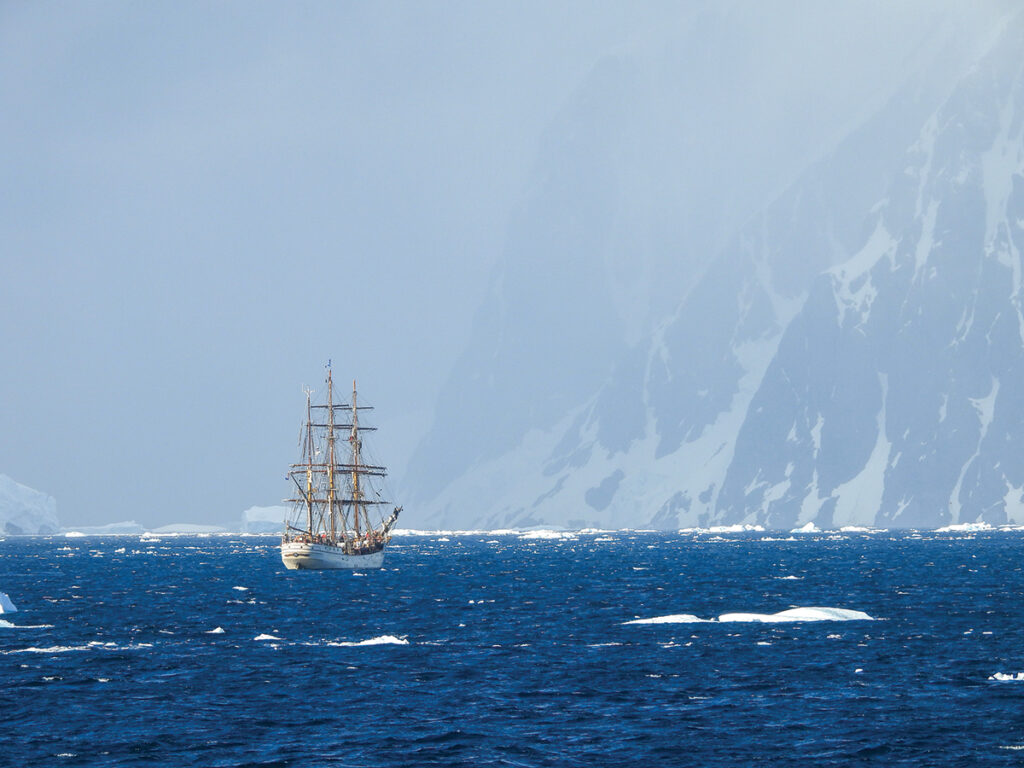
Crossing the Drake Passage from Ushuaia on the Expedition to Antarctica takes two days. How treacherous is that stretch of water that connects the Atlantic, Pacific and Southern oceans? A LiveScience.com headline sums it up succinctly: “Drake Passage: The ‘most dreaded bit of ocean on the globe’—where waves reach up to 80 feet”.
The voyage is not a theme park recreation of the Drake Passage. It’s the real deal.
“There is a mandatory safety briefing, which made us very conscious about walking around on the ship,” Sylvia recalls. “The seas can be very rough, and we were advised to always keep a hold of the railing when on deck.”
Although weather conditions were optimal, the ship’s doctor had his hands full with cases of seasickness during the initial crossing of the Drake Passage.
Things settled down when the Expedition dropped anchor for the first time. The routine of this cruise was not unlike that of more traditional cruises: the ship traveling at night, anchoring at a new location each day.
“The staff were all very knowledgeable,” Sylvia recalls. “They do lectures. Among them there are specialists on whales, seals, penguins, ice and glaciers. Some of them work at the research stations from time to time. In 2014, we had the opportunity to visit the Palmer research station on Anvers Island.”
She continues: “The food was very good. They had something for everyone. At one point, the weather was so mild, they had a barbecue one night out on the deck.”
Even after seeing it once, a dozen years ago, Sylvia’s second journey to Antarctica was a transformative experience.
What advice does she have for adventurous souls considering a visit? “If you are prone to motion sickness you can expect some of that for the two days each way through the Drake Passage,” she says. “Be prepared to be amazed at the pristine and breathtaking landscapes, icebergs, thousands of penguins and other animals along with knowledgeable expedition staff. And, of course, the cold. It was a fabulous trip and I was glad I did it a second time! What you see and where you go is one hundred percent weather-dependent so prepare for changes in the itinerary. If anyone is on the fence about going, I would recommend they go because it is a place like no other.”
Published in the Your Place Or Mine? 2026 Edition.

Add comment