


WECDSB and St. Clair College Train
Next Generation of Skilled Tradespeople
Story by Michael Seguin
Photography by Dax Melmer/St. Clair College
Look around, no matter where you are—with a few possible exceptions—you’ll likely see some familiar landmarks. Roads. Houses. Buildings. Power cables. Cars. Bathrooms and kitchens. Light fixtures. Ring cameras.
All these various features form the unquestioned bedrock of our civilization. And such landmarks demand an entire skilled workforce to both install and maintain.
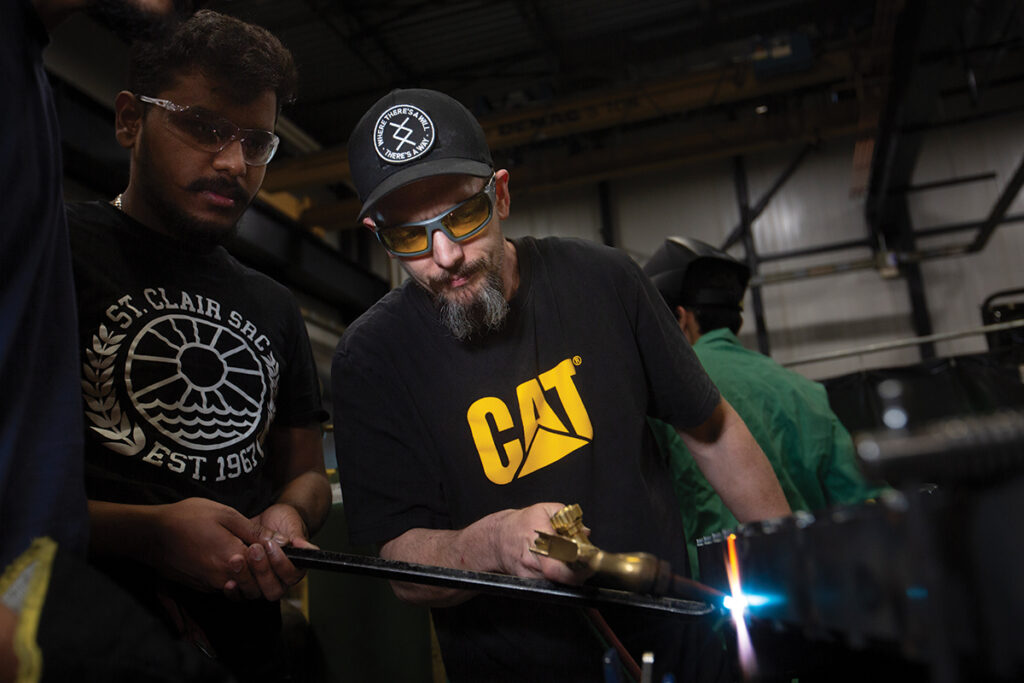
And fortunately, there are some exciting new developments in the skilled trades which mean that our next generation of Windsor’s workers will receive the best possible education.
One of these new developments is the Windsor-Essex Catholic District School Board (WECDSB) Construction Academy—a unique program that offers a hands-on learning environment.
“The genesis of the academy was this: if a student in high school wants to pursue the skilled trades, how can we tailor their education to prepare them for that?” Cory McAiney, the Ontario Youth Apprenticeship Program (OYAP) and Co-op Consultant at the WECDSB, explains. “We want to give them all the benefits of a postsecondary apprenticeship program while they’re still in high school.”
The Construction Academy is a two-year program. For the first semester, they offer a variety of emphasis courses where students can learn more about a specific trade.
“We have emphasis courses in brick and stone masonry, plumbing, carpentry, welding and electrical,” Cory states. “And every one of those courses is taught by a Red Seal tradesperson. We’re not looking for a traditional academic teacher. We’re looking for a certified teacher that has come directly from the industry with Red Seal Tradesperson credentials.”
And Cory is no exception to this rule. While currently an educator for almost 27 years, Cory is a Red Seal carpenter himself—meaning that as he can provide his students with a uniquely advantageous glimpse into his trade.
And one of his former students is also heavily involved in the Construction Academy. Brent Klundert, Owner of BK Cornerstone Design Build and Chair of the Windsor-Essex Home Builder’s Association (WEHBA), chimes in on how valuable an experience this opportunity truly is.
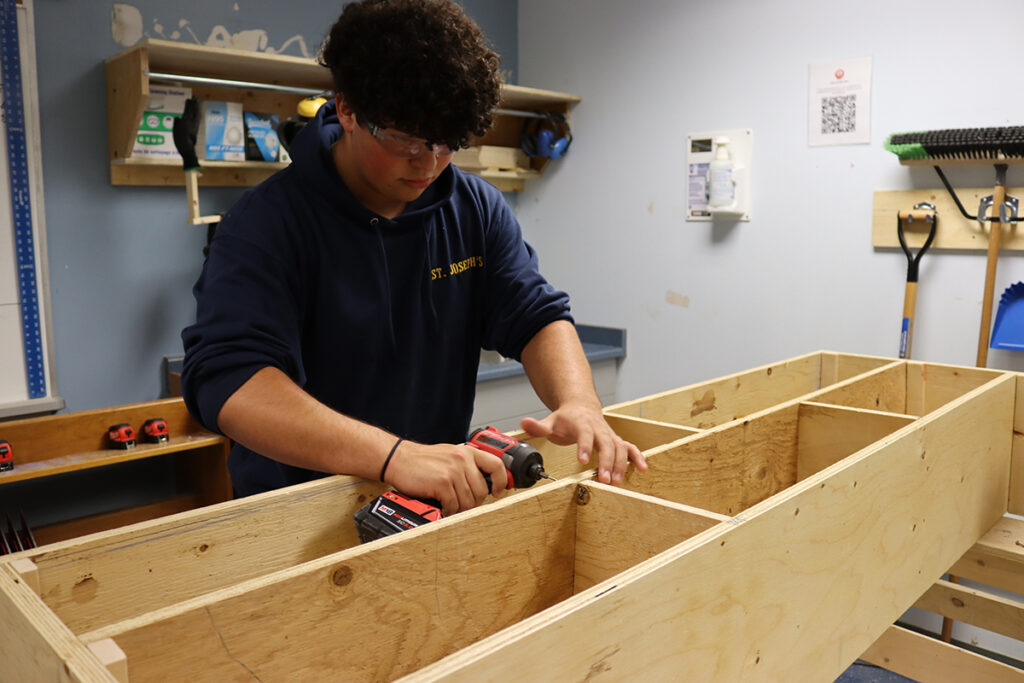
“We’ve noticed that there were a lot of gaps that have opened in education,” Brent states. “So we decided that it was important to garner talent at a young age. Some kids aren’t going to pursue college or university—not because they don’t have the capabilities, but because they see a better future for themselves working with their hands. So this is all about servicing both the industry and these talented young people.”
When the board developed the curriculum for the program, they consulted the WEHBA and focused on what employers were searching for in prospective apprentices.
“We thought about what employers wanted to see from students straight out of secondary school,” Brent states. “A lot of students were arriving at their first jobsite with no formal training with tools. Another ongoing goal was just reaching the kids early enough to show them this is a great career if they like building things. That way, when they enter secondary school from elementary, they’re more motivated to succeed because they want to set themselves up for success.”
And the Construction Academy has both addressed and surpassed those concerns. Students who complete the program are given a dramatic head-start to success in the skilled trades.
“When our students enter their first co-op, they have a huge advantage,” Cory maintains. “They have all their personal protective equipment, starter tools, and have completed numerous safety certifications. Normally an employer would have to send an apprentice away for a couple days to obtain all these. But when our students arrive at the jobsite, they’re all set. On top of that, they’ve spent five months working with electricians, plumbers, brick-and-stone masons and welders—among others.”
Feedback from prospective employers has been glowing.
“They’ll tell us that they’ve never had co-op students like this before,” Cory states. “That they’re incredibly advanced. Almost immediately, employers will sign them because they recognize their value. And every hour of their co-op counts towards their apprenticeship. We’ll have students who’ve completed a thousand hours before they’ve even finished high school.”
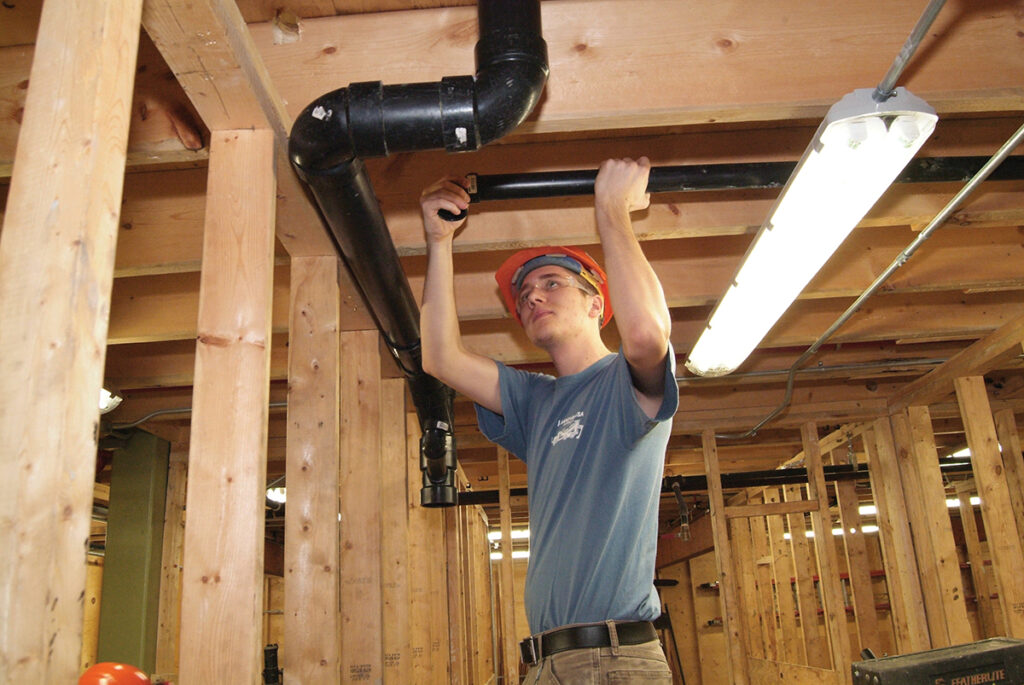
Perhaps most significantly, one of the core tenets of the Construction Academy is preparing our next generation of builders and skilled tradespeople with navigating a changing industry.
“There are new techniques in terms of building processes that always come out,” Brent states. “We’re constantly being asked if there’s anything new that the kids need to learn. ‘Are there any new products to be aware of? Anything that you can see coming down?’ And sometimes it’s as simple as the new paperless world we’re living in where schematics are on iPads. So we try to make sure that they’re aware of this new electronic world and how that’s changing the workplace and the industry. But the nice thing about our world is that basic principles don’t change all that much. We’re still using the same techniques that my grandfather used.”
It is not uncommon for some of the Construction Academy students to receive a job offer straight out of high school.
And as remarkable as WECDSB’s Construction Academy is, there are other institutions making waves in the industry. St. Clair College’s School of Skilled Trades offers a number of exciting, innovative opportunities for future students.
“We have a total of 34 programs, including apprenticeships,” Lido Zuccato, Chair at St. Clair College’s School of Skilled Trades & Apprenticeships, explains. “Our graduates are in high demand. A lot of employers come in throughout the semester to speak to our classes. Many of our students are then sought out for careers before we’ve even signed their degree.”
Lido takes some time to elaborate on how the different trades have ebbed and flowed throughout our city—with an emphasis on the flowing.
“Some of the main construction trades—such as electrical engineering and plumbing—are through the roof,” Lido states. “We are at max capacity right now.”
Much like the Construction Academy, St. Clair College’s School of Skilled Trades is designed to replicate actual days on the jobsite.
“We aim to provide our students with conditions that would mimic true industry,” Lido explains. “When you walk into the Electrical-Residential Lab, it looks like a residential home. Our lecture component is only 50%. Our labs are designed to replicate the trade as closely as possible. When you transition into the industry, you know exactly what to expect.”
As with the Construction Academy, many St. Clair graduates are offered high-paying jobs shortly after obtaining their diploma.
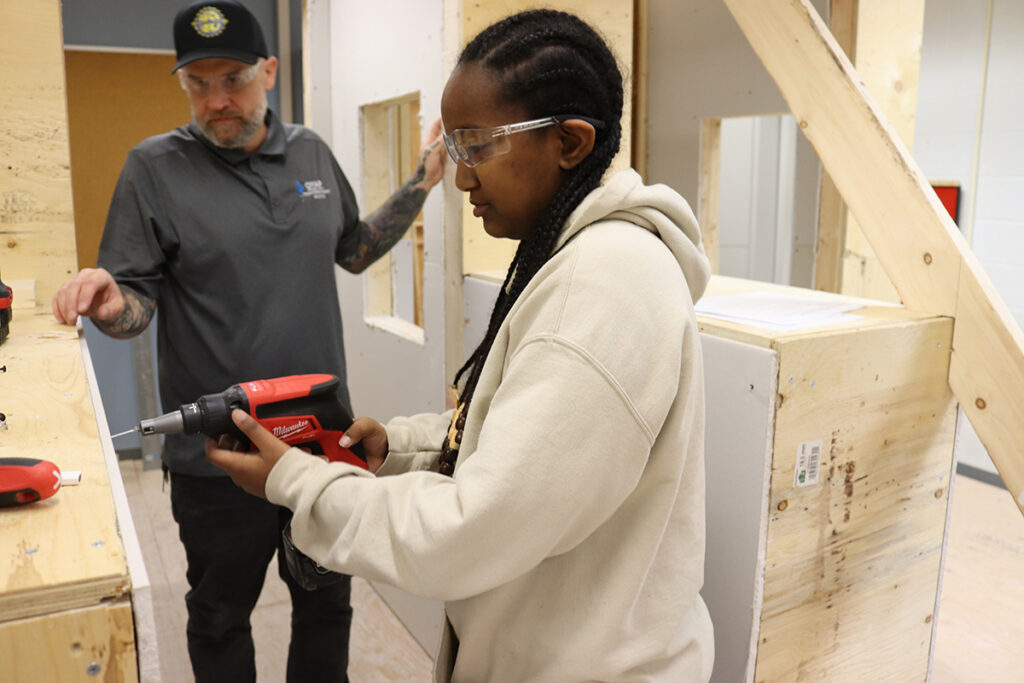
“We have many professionals come in and speak to the class,” Lido explains. “And many of our students are scoped out by prospective employers before they even graduate.”
And when it comes to addressing any potential students, Lido takes care to remind us that while there are no straight roads in life, you can still reach a desired destination if you only keep moving.
“If you choose electrical or you choose plumbing, there’s so many transferable skills you can learn,” Lido reminds us. “You may later decide that one of those industries aren’t for you. But you haven’t lost anything. You can take what you’ve learned and carry them forward. You may have to take another program for two years—but when you zoom out, that’s a very short span of time. You don’t know where life is going to take you. You might even end up using the skills from both!”
One of the many local companies who recognizes the importance of investing in the future of local tradespeople is CCS. For many years, they have been contributing to the program at St. Clair College. “The tradespeople on our team are vital to the success of our projects and clients—their commitment to excellence is unmatched. It’s a privilege to support the future of the trades in our region,” says Carl Bernat, President of CCS Group of Companies.
“We have so many success stories,” Cory states. “I have former students in their early twenties who are writing their Red Seal exams—and the average age for an apprentice in Ontario is 27! We are so proud of all of them. Our city is in good hands.”
Published in the September 2025 Edition.

Add comment