

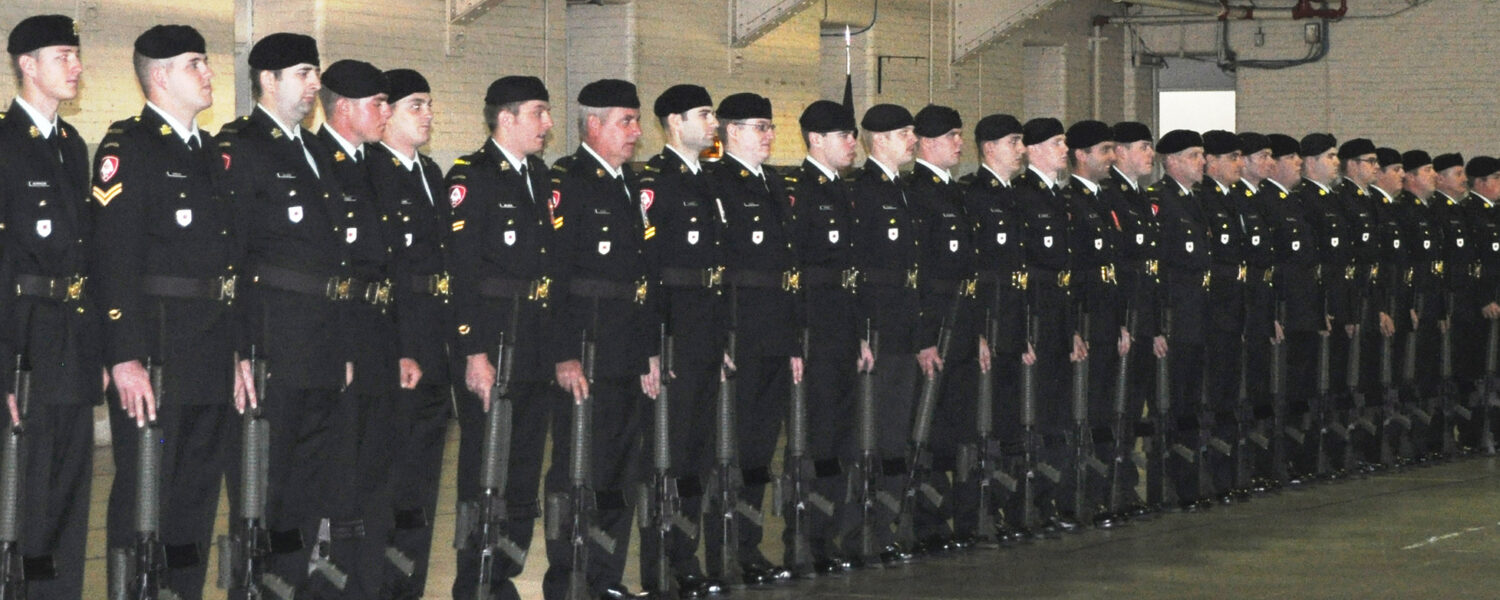
Celebrating 90 Years of Service
Story by Matthew St. Amand
Photography courtesy The Windsor Regiment Association
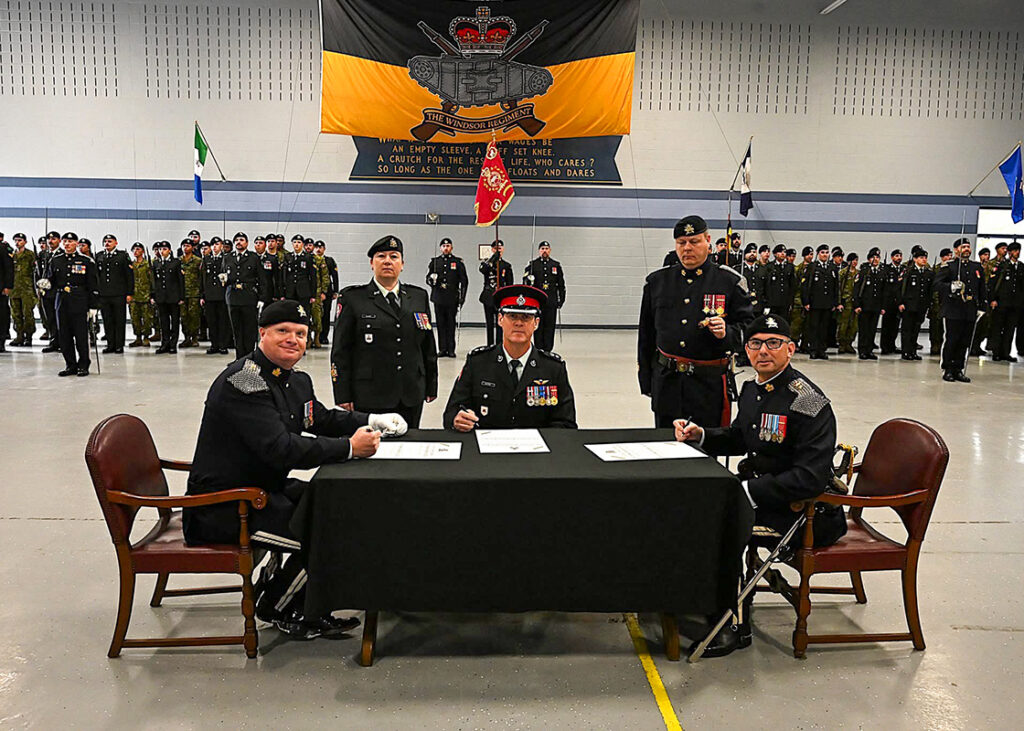
In honour of The Windsor Regiment’s 90th anniversary, October 19 – 25, 2026 has been designated “Windsor Regiment Week”. The occasion will be commemorated on two separate dates: October 19, The Windsor Regiment’s flag-raising ceremony and October 24, the Windsor Regiment’s Freedom of the City Parade. Both events will occur in City Hall Square.
Armed conflict is serious business and organizing the forces that undertake the tasks of war—whether administrative, tactical, intelligence or frontline infantry—is highly complex and ever-changing with ideas and orders filtering down myriad lines of command for implementation.
The reserve armoured unit that would one day become The Windsor Regiment came into being on December 15, 1936. It was established in Windsor and created through General Order 188/36, the group being first known as the Essex Regiment (Tank). Soon after its formation, the Regiment made military history as the first Canadian Army unit authorized to wear the iconic black beret—a headdress made famous by the British Royal Armoured Corps in 1924. Its regimental motto is “Semper Paratus”, which means “Always Prepared”.
Creating the Regiment was not a decision arrived at overnight, but the result of years of planning. In 1932, Canada reorganized its army into seven divisions, laying the groundwork for a potential Canadian Expeditionary Force. As part of this overhaul, the reserve army—then known as the Non-Permanent Active Militia—underwent a massive shakeup. Regiments were disbanded, merged, or given new missions.
By 1936, a key element was added: armour.
The Windsor Regiment is a tank unit. To those in charge, it made good sense to establish it here in Canada’s automotive capital, with so many potential reservists having experience working in the city’s auto factories.
“The tank was first introduced in World War I,” says Colonel (retired) J.P. Celestino, President of The Windsor Regiment Association. “It was a brand-new weapon system, and in the 1920s and 30s, tacticians struggled to define the proper role for armoured units. Should armoured units be for infantry support? Or should they be used for break through and exploitation.”
Today, The Windsor Regiment is a reserve unit of approximately one hundred seventy members, including the band.
The Regiment’s inception in 1936 was very timely, as World War II was less than three years away. Was this a coincidence?
“By 1936, Germany’s ambitions were clear,” J.P. continues. “Japan was aggressive in the Pacific, and Italy’s ambitions toward the Mediterranean and in North Africa were also known.”
The Commanding Officer of the new regiment was George Yule Masson ED, a forty-one-year-old architect who had served in the First World War. The first Regimental Sergeant-Major was Reginald William Gates, also a veteran of the Great War.
World War II began with the German invasion of Poland on September 1, 1939. The British and French declared war on Germany two days later. As the war developed and widened, The Windsor Regiment prepared for combat.
In September 1940, its commanders received orders to stand down from active duty. Ultimately, the Regiment never deployed overseas as a single complete unit, but its soldiers were given the option to remain with the local reserve or join active frontline units. Approximately half of the soldiers joined the Headquarters Squadron of the 1st Canadian Army Tank Brigade under the famed Brigadier F.F. Worthington.
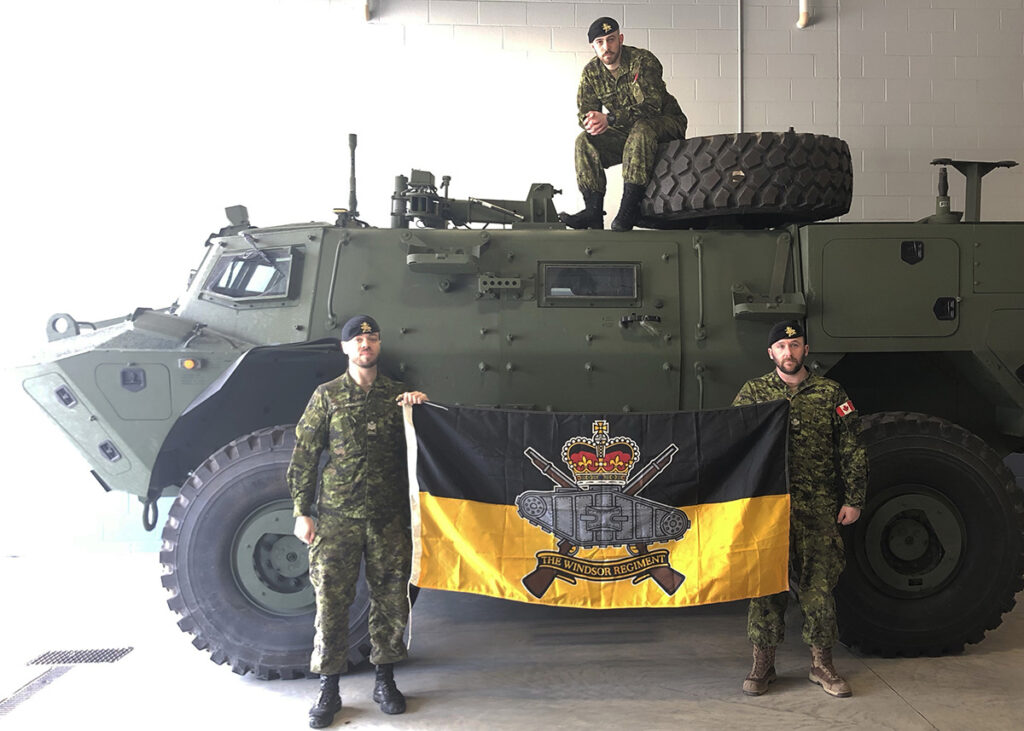
Back in Windsor, the unit was renamed the 30th (Reserve) Reconnaissance Battalion in 1942—keeping “Essex Regiment” in brackets out of deep regimental pride—before officially taking the name ‘The Windsor Regiment (RCAC)’ in 1949.
Following some turns of fortune during World War II, the Regiment was given a special assignment. A large number of military vehicles had been shipped overseas in pieces, and they now needed to be assembled. This is where the homegrown automotive expertise became so valuable. As the original planners predicted, many of the men in the Regiment who, ironically enough, had joined the army to escape Windsor’s auto plants—found themselves as overseas auto workers earning $1.30 per day whereas their friends on the Windsor assembly lines received $5 to $6 a day for the same work. They became Number 1 Canadian Armoured Corp Company Canadian Equipment Assembly Unit.
On April 6, 1944, the active unit was disbanded and the personnel became reinforcements for other regiments in the European Theater.
As the Korean War heated up in the 1950s, volunteers from the Windsor Regiment were sent to augment the forces serving there.
For his own part, J.P. joined the regular army in 1978 and was released in 1981.
“I joined The Windsor Regiment (RCAC) in 1986 and retired from the Armed Forces in 2012. During these years, I served as Commanding Officer of The Windsor Regiment (RCAC) and later as Commander of 31 Canadian Brigade Group. Operationally, I completed a tour with the United Nations Mission in Sudan and served 371 continuous days in Afghanistan as part of an advisory team to the Afghan Minister of Defence.”
He continues: “Young people are still drawn to The Regiment by a sense of patriotism, and they enjoy the camaraderie. The skills and experiences learned in the military prove beneficial no matter what they go on to do in life.”
Not only is The Windsor Regiment’s history being celebrated with the events in October, but also its ties to Windsor.
“We have a close relationship with the City of Windsor—our Regiment is named after our city which is quite rare in the Canadian Armed Forces,” J.P. explains. “To reinforce this relationship, every ten years we request permission from the Mayor to hold a Freedom of the City Parade. It’s a tradition that goes back to the Middle Ages. For a city to say ‘We give your regiment freedom to enter our city’ demonstrates great trust. Otherwise, that unit could be seen as an occupying force.”
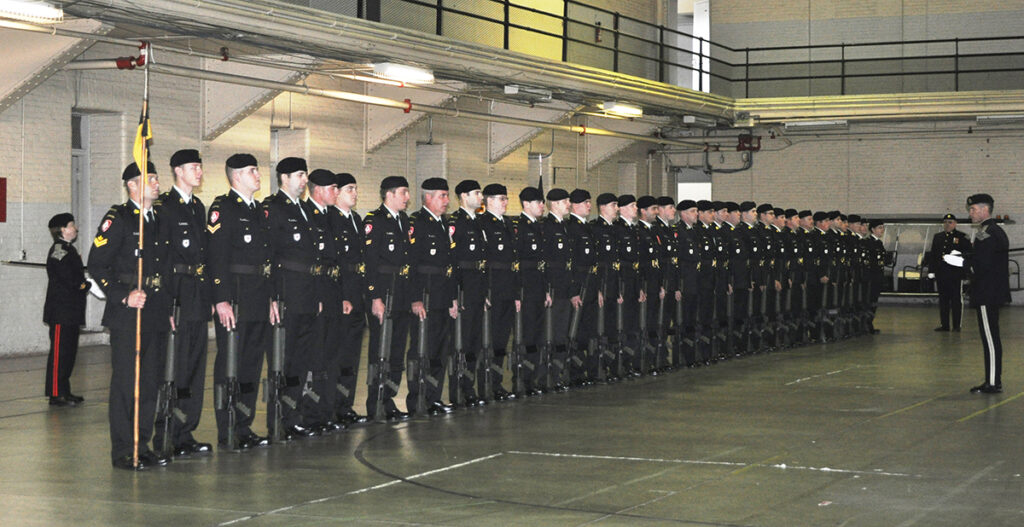
Over the decades, The Windsor Regiment has distinguished itself in venues other than the battlefield. During the 1970s, it showcased its versatility by supporting major security operations at the 1976 Montreal Olympics, aiding local communities during severe winter blizzards under Operation Butane, and sending a reconnaissance troop to West Germany in 1978 to train alongside the Royal Canadian Dragoons on the front lines of the Cold War. From pioneering the black beret to answering the call both at home and abroad, The Windsor Regiment remains a vital piece of Canadian military heritage.
If you are interested in becoming a member of the Regiment, you can email them at WindsorChathamRec@forces.gc.ca.
Published in the Autumn 2026 Edition.

Add comment