

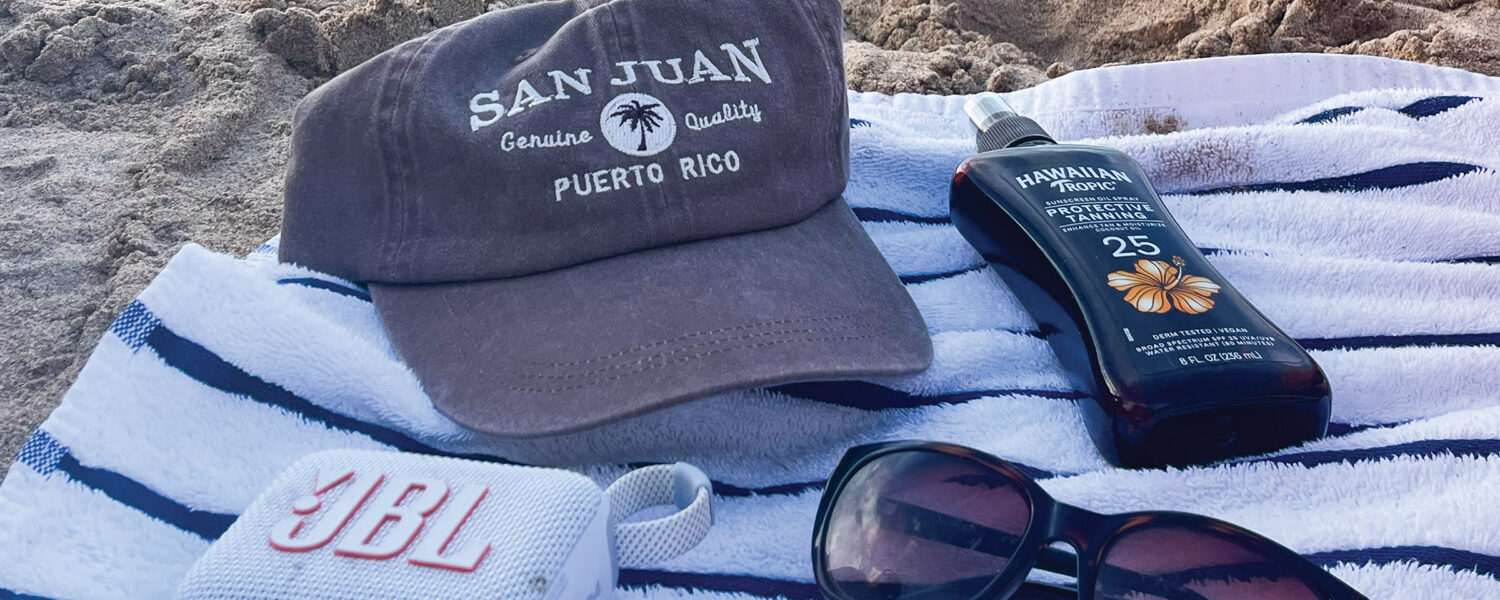
A Balanced Trip of Adventure and Leisure
Story and Photography by Serafina Piasentin
I only spent 4 days in Puerto Rico, but it left a lasting impression. From the white sand that trickles into the cerulean sea on Condado Beach to the colourful array of buildings in Old San Juan, all the way to the emerald palms in the El Yunque National Forest, there is so much to see in only a short amount of time. Though I would recommend staying longer, here’s what my family and I did in 4 days.
Day 1:
We flew into Luis Munoz Marin International Airport on May 21. As soon as we stepped out of the plane, I was surprised to find that the weather was quite similar to that of Windsor. Ends up that the end of May is during the rainy season in Puerto Rico which can cool down the tropical climate. Like Windsor, it was humid and hot but not overwhelmingly so. There was always a breeze and the occasional shower.
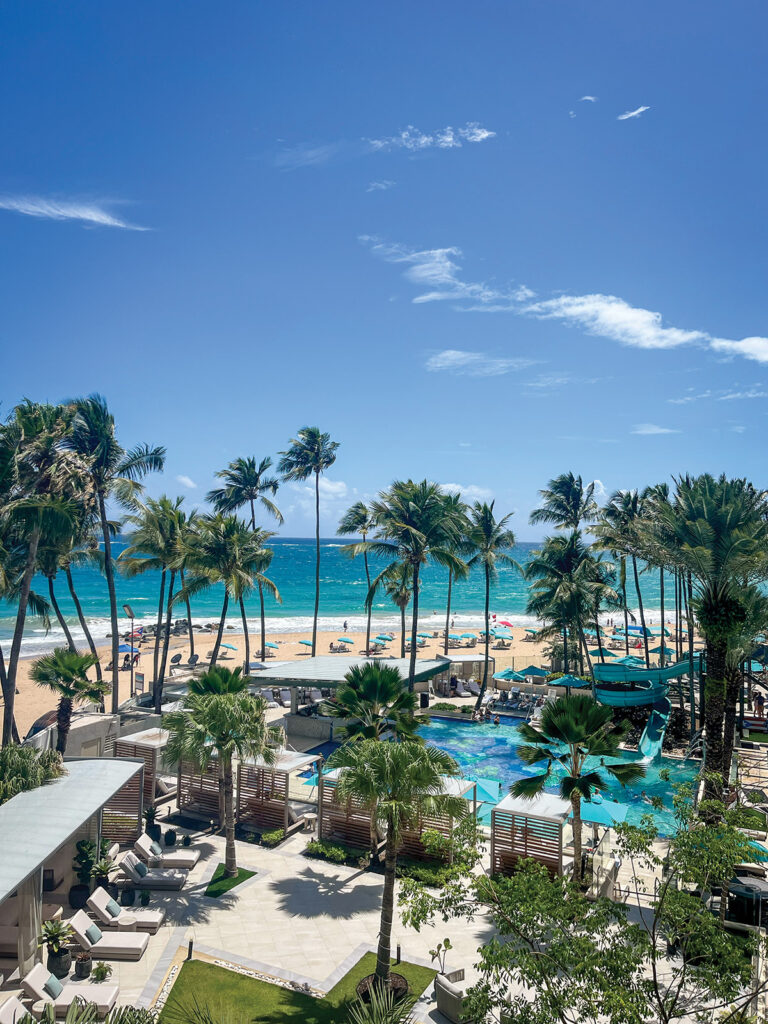
We spent the first day exploring the San Juan Marriott Resort which overlooked Condado Beach. Being an avid backpacker who stayed at hostels on my previous travels, I was a bit wary about resorts. I held the prejudice that they made their guests so comfortable that they never wanted to leave. While this is true (we spent the whole day lounging on the beach or enjoying the pool), it is equally true that a traveller’s thirst for adventure can never be quenched. So, while I relaxed on a sunchair, I looked for things to do in Puerto Rico.
Day 2:
I woke up early with my mom to participate in yoga by the pool. While lying on my back in Savasana, I watched the light and wind filtering through the palm trees, creating dappled shadows on the other yoga mats. There is always a balance, I realized, between adventure and relaxation, between comfort and discomfort. This is what Puerto Rico helped me to find.
The other half of my family joined my mother and I for the complimentary breakfast—a buffet that consisted of Puerto Rican dishes such as maduros—balls of fried plantains—as well as mimosas, chia seed pudding and an omelet station.
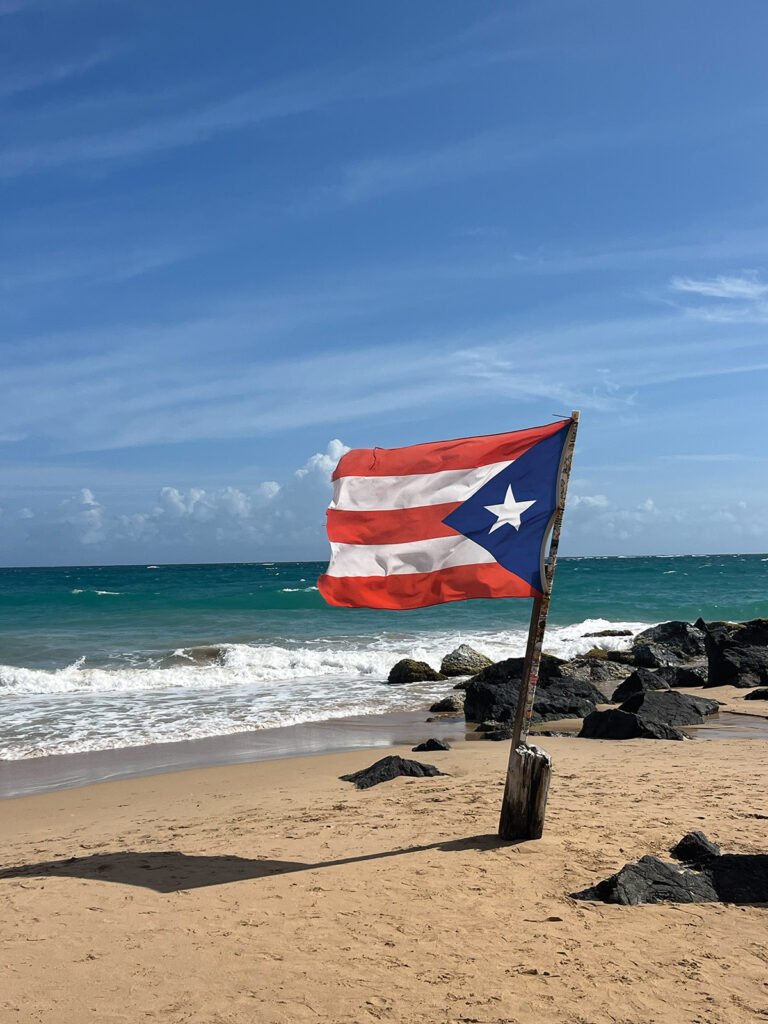
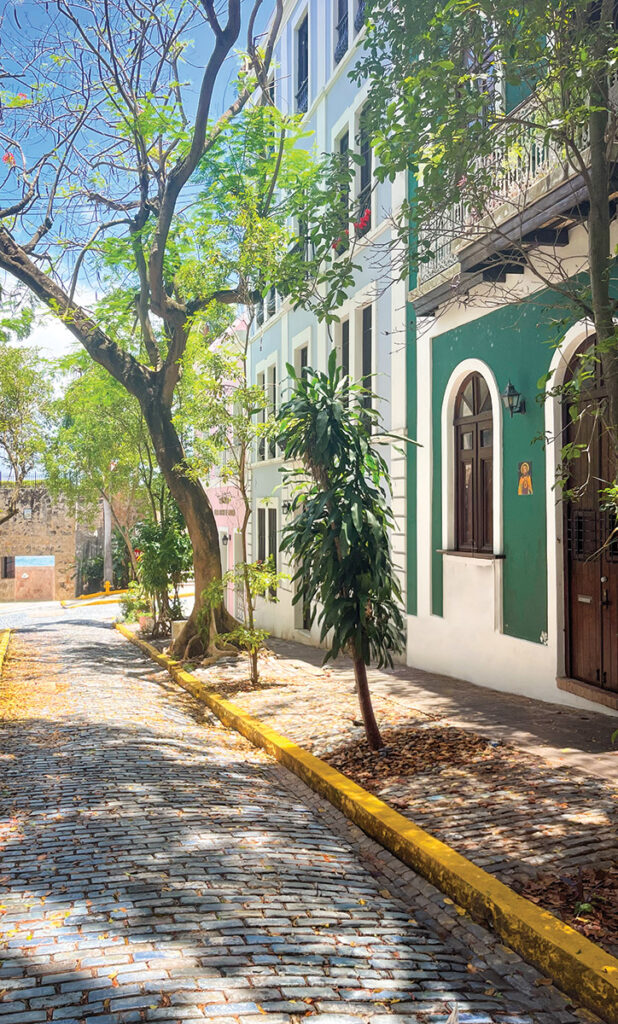
We then readied ourselves to visit Old San Juan. Founded in 1521, this section of the city is full of history. The architecture is a result of the Spanish colonization featuring white trims, wrought-iron balconies, inner courtyards and colorfully painted walls created from brick, sea sand and limestone. There are some surviving Spanish Gothic influences seen mostly in the cathedrals and churches as well as the Renaissance and Baroque style seen in the Castillo San Felipe del Morro fortress. I could have spent hours walking on the blue cobblestone streets, photographing the beautiful buildings without realizing the history all around me. For instance, these blue cobblestones, called adoquines, are made from iron slag, a waste byproduct produced by iron smelting—the extraction of pure iron from raw iron. The slag turned blue over time from exposure to the elements and oxygen. These stones were brought over in European ships to stabilize the vessels on their long journey. At first glance, these stones add to the charm of Puerto Rican streets, but they are also a marker of the struggles of Spanish colonialism.
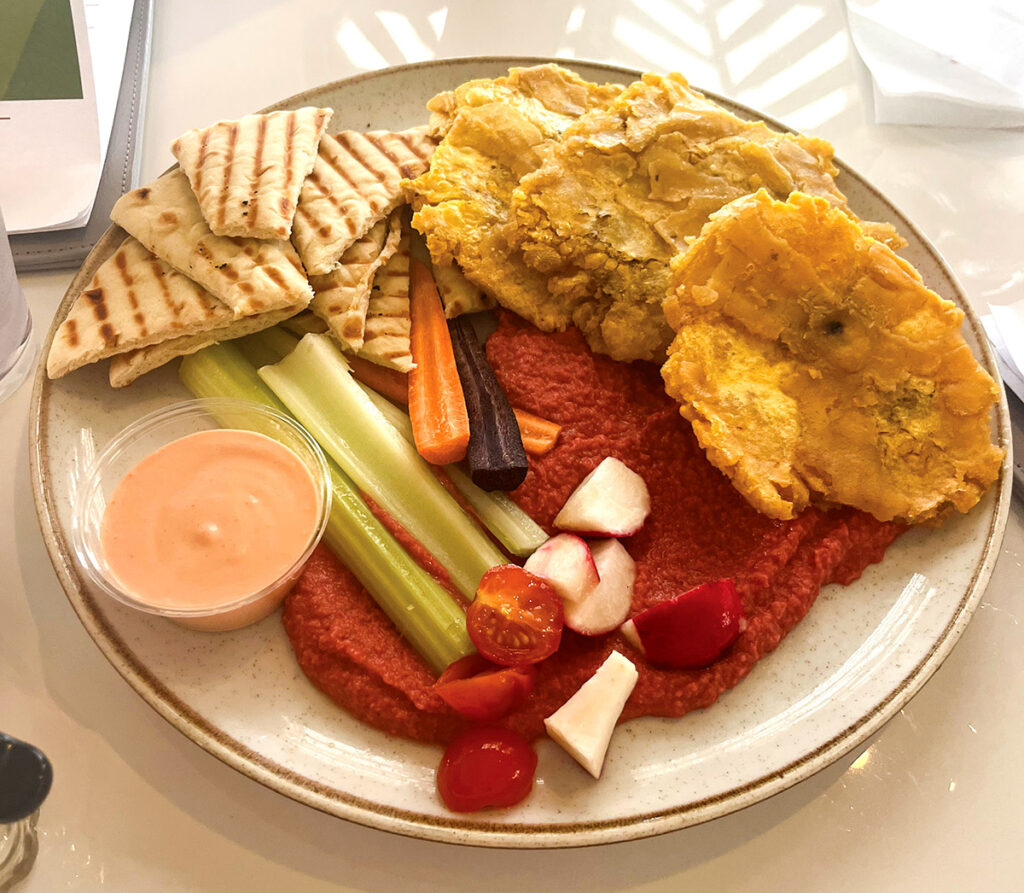
Spanish influences can also be seen in Puerto Rican cuisine as the Spanish introduced ingredients like pork, garlic, olive oil and rice. For instance, deep-fried fritters, alcapurrias, are made of raw green bananas and taro root and stuffed with pork, garlic and Spanish olives. I tried this dish in Old San Juan at an outdoor restaurant with a tank of live lobsters next to a shelf of coconuts. If you order a coconut, remember to ask the waiter if they can split it open after you drink the water—you can eat the coconut jelly by scraping it off with a spoon! Another great example of a balance between Spanish and Puerto Rican ingredients is arguably my favourite dish of the trip, pork belly in guava sauce. The Spanish brought pigs over to Puerto Rico in 1493, but guava trees are native to the Caribbean. The result is a savoury and sweet meal that is not easy to forget. Finally, Puerto Rican pastelillos, fried turnovers filled with meat or fruit, are descended from the Spanish empanadas (though I prefer the Puerto Rican method of deep-frying rather than baking). The fusion between cuisines has created a unique array of foods that you will not find anywhere else.
Day 3:
This was our adventure day. I believe trying new foods is an adventure in and of itself, but it does not compare to hiking a trail you’ve never seen before in the El Yunque National Forest. Characterized by a deep green colour and a dewiness in the air, this rainforest has some of the most diverse plant life. We saw bamboo, tree ferns and orchids all in the same place. After exploring some waterfalls, it was time for our next adventure.
Puerto Rico has three bioluminescent bays in which plankton glows a neon blue. During sunset, we kayaked through the mangroves to Laguna Grande where we waited for nightfall. When it was sufficiently dark, we pulled a tarp over our kayaks. Upon splashing the water, we could make out little blue sparks. I had expected better visibility, but we were later told that this is only possible during a new moon. Regardless, this was a unique and exciting experience.
Day 4:
Before we left, there was one more activity I wanted to cross off my list—snorkelling with sea turtles—so I convinced my mom and sister to join me on a last-minute excursion before our flight. Though it was a bit rainy and the ocean was foggy, we got to swim with green sea turtles and other fish only a 10-minute drive from our resort.
I did not want to leave Puerto Rico; there is still so much that I would like to explore. However, 4 days were enough to convince me to return. It truly is the ideal destination for both leisure and adventure.
Published in the Autumn 2026 Edition.

Add comment