

Fire Chief James Waffle Shares
His Pan-Seared Duck Recipe
Photography by John Liviero
Chief Waffle and his wife, Julie, recently celebrated their 30th wedding anniversary. They have 4 children between ages 17 and 25 and family has always been the centre of their journey. Home and especially the kitchen tend to be a very busy place.

James loves to cook. What he enjoys most is having the time to find something he hasn’t made before or taking on a dish that’s a little outside the ordinary. “There’s something particularly satisfying about trying something new and then having it become a favorite with family and friends. One of those dishes has become pan-seared duck breast. Even people who have never tried duck before have really enjoyed it, which has made it a bit of a go-to when we want to make something different.”
Outside of work (and cooking), James loves traveling with his wife, family and friends; especially enjoying spending time in Northern Ontario, fishing and hiking. He tries to maintain a consistent fitness routine, has always enjoyed the occasional round of golf and more recently has developed a new appreciation for pickleball.
For me, cooking is another way to enjoy time with people. Whether it’s trying a new recipe, making something a little more adventurous than the usual weeknight meal, or simply sitting down with family and friends to enjoy it together, that’s what makes cooking enjoyable.
Pan-Seared Duck Breast with Orange, Port & Warm Spices
Duck and Rub Ingredients:
• 2 duck breasts
• ¼-½ tsp fresh thyme leaves
• Zest of 1 orange
• ¼ tsp sugar
• ⅛ – ¼ tsp freshly grated nutmeg
• ½ tsp freshly ground black pepper
• ½ tsp kosher salt
• ¼-½ tsp crushed allspice
• Port Reduction
• 1 bottle (750 ml) Port wine
• 2 shallots, thinly sliced
• ½ cup unsalted or low-sodium chicken stock
Instructions:
1. Make the rub: Combine the thyme, orange zest, sugar, pepper, salt, allspice, and nutmeg in a small bowl.
2. Season the duck: Rub the mixture generously over both duck breasts. Cover and refrigerate for at least 4 hours (preferably overnight. Remove from the refrigerator about 20 minutes before cooking and pat dry with paper towels.
3. Make the Port reduction: While the duck is resting, combine the Port and shallots in a saucepan. Bring to a gentle boil over medium-low heat and reduce until about 1 cup remains, approximately 30 minutes. Strain out the shallots, return the Port to the saucepan, and add the chicken stock. Bring to a boil, then reduce to a simmer and cook until the sauce thickens and reduces to about ½–⅔ cup, approximately 15 minutes. (This can be done the night before.)
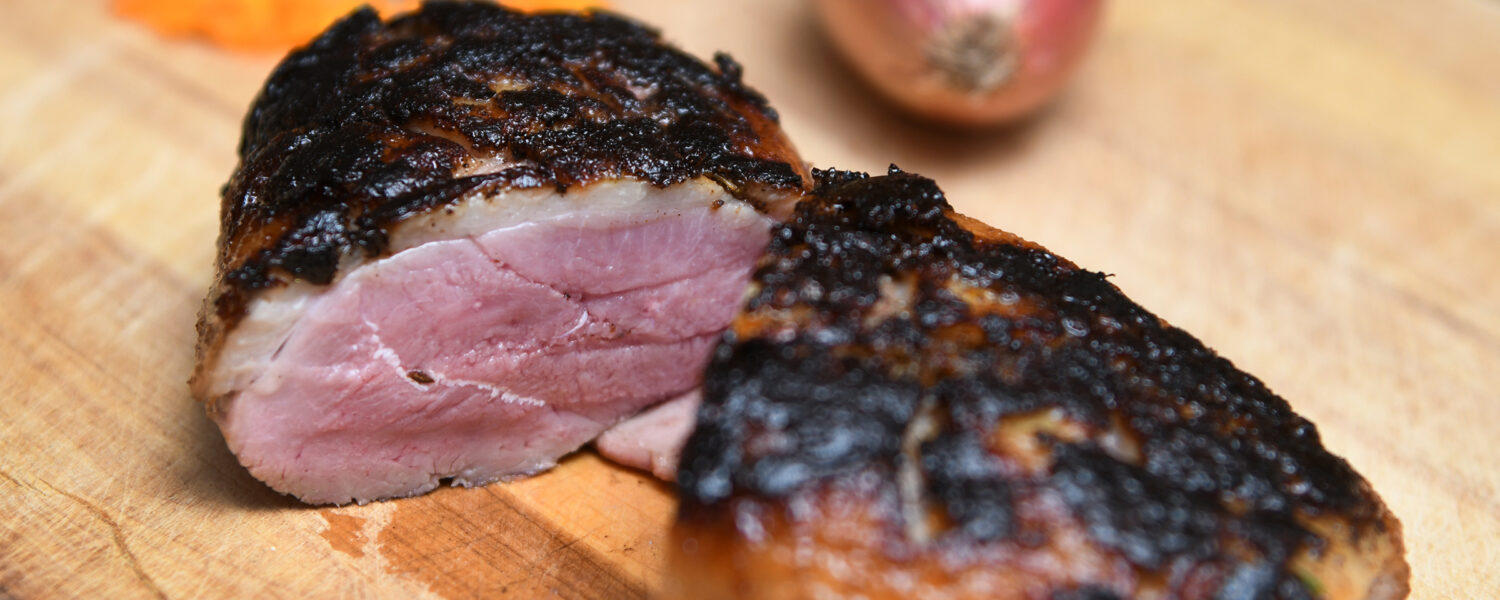
4. Cook the duck: Preheat the oven to 450°F. Heat a cast-iron skillet over high heat. Place the duck breasts fat-side down in the hot, dry skillet and sear for about 1–1½ minutes, until the fat renders and the skin starts to brown. Transfer the skillet to the oven and cook for about 2½ minutes. Carefully turn the duck breasts over (ensure the fat layer releases cleanly and is nicely browned) and cook for another 2–2½ minutes. Remove from the oven and transfer the duck to a platter. Let rest for 5 minutes (this is key).
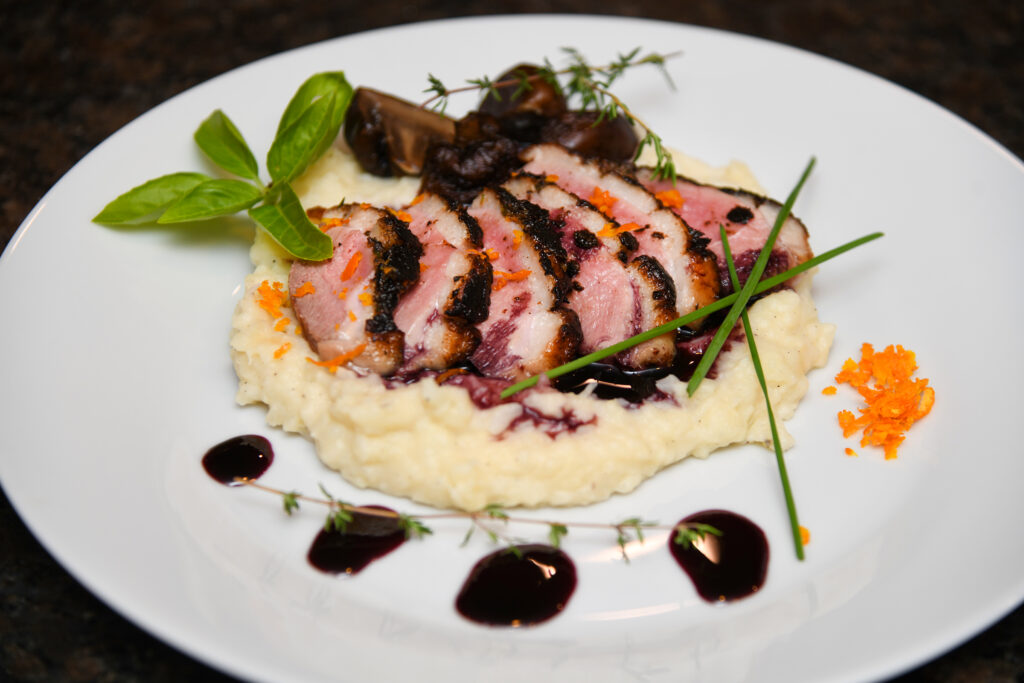
5. Finish and serve: While the duck rests, gently reheat the Port reduction. Slice the duck and arrange on plates. Spoon the warm Port reduction over and around the duck.
Serve with: cauliflower and celery-root mash, potatoes, rice, or your favorite vegetable side.
You can make the Port reduction ahead and store it in a tightly sealed container in the refrigerator for up to one month.
Published in the Anniversary 2026 Edition.

Add comment