

The City of Lights Opens Its Arms
To A Local Family Making Their First Visit
Story/Photography by Matthew St. Amand
Within seconds of entering the crowded room—a space large enough to accommodate a wedding reception—my family was separated from one another.
Amid the jostling bodies, my wife and youngest son were shoved a few metres ahead of me and my eldest son; the increasingly unruly mob forcing its way toward the woman positioned at the front of the room.
One might have thought Taylor Swift stood there handing out one-thousand-Euro notes wrapped in hair scarves she’d worn during her last concert tour. In fact, the woman at the front of this room in the Musée du Louvre was Leonardo da Vinci’s Mona Lisa. Luckily for me, my favourite da Vinci painting, Saint John the Baptist, was outside the room, across the corridor, and not the subject of such unhinged adoration.
The Louvre feels like a city—a 60,600 square-metre mythic metropolis with a population of approximately 500,000 with 35,000 of its denizens (works) on display at any given time.
The kaleidoscope of masterpieces is mesmerizing: religious paintings dating back to the 1300s, massive canvases by masters of the Middle Ages, artefacts from ancient Egypt, Greece, and Rome; the Venus de Milo sculpture has nearly as many admirers as the Mona Lisa. To my mind, the most haunting and enigmatic piece is the headless, armless sculpture, The Winged Victory of Samothrace, exhibited at the top of the Daru Staircase. There is something almost sinister about its incompleteness, as though if it were fully intact, it would be too much to behold.
That visit to the Louvre, and more than a dozen other historic and cultural sites around Paris, France, was the culmination of a year’s planning.
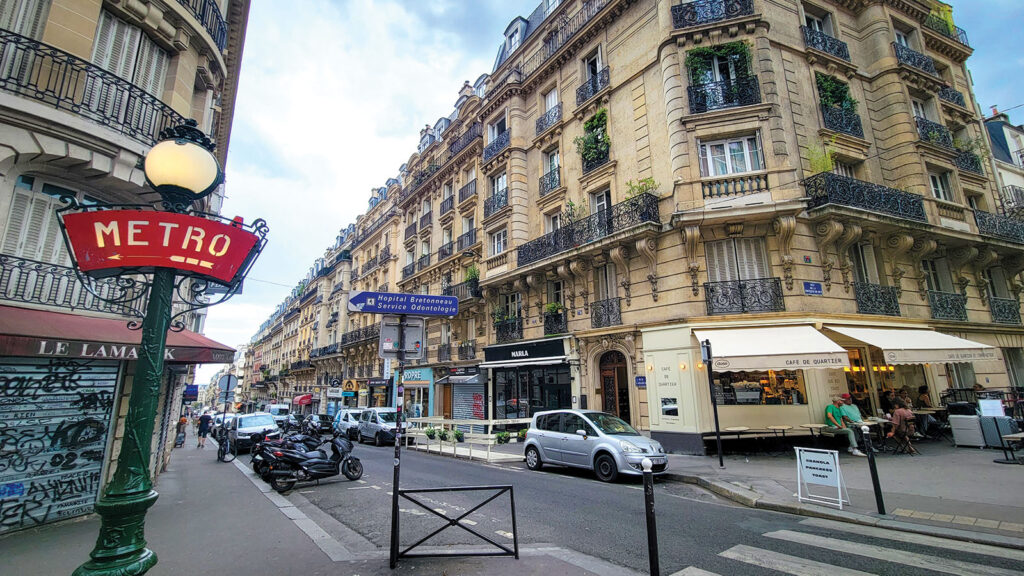
We arrived in the City of Light on August 1, excited and jet lagged. The following morning, we took the Metro into Paris proper, emerging near the Louvre. The city is preternaturally beautiful.
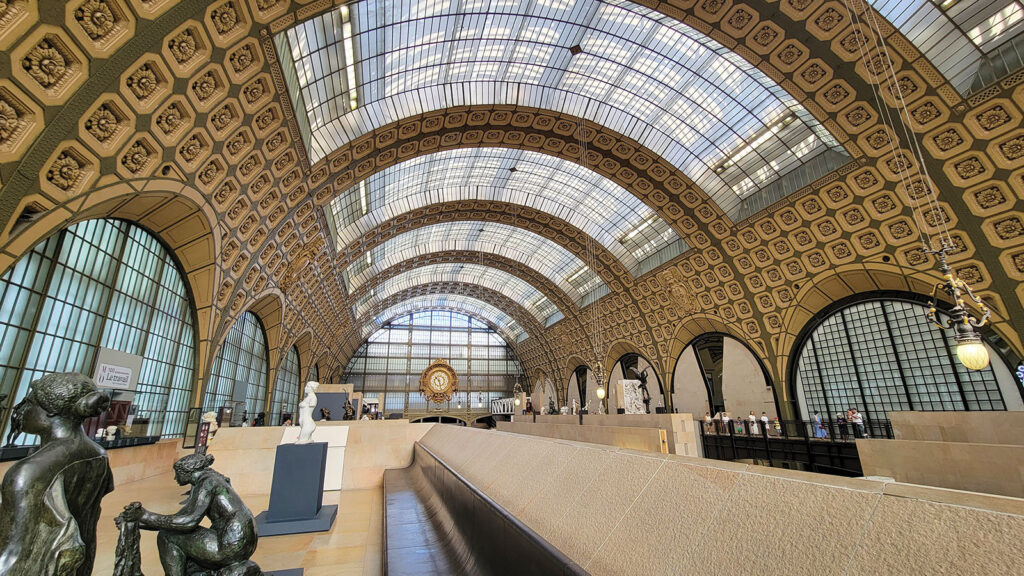
The first adventure my wife booked was a “hop-on/hop-off” bus tour, which allowed us to see the sights without wearing ourselves out: Avenue des Champs-Élysées, the 3,000-year-old Luxor Obelisks, the Arc de Triomphe, scenic café-lined avenues, the Seine River, Notre-Dame de Paris, the Musée d’Orsay—all before we exited the bus for the first time.
Paris was hot. It was crowded. Nothing stopped us.
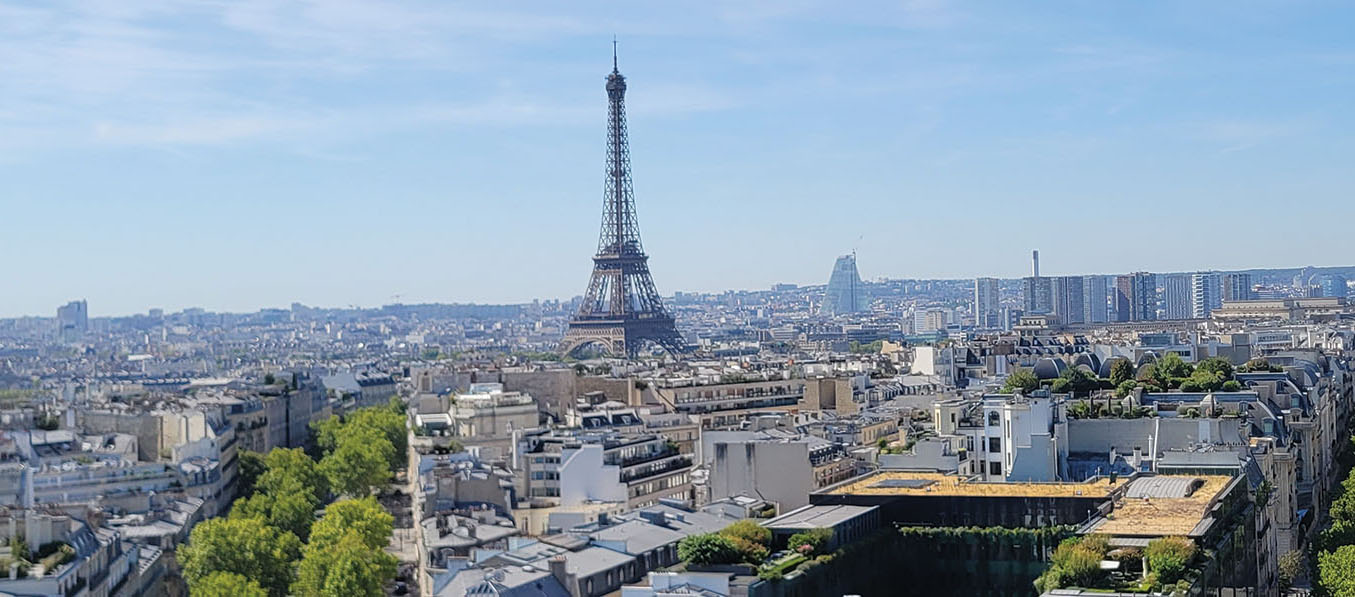
Not even the 674 stairs leading up to the second level of the Eiffel Tower on a 90-degree day. The view was worth the climb. Our entire vacation lay sprawled before us: Sacré-Cœur Basilica of Montmartre stood in the distance, the royal chapel Sainte-Chapelle, the Cathedral of Notre Dame, the Seine River and the myriad marvels lining its banks stretched into the distance. Some brave souls continued by elevator to the very top of the tower. After seeing all we could see, we took a breath and descended those 674 stairs.
Our visit offered the perfect combination of landmarks, art galleries, and what I refer to as “The Museum of Contemporary Life”—simply walking the streets and boulevards observing the pulse and thrall of Paris. According to Momentum Magazine, bicycle’s now out-number automobiles in Paris. It sure keeps a pedestrian on his toes dodging two layers of traffic.
Although the city is eminently walkable, my wife did a masterful job guiding us through the Paris Metro. One of our farthest forays was to Père Lachaise Cemetery, final resting place for countless historic figures, such as Oscar Wilde, Frederic Chopin, Gertrude Stein and Jim Morrison. More than 70,000 graves are spread across 44 hectares. Père Lachaise is its own world, surreal and overwhelming in its profusion of haunting statuary and elaborate crypts. One could become hopelessly lost among the winding thoroughfares and small lanes spiderwebbing between the endless array of mausoleums and sepulchres. It’s a busy place for a necropolis. Visiting Jim Morrison’s grave was a sombre highlight I could not miss.
It was interesting to contrast the cemetery’s chaos with the soaring solemn interiors of Notre Dame and Sainte-Chapelle. Notre Dame is fully restored after suffering a catastrophic fire in 2019 that destroyed its spire and roof and caused extensive interior damage. Construction of the cathedral first began in 1163. Its history is palpable, evoked through an amazing collection of paintings, sculptures, stained glass windows and the structure’s very architecture. Among Notre Dame’s notable relics: the crown of thorns said to have been worn by Jesus Christ, a piece of the original cross, and one of the nails used in the Crucifixion.
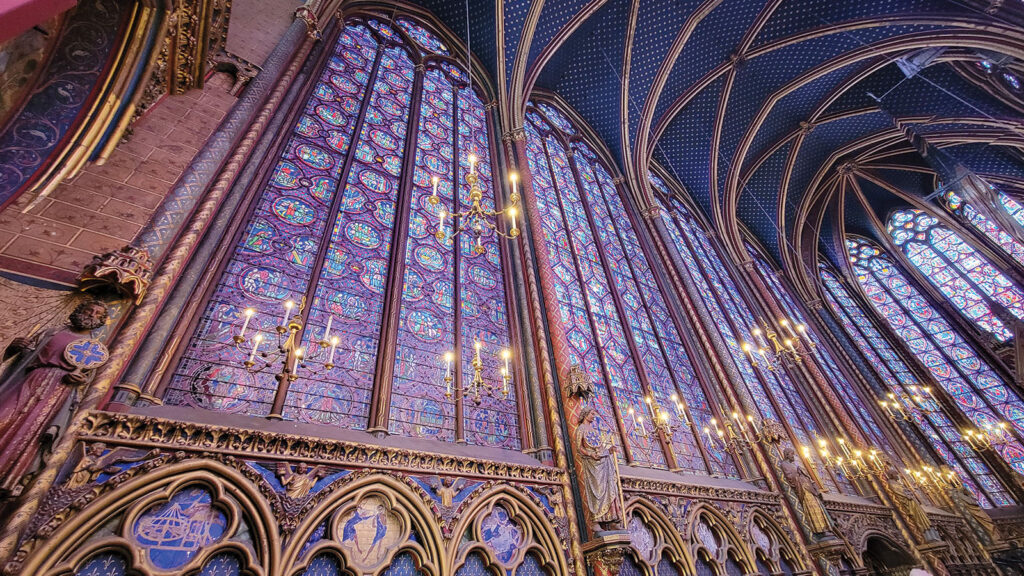
The royal chapel of Sainte-Chapelle is not to be outdone, adorned with 1,113 stained glass windows and its trove of relics. Although much smaller than Notre Dame, its architecture is nonetheless awe-inspiring. It made for an interesting comparison, days later, seeing the stained-glass dome at the center of the shopping mall, Galeries Lafayette Paris, which rivalled that found at religious sites around the city.
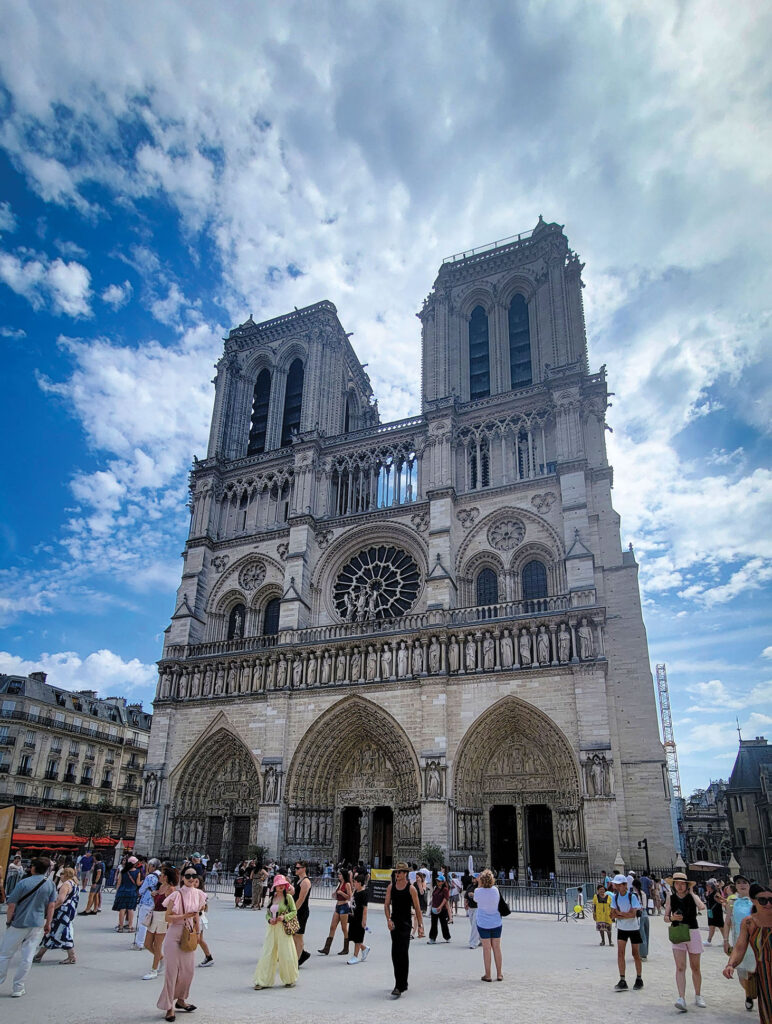
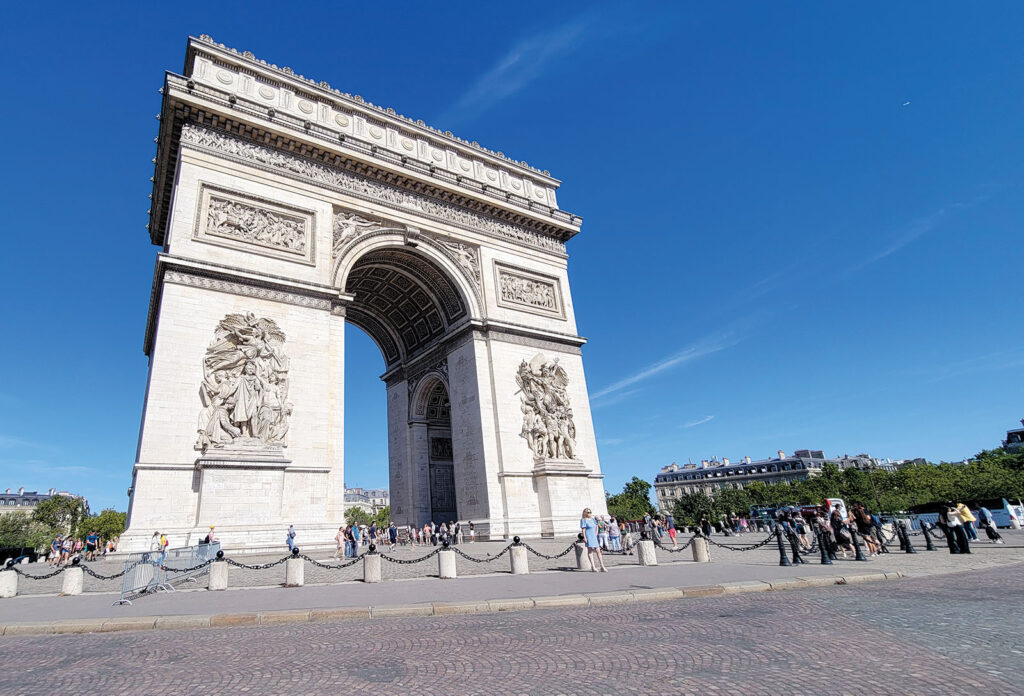
The Arc de Triomphe de l’Étoile was commissioned by Napoleon in 1806 after the victory at Austerlitz. What is most impressive about this monument? Its sheer size? Or the intricate friezes and sculptures depicting military victories adorning its piers? At six metres in height, the sculpted figures burst forth from the piers. My wife had tickets for us to climb to the top of this monument. There, we beheld a view of Paris rivaled only by that seen from the Eiffel Tower; a panoramic view from the center of twelve avenues leading away from the Place Charles de Gaulle-Etoile like spokes from the center of a wheel.
One particular highlight was a night cruise along the Seine River. If ever there is a city that comes alive at night, it is Paris. The city’s gems are beautiful in the daylight, but at night, cast by electric light, by moonlight, the city becomes otherworldly—recreated in light and shadow, a masterpiece rivalling anything found in its galleries or museums. It seemed that more people came out at night. Life teemed along the Seine: I captured video of two guys on e-bikes being pursued by police; a guitarist seated beneath one of the bridges, its arch curving above him like a cathedral ceiling. We passed a samba dance party. Soon after we passed a group ballroom dancing. And then to see the jewel of the city: the Eiffel Tower fully illuminated against the night sky. Breathtaking.
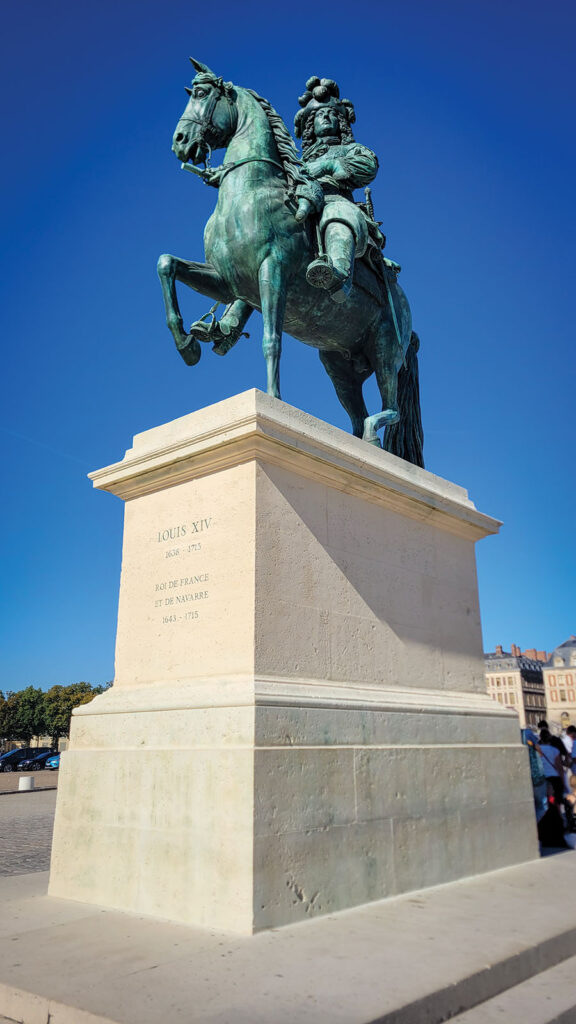
The moment we stepped into the Palace of Versailles, home to French royalty for centuries, we perfectly understood why the 1789 French Revolution occurred. The palace is opulent beyond all opulence. Even its chapel is a blinding display of wealth and architecture as art, grabbing the eye of the beholder and pulling it in all directions—the scenes painted across the ceiling, the soaring pillars, devotional statuary, the elaborate gleaming pipe organ. The chapel is not so much a place of worship, but a place to be worshipped.
The splendor only increases throughout the massive complex, larger than the Louvre, once housing between 3,000 and 10,000 members of the royal family, courtiers and staff.
The centerpiece of Versailles is the Hall of Mirrors. It is like a Fabergé egg the size of a city block. If it was designed to stun the senses, the designers succeeded. No photograph does it justice. The human eye can hardly take it all in. And Paris itself is much the same way—no collection of words, no series of photographs conveys the actual experience. They hint at best.
My wife deserves all the credit for planning this transformative two-week visit to Paris. See how we spent each day in the City of Light by checking out the blog posts I wrote at www.mattst.ca chronicling the entire experience.
Published in the Anniversary 2026 Edition.

Add comment