

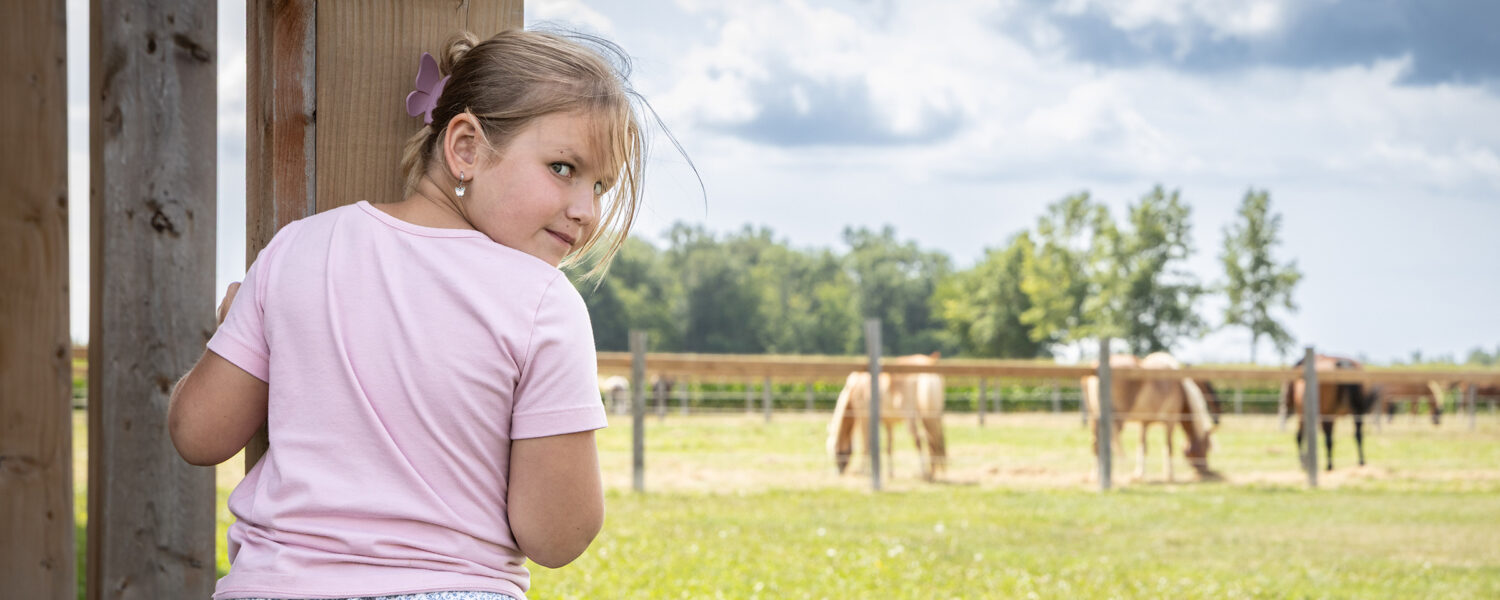
The Windsor-Essex Therapeutic Riding
Association (WETRA) and Their Programs
Story by Michael Seguin
Photography by Gene Schilling
Nothing is quite as arresting as standing before a horse. We all think we know these animals! Most of us grew up watching John Wayne movies, where they served as little more than cars on hooves. But the silver screen cannot prepare you for what it feels like to face one of these majestic creatures. They’re tall, muscular, shockingly imposing animals.
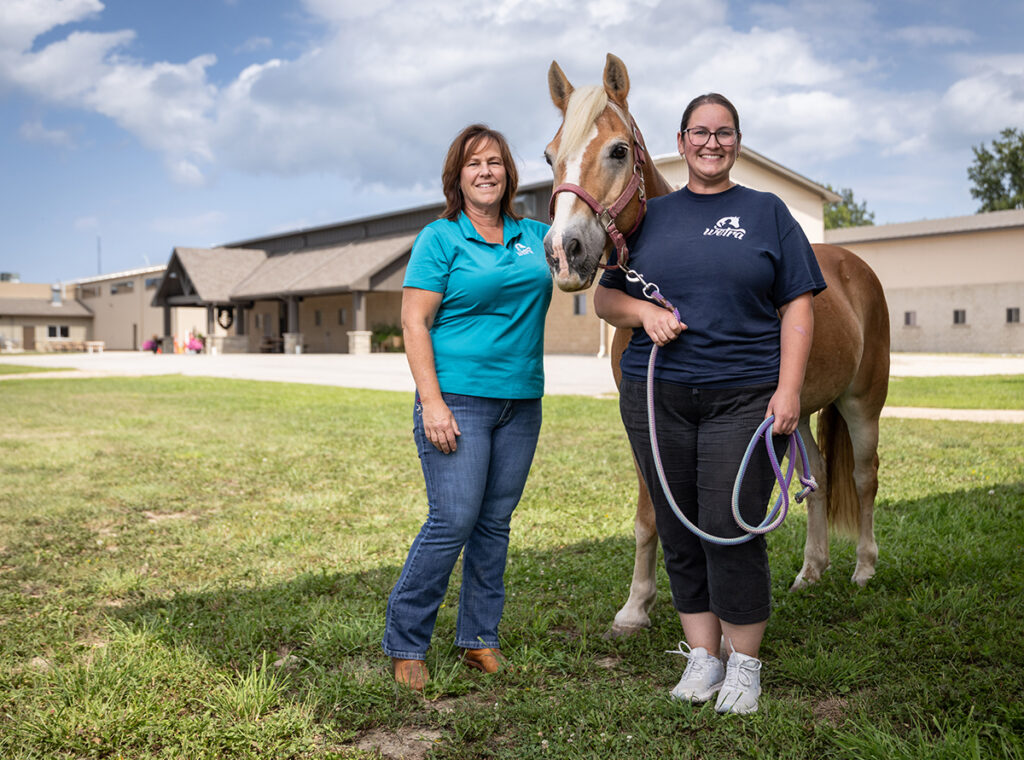
It’s difficult not to get the impression that they are staring down their nostrils at you.
But peer a little closer and look into their eyes and you’ll be struck by the sheer gentleness you see staring back at you.
These are the kind of experiences that the Windsor-Essex Therapeutic Riding Association (WETRA) aims to provide.
“Horses mirror our emotions and give us immediate feedback,” Becky Mills, Transition Advisor to the new Executive Director, explains. “That can help a person become more aware of their own emotional state and how they’re affecting the world around them. The benefits of working with these creatures cannot be overstated.”
Back in the 1960s, Windsor radiologist Dr. Elmer Butt observed horses being used for therapy with children who had physical disabilities while on a trip to England. He ferried the idea back across the Pond and in 1971, hosted the first meeting of what would eventually become the Windsor Association of Riding for the Handicapped (W.A.R.H). Later, to better reflect the area his organization serves, W.A.R.H. was rechristened as WETRA in 1995.
Now, nearly 200 persons with disabilities receive therapy at the ranch at 3323 North Malden Road each week—about 80% of those are children with developmental, emotional or physical disabilities.
“Over time, the amount of our services we offer has exploded,” Becky states. “We work with people with physical limitations, as riding can help build mobility in their limbs and their core strength. We also work with a lot of children and adults who are neurodivergent or have emotional needs.”
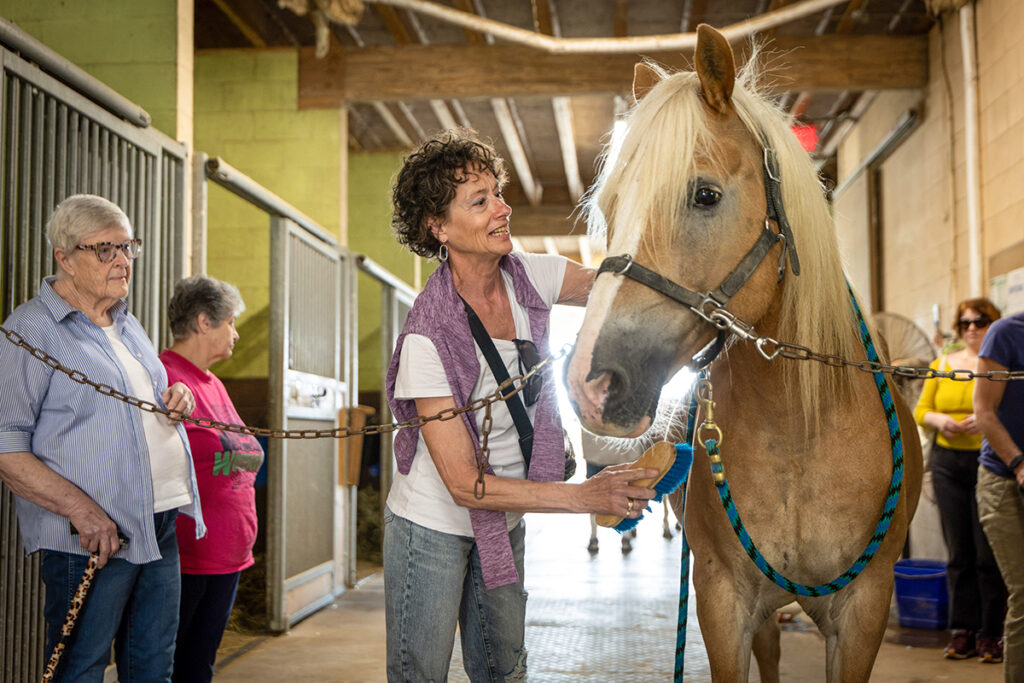
On any given day, any number of community members and professionals can be found at WETRA’s stables, including occupational therapists and mental health practitioners.
“Horses are immensely intuitive,” Becky explains. “They’re such a fun animal to be around. Working with them represents a great opportunity to come out to our farm and engage in some physical therapy or cognitive reprogramming with them. Children. Adults. Volunteers. They’re all very receptive to learning from the horses. That’s what we do. We’re a service that meets a need.”
Anyone who has ever mounted a horse will attest to how sensitive and how loving these creatures can be.
“They’re herd animals,” Becky stresses. “Their inherent need is to be with others. They respond generously to emotion. They don’t focus on what happened five minutes ago. Their gaze is squarely trained on what’s happening right now. This encourages people to be incredibly focused and aware of their own bodies. You can feel truly at ease in their presence.”
If you’re perhaps feeling a bit down, a horse will intuitively sense your emotional state and respond with calmness. Conversely, if you’re feeling distressed, the horse will pick up on that energy and respond accordingly, creating an opportunity for you to redirect your energy toward a calmer state.
As well, nothing can prepare you for the experience of your first ride. Once you swing up into the saddle, you and the horse suddenly become one. You feel elevated—the wind in your hair, the sun on your face.
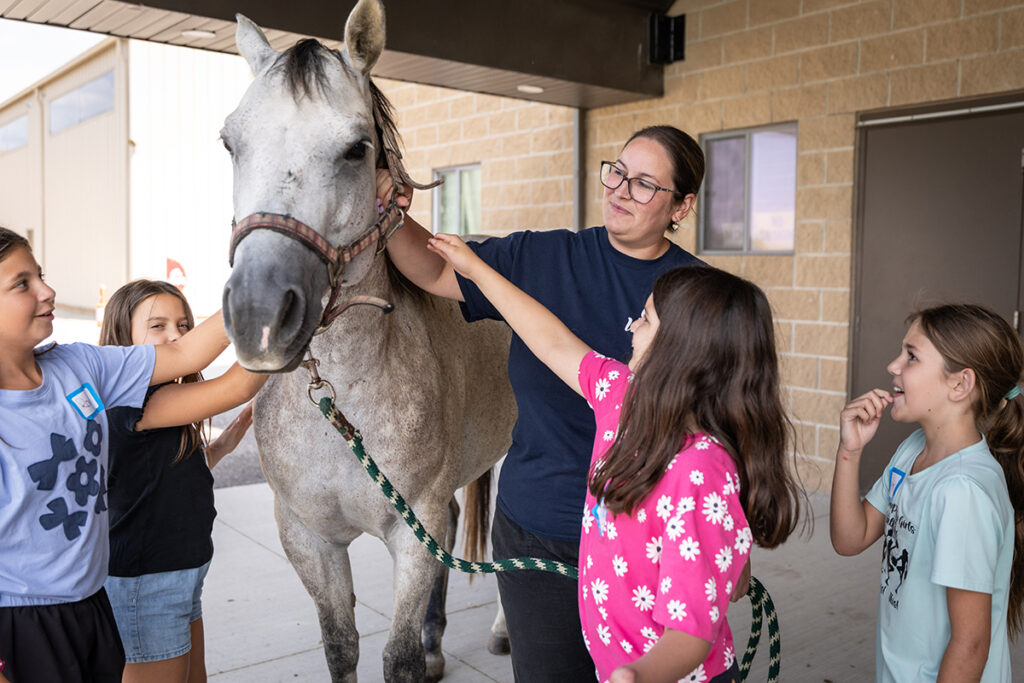
The sense of strength and control the horse gives you lingers for weeks afterwards.
“It’s remarkable the benefits our riders leave with,” Becky states. “We’ve had riders who were putting on a brave face but needed more confidence. Our volunteers were able to help them with that. Then hopefully they can take that same confidence out into the world with them. As well, the process of building a horse’s trust takes time, and that process can teach patience, confidence and self-awareness.”
Over the past two decades, Becky has witnessed countless examples of these positive developments firsthand.
“Everyone who is unfamiliar with horses is naturally a bit reserved at first,” Becky explains. “It’s not hard to see why—they’re a very large animal. What I’ve found over the years is that working with a horse for only a few sessions provides an enormous sense of confidence. Beyond that, they make friends with the other volunteers or their fellow classmates.”
While all these dramatic turnarounds mean the world to Becky, she recalls a recent example with a young autistic boy.
“We had a young boy attend one of our programs this summer,” Becky states. “He started out extremely afraid of the horses. He was adamant that he wouldn’t be in the presence of one. But now, he can’t wait to ride! He arrives, says hello to the volunteers and asks who he’s working with today! He struggles with articulating his emotions, so the horse keeps him grounded and focused.”
Paige Shepley, the program’s new Director, encourages anyone interested in WETRA’s history or programs to contact the farm.
WETRA is always searching for new volunteers to help with their programs and their horses.
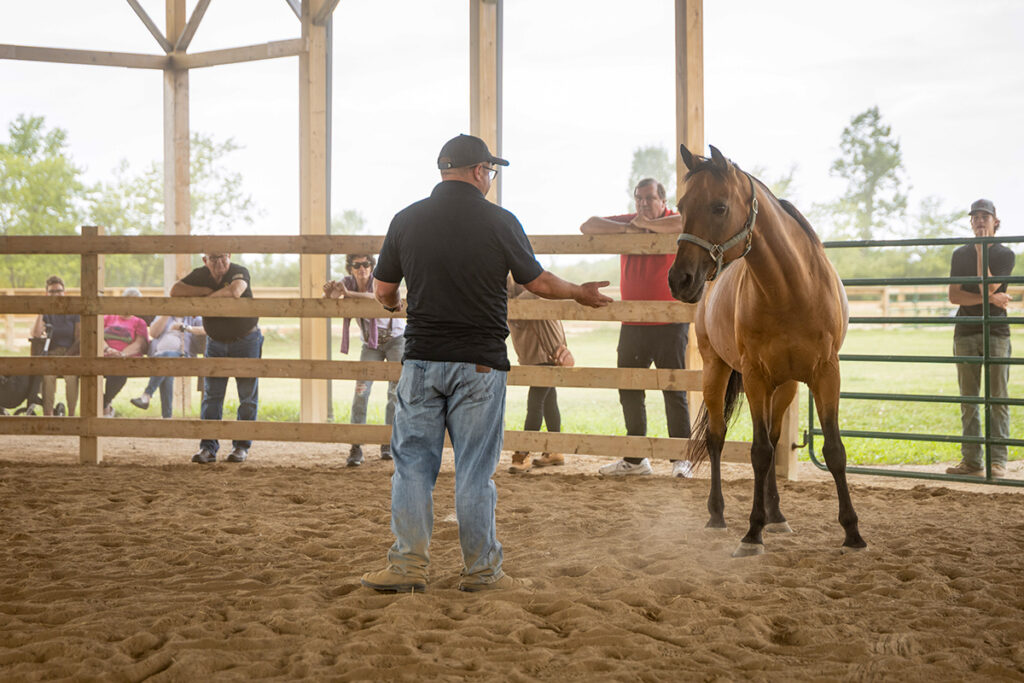
“We can’t run these amazing programs without volunteer support,” Paige states. “Considering the demographic that we’re serving, people always need assistance—in every possible facet. Our volunteers are the lifeblood of what we do. They help prepare the horses for our guests and support the instructors. We particularly need volunteers during the summer months or during busy after school times. There are also things like farm maintenance and fundraisers that we need assistance with.”
As well, WETRA runs a range of exciting annual events, including Hogs for Horses (in association with the Iron Horse Motorcycle Club), the WETRA Annual Ride-a-Thon, the Pony Up for WETRA 50/50 Raffle, the WETRA Annual Fall Fair, the WETRA Annual Spring Fun Fair and the WETRA Charity Golf Tournament.
All potential volunteers are encouraged to fill out an application at wetra.ca. As well, more information about WETRA, their various programs or to help support them financially, are available at the same website.
Published in the Autumn 2026 Edition.

Add comment