

A Concert for the Ages That
Turned Out to be a Beautiful Mess
Story by Matthew St. Amand
Photography Courtesy of Mike Evans
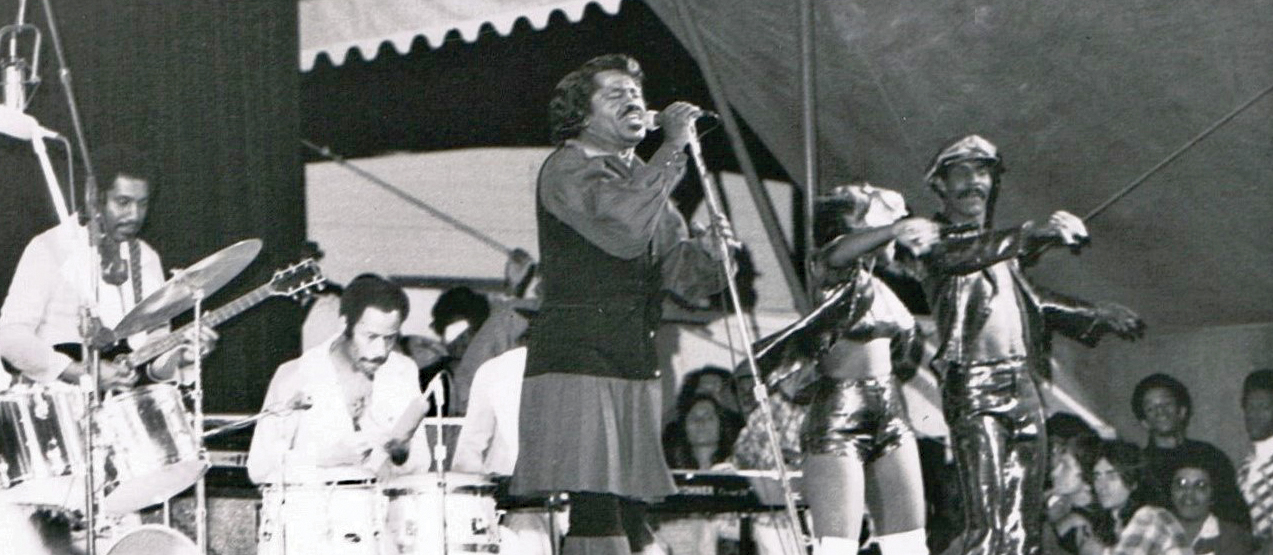
Do you remember the weekend that James Brown, BB King, John Lee Hooker, among other blues legends, performed in Windsor? Almost no one does. It happened September 6-8, Labour Day Weekend 1974. An upcoming documentary by Windsor historian and filmmaker, Mike Evans, tells the story of the Ann Arbor Blues Festival In Exile, which he describes as both a “concert for the ages” and a “beautiful mess”.
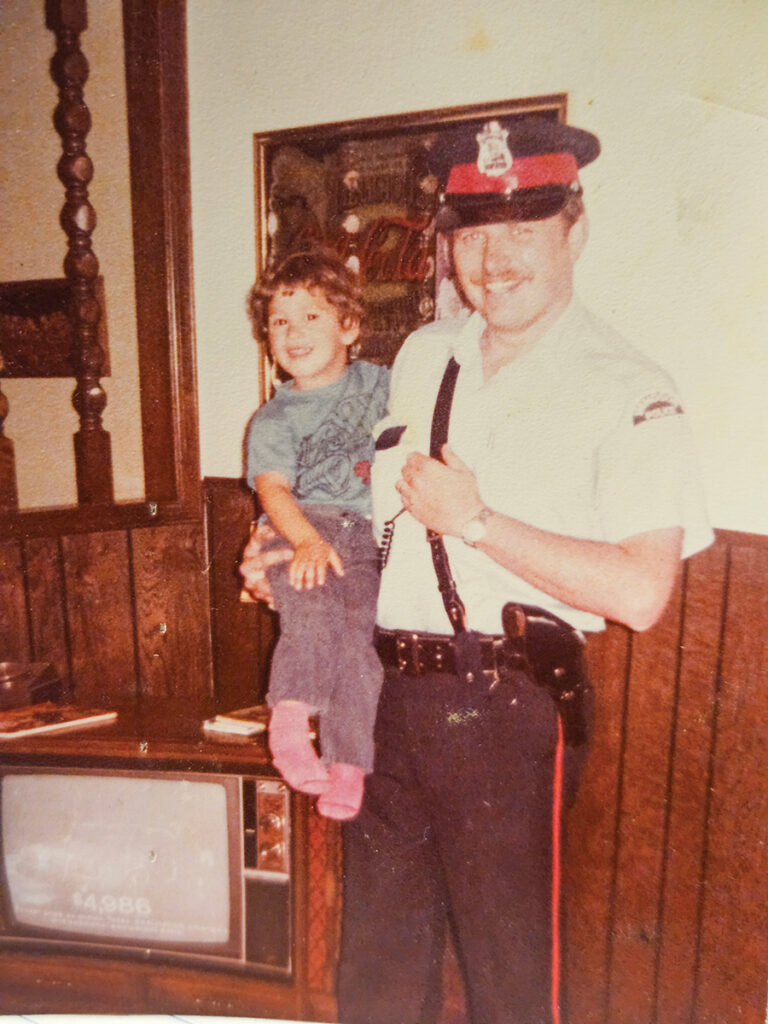
Mike first heard about the festival through his father, James Evans, a young Windsor Police constable at the time who was assigned to work the event.
“He wasn’t really a fan, it was just another weekend on the job for him,” Mike says.
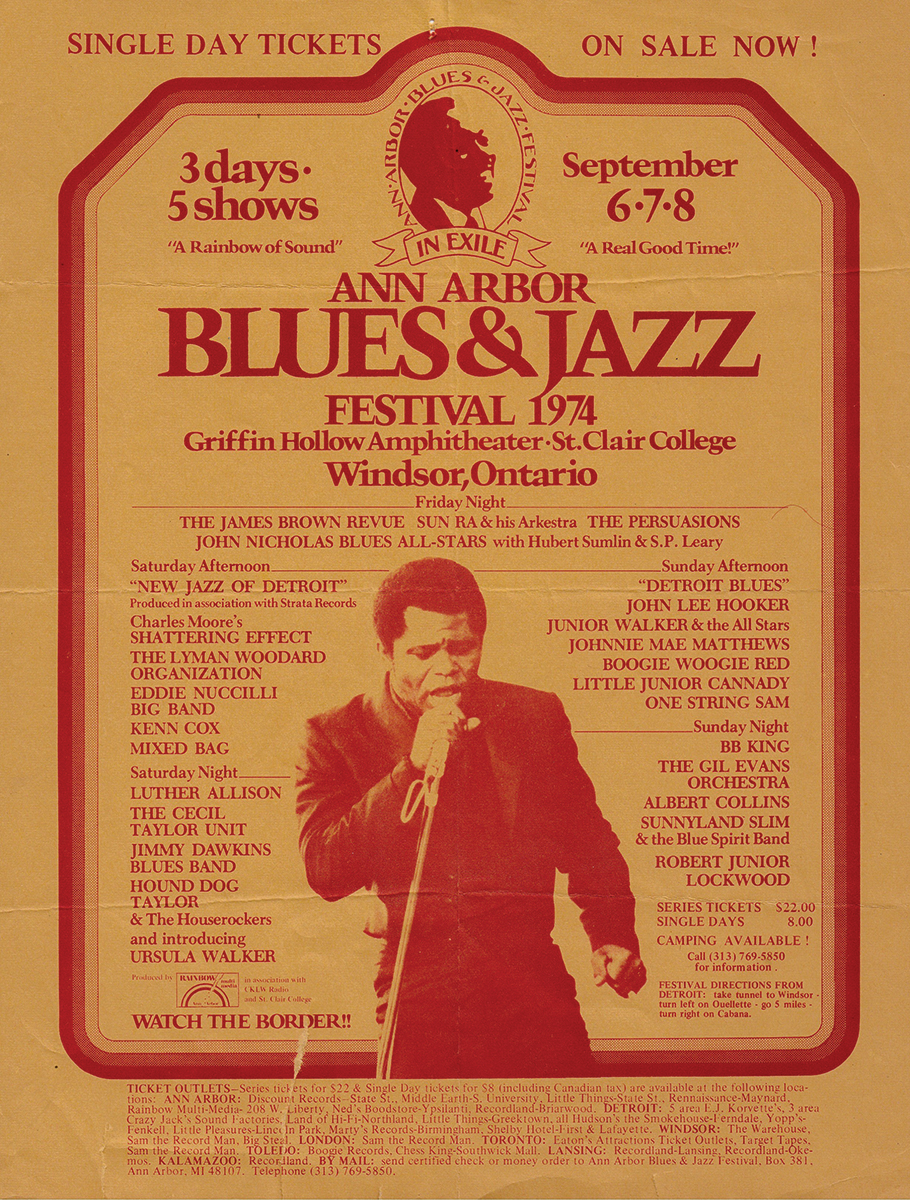
The real question is: How did a world-famous blues and jazz festival end up being re-located from Ann Arbor, Michigan to Windsor?
It’s a funny-not-so-funny story.
The Ann Arbor Blues Festival began in the late 1960s and featured acts such as Muddy Waters, Ray Charles, Count Basie and John Lee Hooker, among other blues legends.
“By 1973, the festival had worn out its welcome in Ann Arbor,” Mike explains in the documentary’s narration. “Problems with litter, drug use and other overconsumption gave the city of Ann Arbor cause to not allow the festival back in 1974.”
Festival organizers found themselves on the horns of a dilemma: cancel the event or find another venue. They decided to move the festival out of the United States entirely and stage it in Windsor at the St. Clair College Amphitheater, dubbed “Griffin Hollow”.
Mike Evans has been interested in Windsor history for most of his life. In 2009, he started the YouTube channel ‘It Happened In Windsor’, which has garnered nearly three million views. He features quirky, often forgotten history about the City of Windsor. He has been unable to tell the story of the Ann Arbor Blues Festival in Exile because he has never come across photos or film footage of the event—until now.
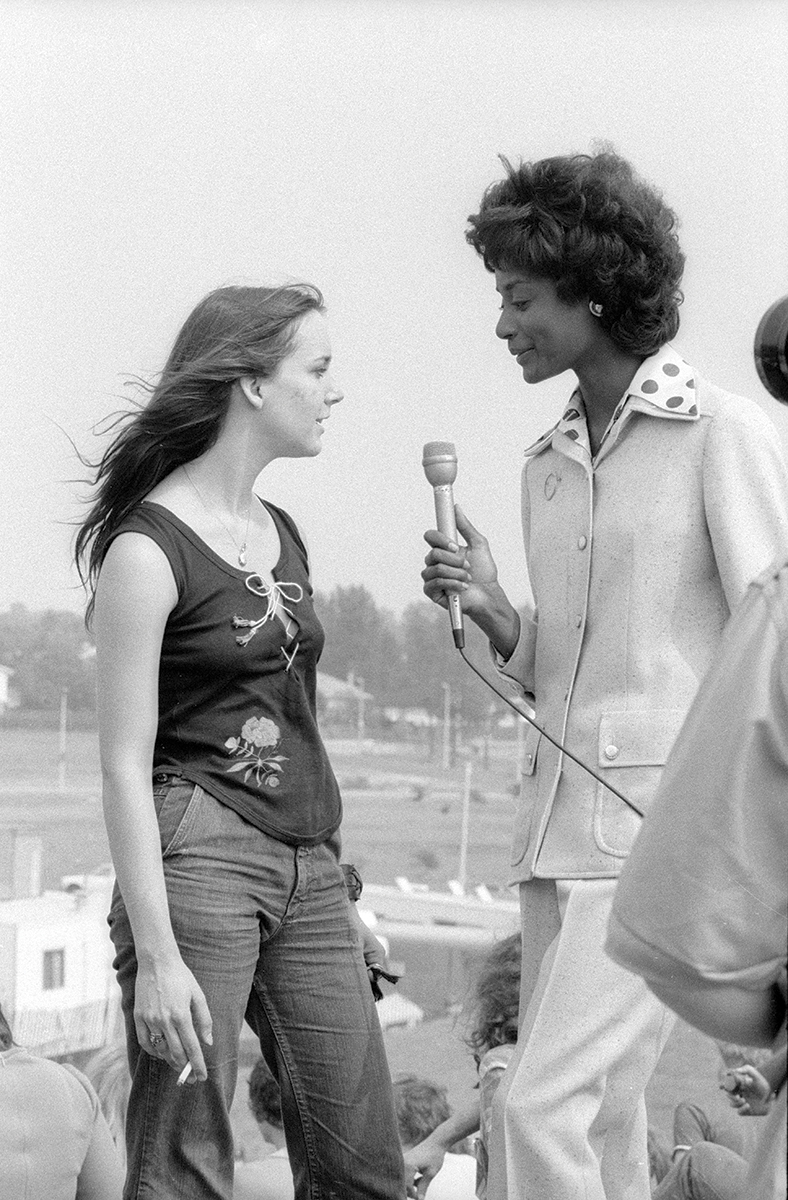
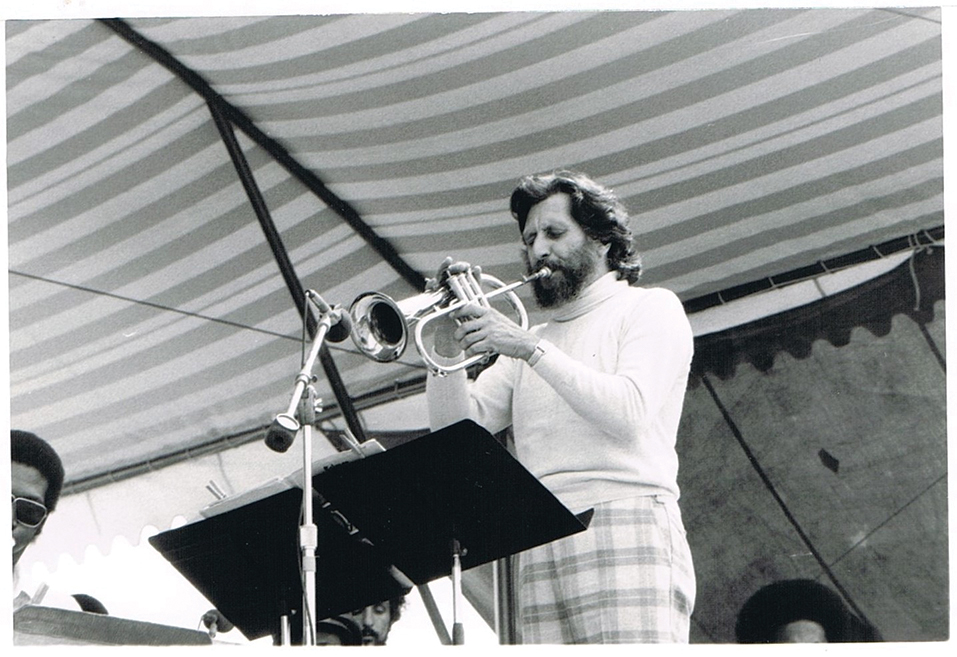
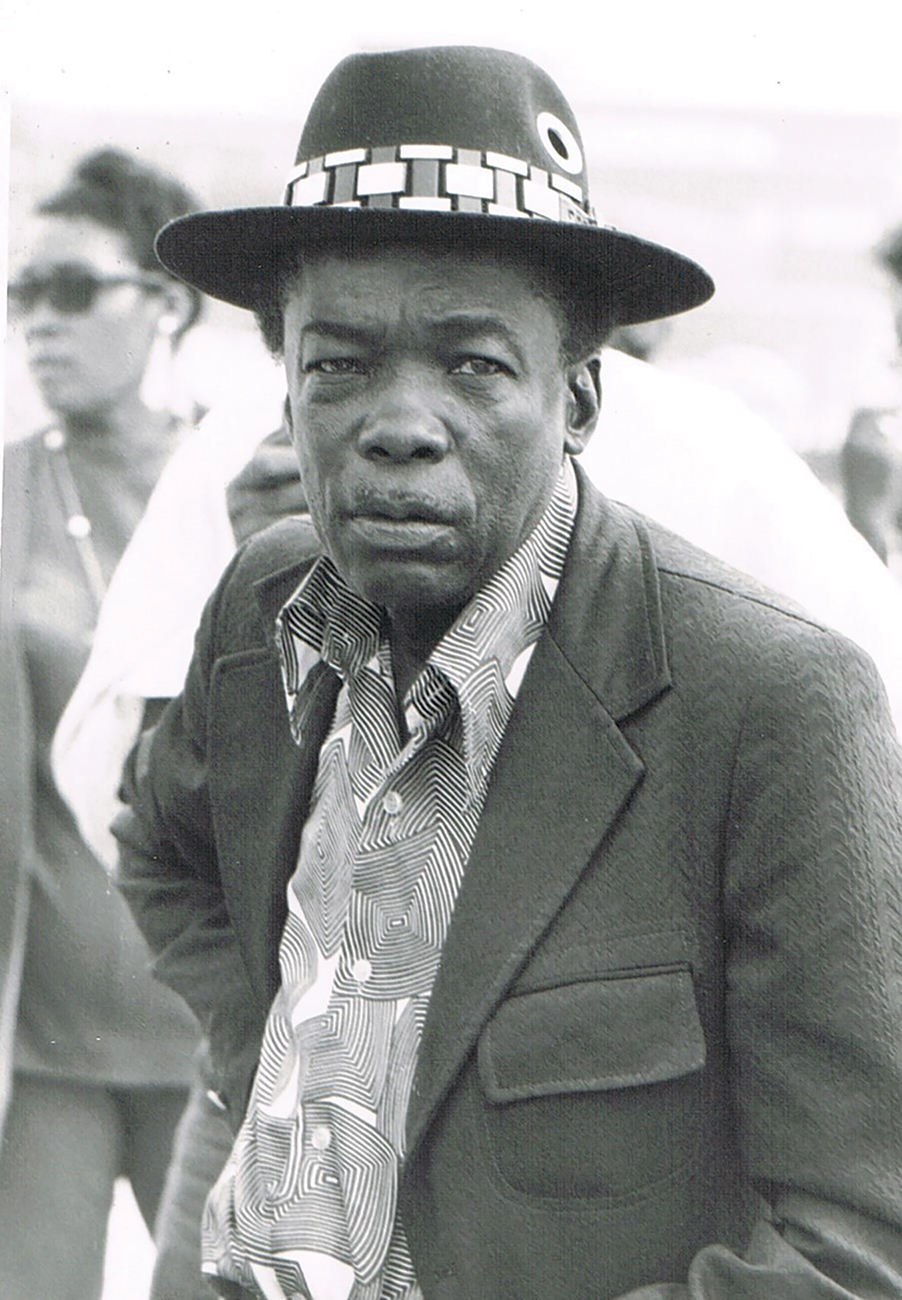
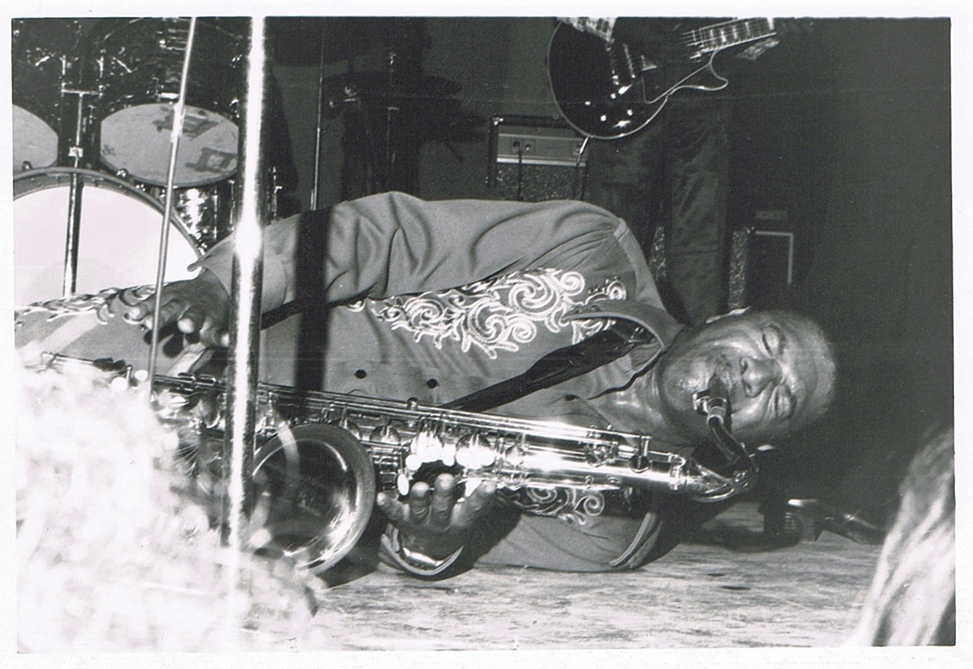
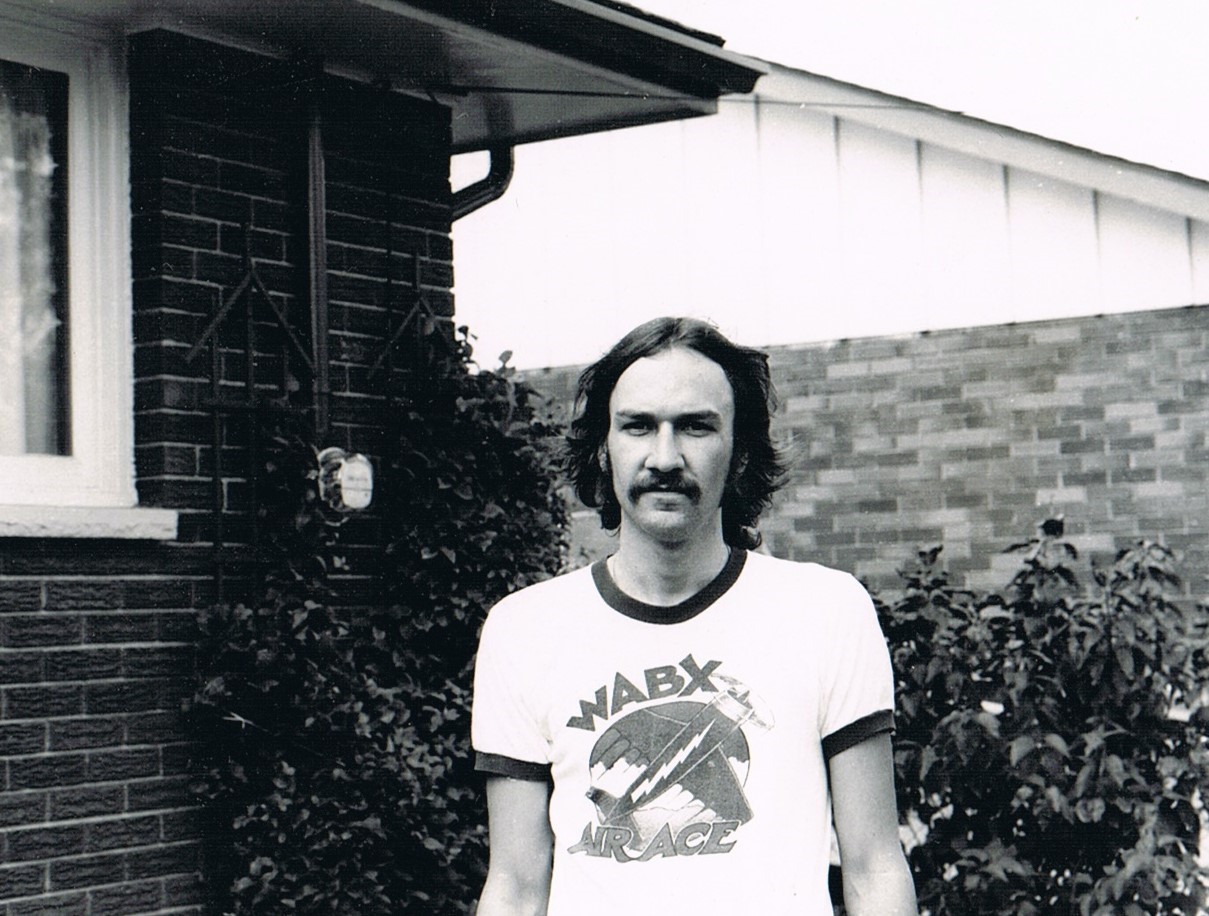
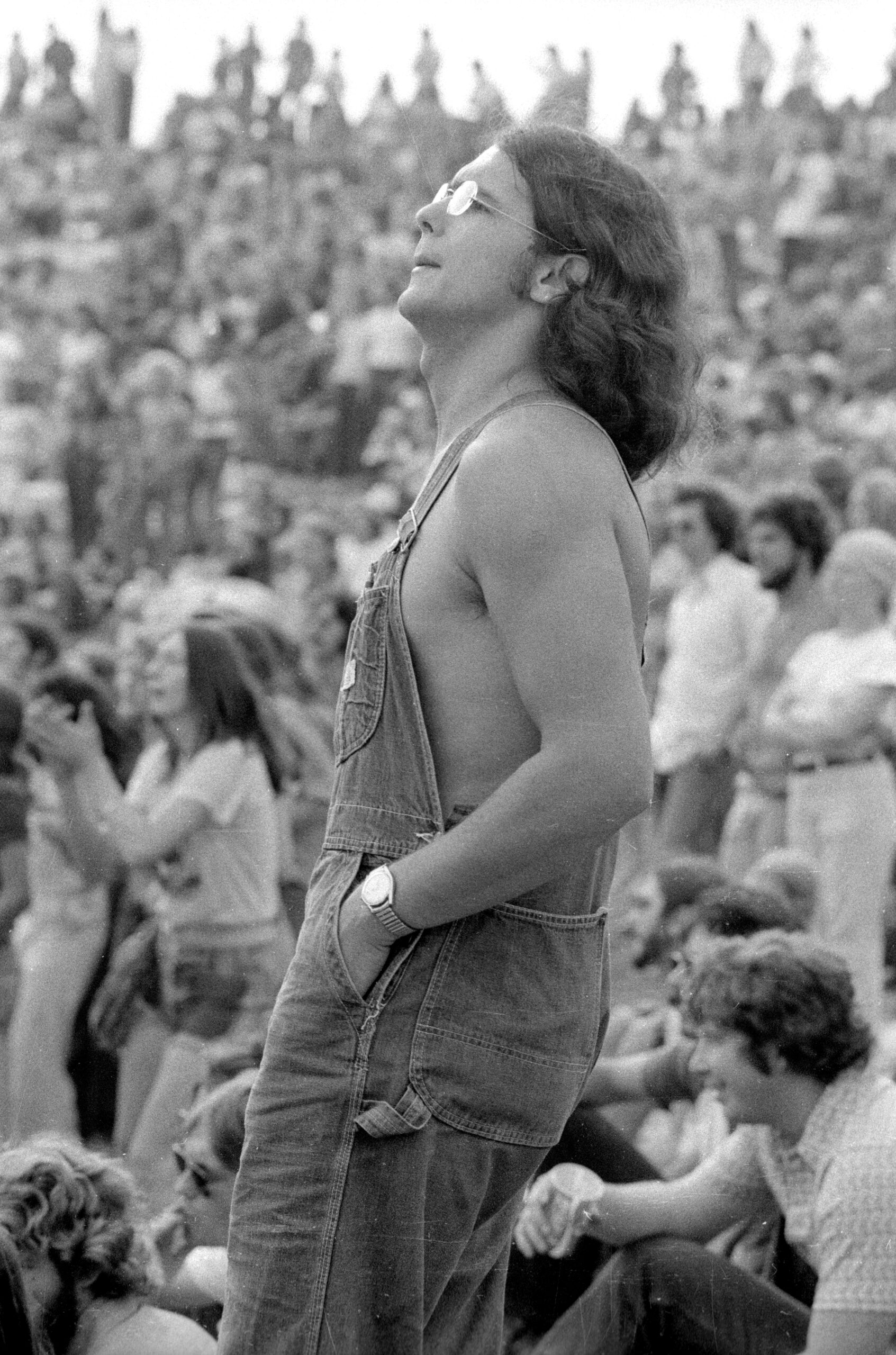
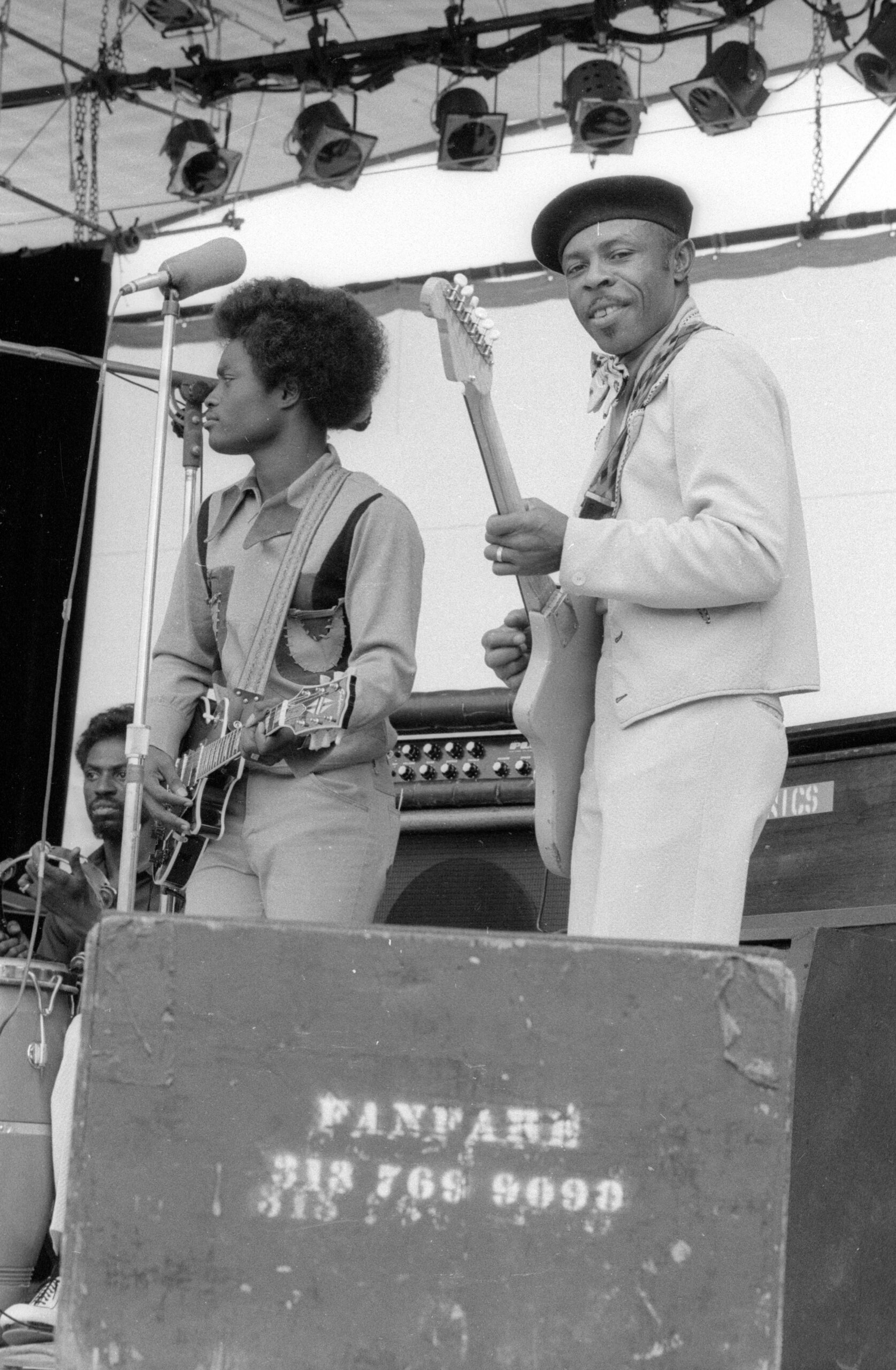
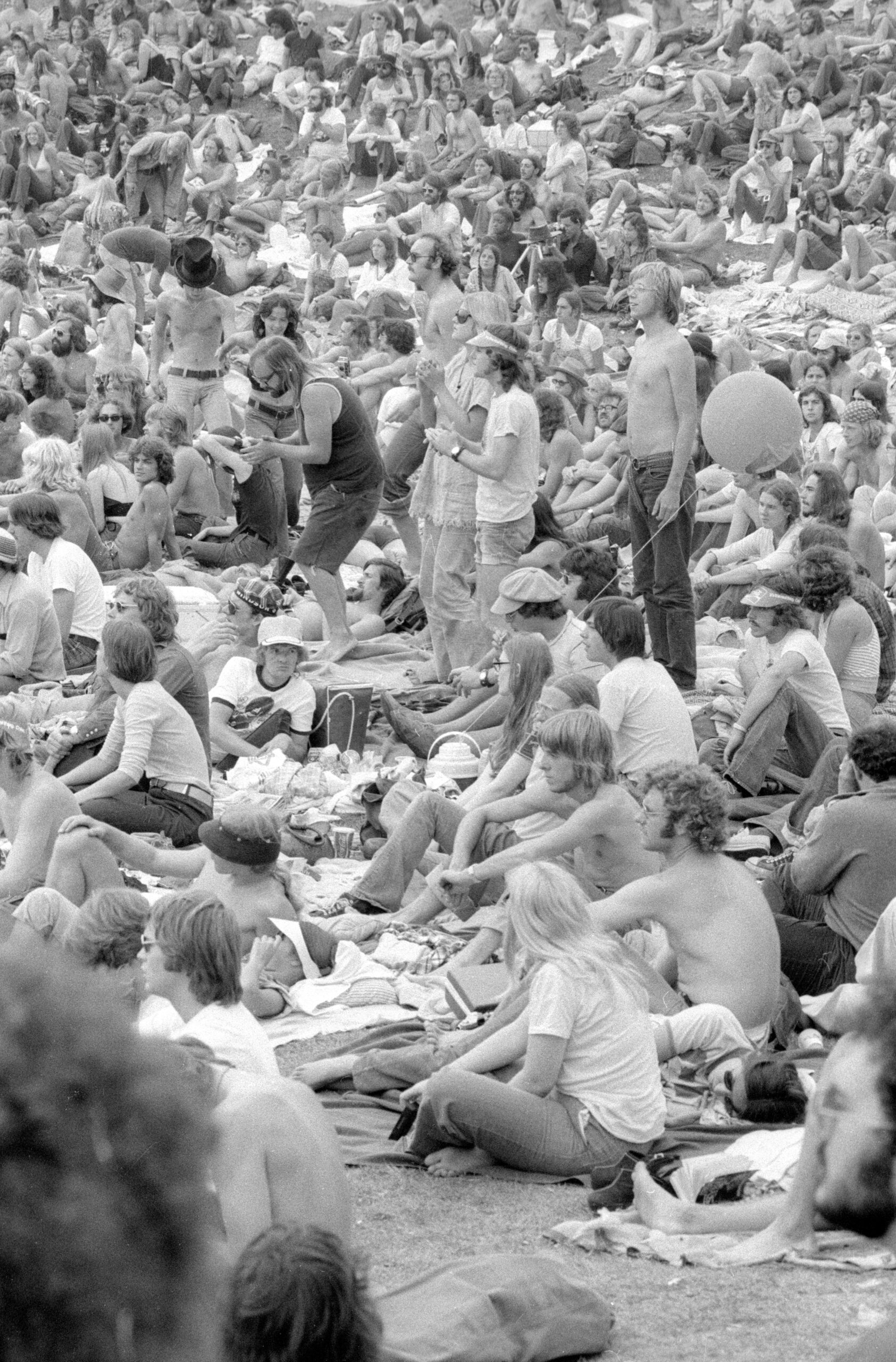
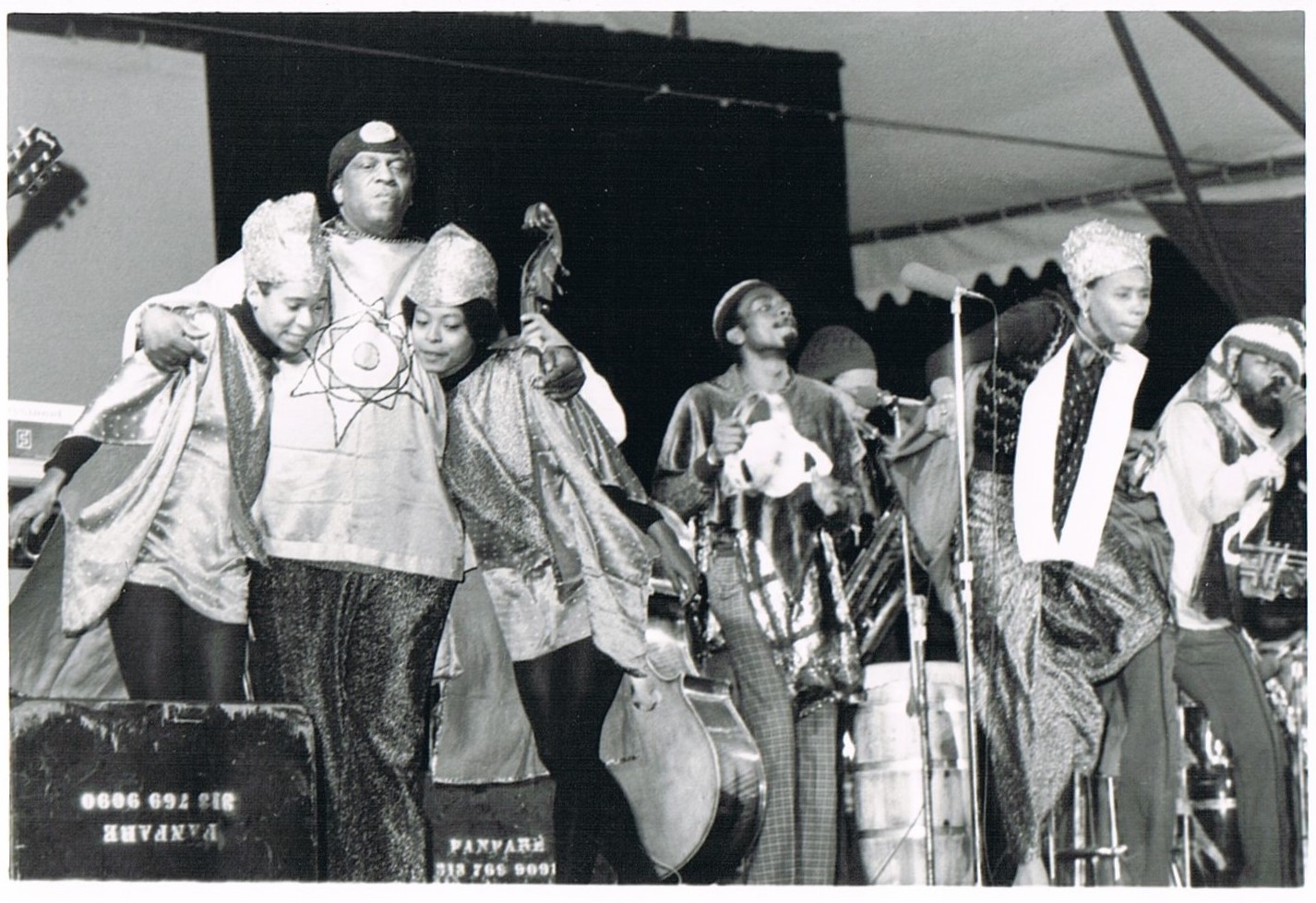
After reading about Mike’s YouTube channel in local media, Windsor resident Richard Benkendorf contacted him about giving him some old film canisters. During their conversation when Mike picked up the canisters, the subject of the Ann Arbor Blues Fest came up. It turned out that Richard had a trove of images of the event.
“Richard brought the photos up on his computer,” Mike recalls, “and we went through them one by one. And then we came to a wide shot and off to the side, I saw my father, in uniform, standing at the edge of the stage.”
Beyond the ways in which those photos would pave the way for a film project, the moment was profoundly personal. Mike lost his father in 2017.
This began a cascade of contact with people who had photographs of the Ann Arbor Blues Festival in Exile. In all, Mike came into possession of more than 200 photographs of the event. A documentary about the concert now seemed feasible.
The resulting project is a comprehensive look at this singular Windsor event.
Going by the photographs of the weekend, one could be forgiven for thinking it was a roaring success. Organizers, however, took a financial bath.
“The festival had always been popular,” Mike explains, “but it was never a money maker. When they brought it to Griffin Hollow, they had to sell out all three days in order to turn a profit. That’s a tall order for almost anyone!”
The John Nicholas Band opened the show Friday night, followed by The Persuasions, an acappella group known for their energetic performances. After The Persuasions pumped up the audience, Sun Ra and his Arkestra took the stage and would later release the recording of their show as a live album. In a September 20, 1974 review, a writer for the Ann Arbor Sun wrote: “The Arkestra played, chanted, sang and danced for a solid hour and took the howling crowd on a relatively brief tour of some of the nearer planets and stars.”
The reviewer was even more unhinged describing The James Brown Revue, which closed the opening night.
The audience was comprised mostly of Americans. Canadian border officials had been apprised of the festival and were proactive in their efforts to ensure no drugs crossed the border that weekend. One publication providing information to concert goers on where to stay in Windsor that Labour Day weekend informed readers: “Watch the Border! … Canadian and American customs officials have the legal right to search every micrometer of your body and vehicle…”
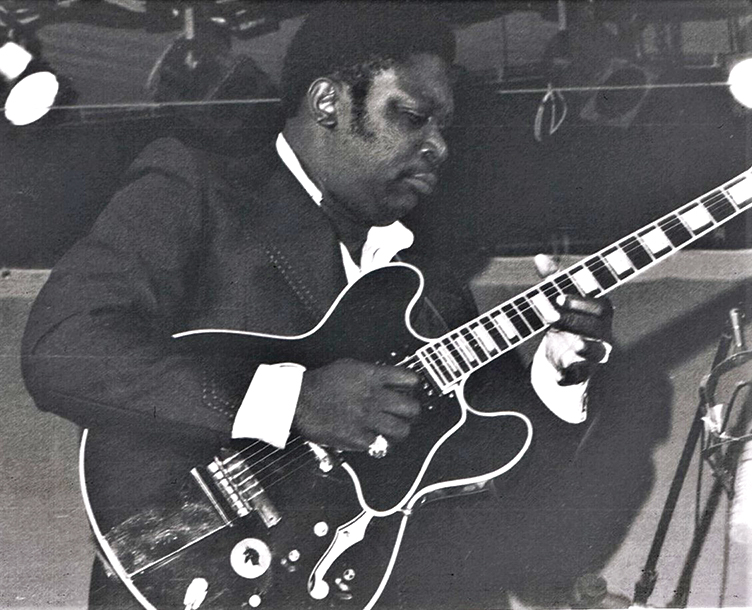
Strict scrutiny at the border coupled with a lack of advertising on the Canadian side of the Detroit River meant 90 percent of the audience at Griffin Hollow was American. Few Canadians attended. Which was a shame because it was a long weekend filled with great music: John Lee Hooker appeared on Saturday afternoon and BB King performed on Sunday night. There was also Johnnie Mae Matthews, one of two female performers to appear. Junior Walker and the All Stars were a surprise hit, Mike Evans notes in the narration—accompanied by excellent photographs of the performance: “Junior Walker got so into it that by the end of his set, he was laying on the stage playing his saxophone…”
Photographer Avery Wagg, interviewed in the documentary, recalls another interesting performance: “One String Sam was really good. He had to sit down too during his concert. He had a homemade one-string guitar… and he looked like about ninety…”
Mike’s narration explains that One String Sam was a Detroit musician who “played the diddley bow, a one-stringed instrument using an empty baby food jar as a slide.”
Plagued by poor attendance, noise complaints from residents in surrounding neighbourhoods, no alcohol being sold at the venue and a noticeable police presence at Griffin Hollow, the festival was a financial bust, but a genuine happening for Windsor. The festival should be legendary in local history, but it has mostly been forgotten.
Mike Evans’ documentary, Ann Arbor Blues Festival in Exile (1974), tells the story of this “beautiful mess” in full. The photos may be black-and-white, but the tale is pure Technicolour.
Mike is always searching for more photographs. In some pictures, people are seen holding movie cameras, so film footage was taken by someone… somewhere. It would add so much to the historical chronicle to unearth these.
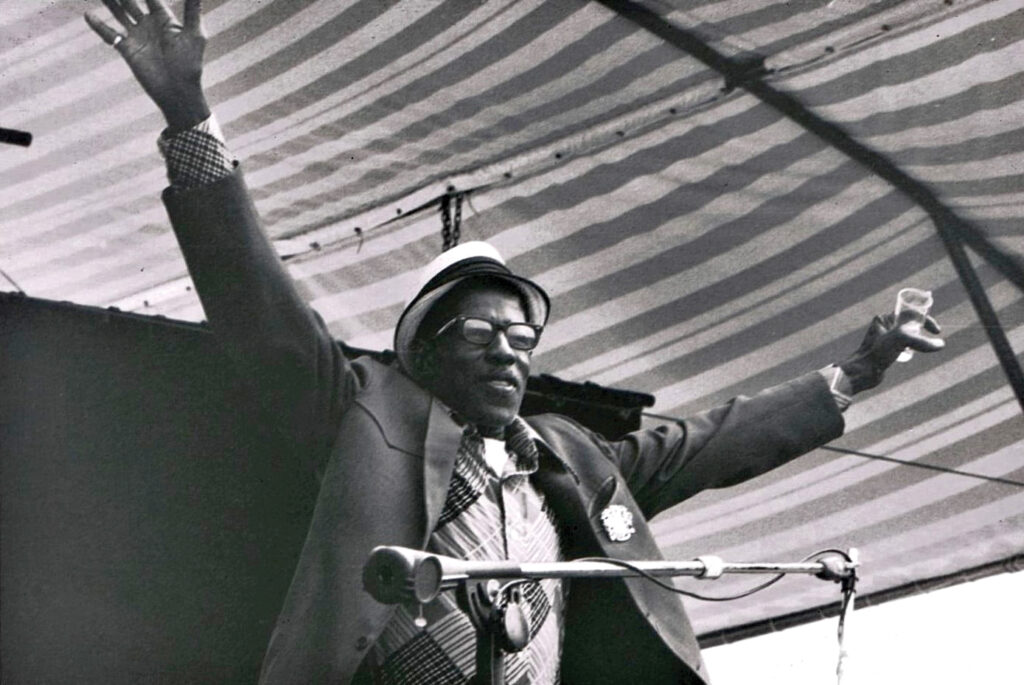
For the moment, local history buffs can view a tantalizing trailer. What upcoming projects does Mike have in the works?
“I’m working on a doc about the Grand Marais ditch,” he says,” and a longer video about the history of the Norwich block.”
Check out Mike’s work at ‘It Happened In Windsor’ on YouTube: youtube.com/@MikeEvansWindsor.
Published in the May/June 2026 Edition.

Add comment