

Graphic Novelist Looks Back on
His 25 Year Career in a New Memoir
Story by Matthew St. Amand
Photography by Janis Lempera
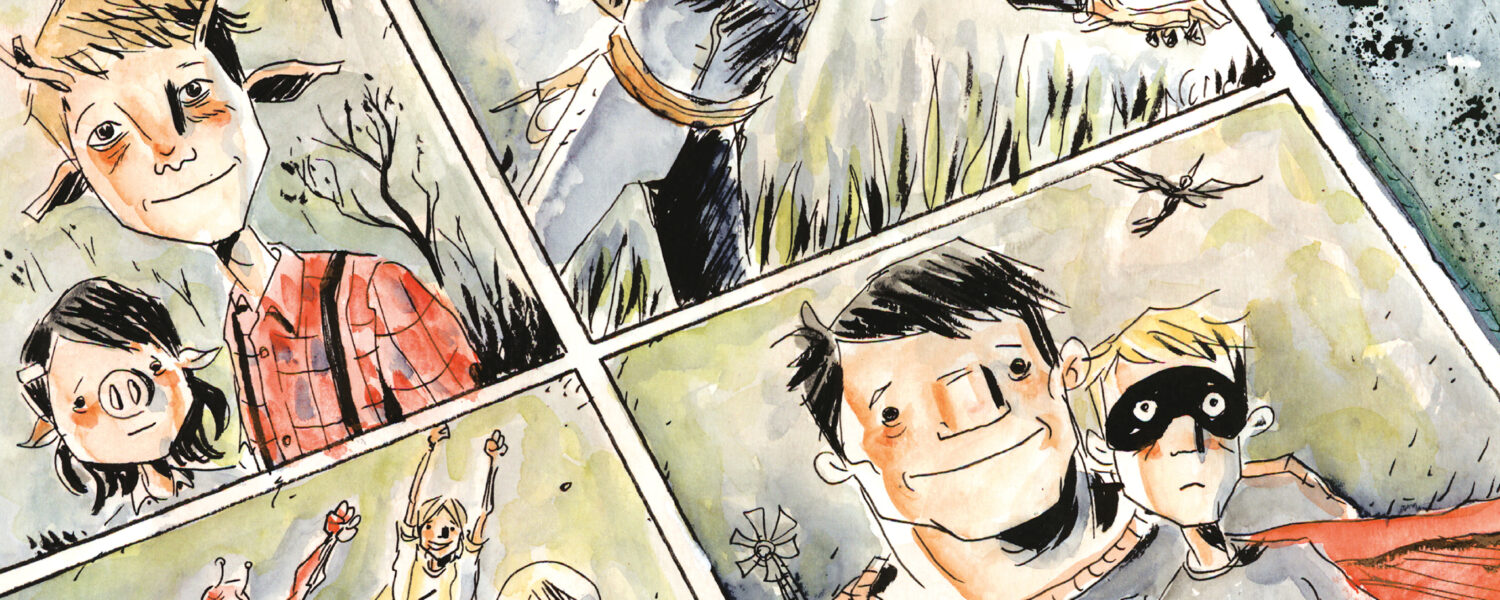
Great ideas often arrive in disguise. Inspiration for an autobiography—10,000 Ink Stains: A Memoir, published by Dark Horse Books—revealed itself slowly to graphic novelist Jeff Lemire when his blog publisher, Substack, asked him to write a series of newsletter entries as a means of engaging with his fans.

“The cool thing with doing the newsletter, it’s a more direct connection with your fans than social media. For one, it’s more civil,” Jeff says with a laugh. “Doing the first few, what became chapters, I was encouraged by the feedback I was getting. I was connecting with people in a different way, otherwise it’s through the comics, but in this case it was going behind the work, talking about the process. It felt very gratifying.”
Offering a glimpse into the process of creating his work was new to Jeff.
“I’m the kind of person who’s really focused on whatever I’m working on at the moment and then I’m right onto the next thing,” he says.
How did he find this experience?
“It was good,” Jeff continues. “I don’t often look back at past work, but it was good to go through the old art and piles of sketch books and take stock.”
Often, the most important element that tips a notion into becoming a great idea is time. When Jeff was asked to write the Substack newsletter entries, he was forty-five years old. The time was right to look back at his life through the kaleidoscope of more than two decades of prolific output. There is no getting around the question: How did Jeff Lemire go from being a kid, buying superhero comics at the local convenience store in Woodslee, Ontario, to becoming one of the most popular comic book creators in Canada? His studio is a world away from the farm where he grew up and was first drawn to comics as a young child. Personal interest and inspiration were his only navigation tools.
“I didn’t have anyone in my family who was involved in the arts in any way,” Jeff told The Comics Journal. “Everyone in my family and surrounding me, they were either farmers or they worked in automotive factories. And yeah, the arts, having a life making art, I had no one to show me the way, how to do that. It just didn’t seem like a realistic thing. But I just loved drawing and I drew all the time.”
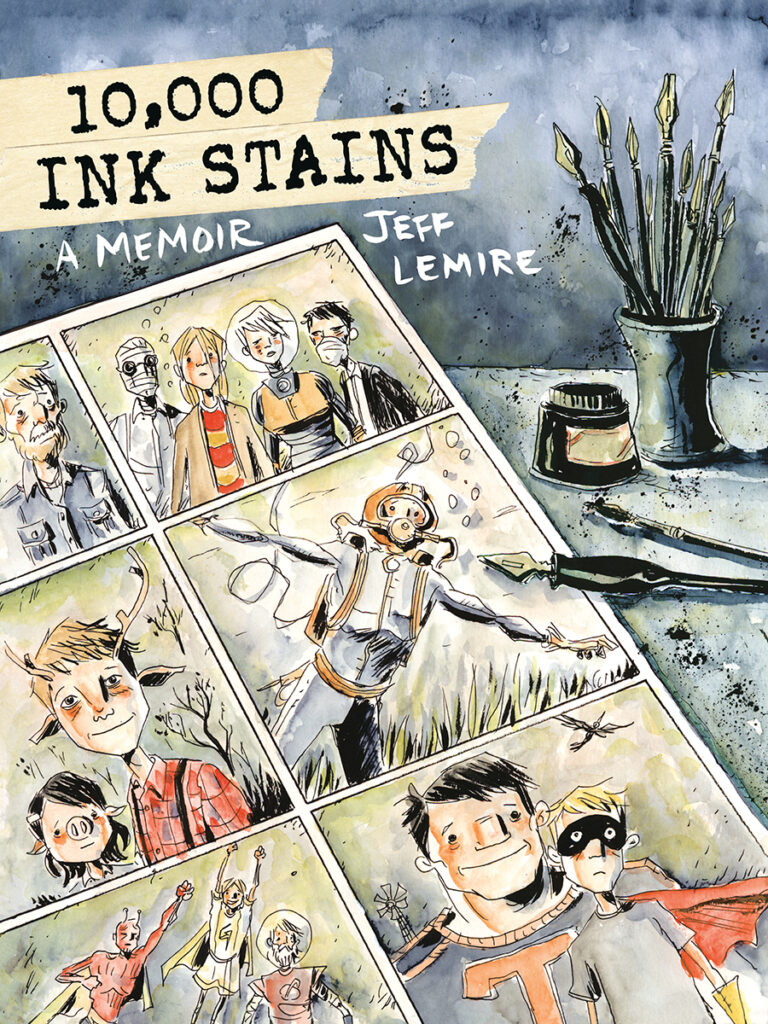
Jeff began drawing with pencils and ballpoint pens. In those pre-Internet years, there was nowhere to gain information about how comic book artists worked.
“I grew up on a farm, [had] no interest in farming or working in an auto factory or tool and die shop in Windsor, and only wanted to tell stories and draw and get away,” he wrote in a Substack newsletter. “As I finished high school in 1995 I saw my window to escape via going away to University, and I took it. After a frustrating year in the Fine Arts program at the University of Guelph, I followed one of my best friends to Toronto where I switched to the Film Studies program at Ryerson University.”
After completing a degree in Film Studies, Jeff had little interest in the film industry. Comics were his passion, so he worked as a line cook in a restaurant and created comics in his off hours. That first work became Lost Dogs, which he self-published.
“I thought I’d work my day job, which was at night, and I’d work in kitchens to pay the rent,” Jeff said in an interview, “and then I would just do my comics as my passion, and I didn’t ever expect to make a career out of it.”
Through the span of nineteen chapters of 10,000 Ink Stains, Jeff focuses on the processes and the serendipitous connections that forged his route from project to project.
“Like the time I received an email from Gord Downie,” Jeff says, referring to the late lead singer of the beloved Canadian rock band The Tragically Hip. Jeff collaborated with Downie on the book Secret Path about the death of Chanie Wenjack, an indigenous boy, as he attempted to escape a residential school in the 1960s. “You can’t plan for that and it became an amazing project and friendship.”
Jeff is surprisingly candid about sharing the false starts, numerous early sketches, every idea he dreamed up, either alone or, sometimes, in collaboration with others. It comes together to form a picture of how he transformed from a Woodslee native into a bestselling author known as “the four-colour Stephen King” as a 2016 Maclean’s magazine article referred to him.
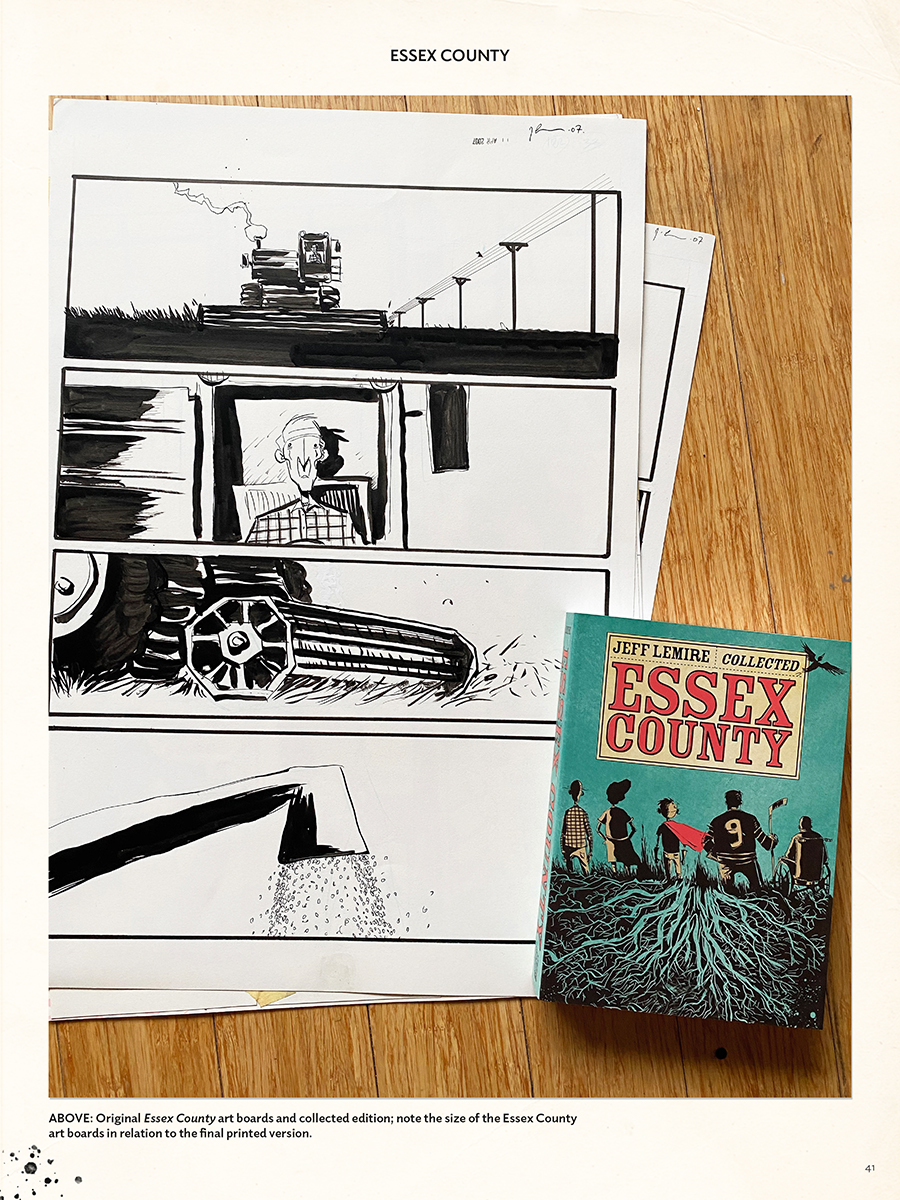
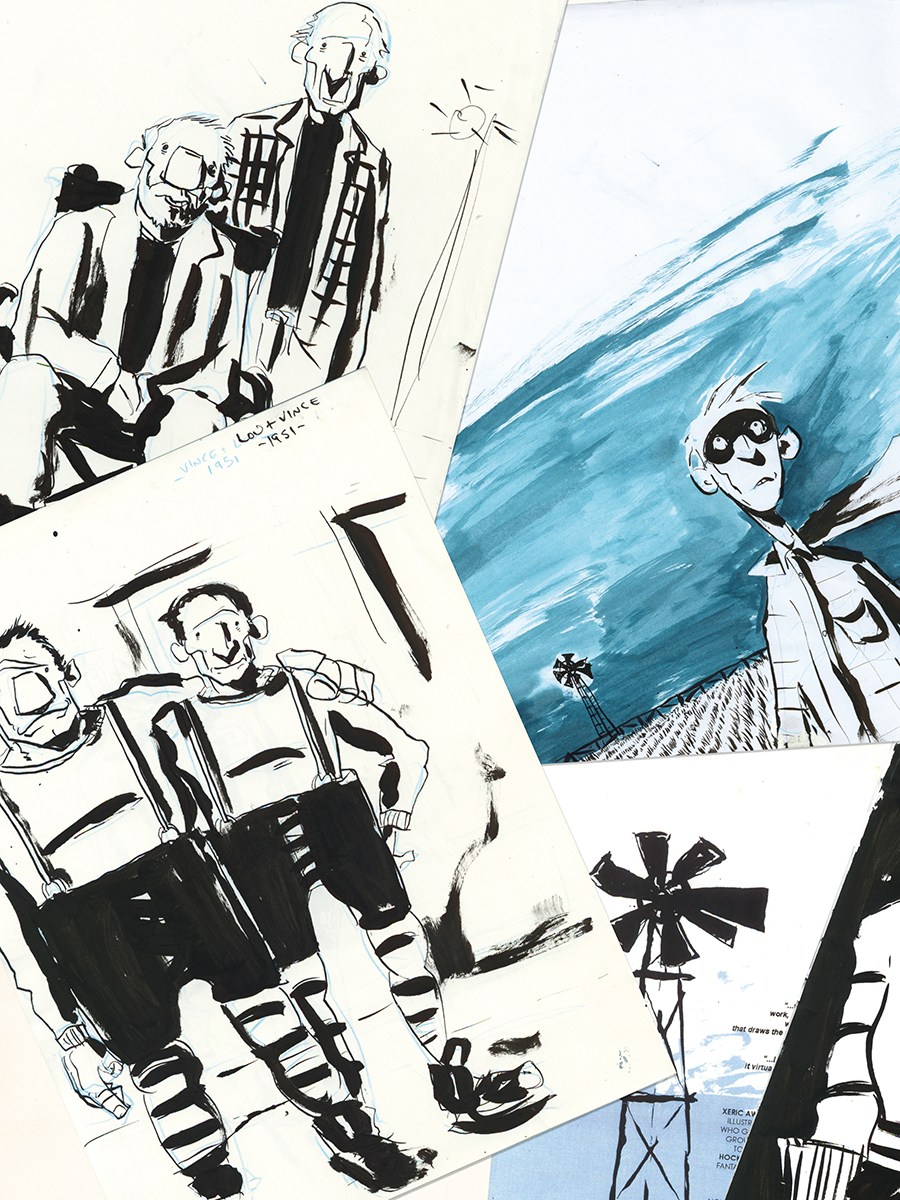
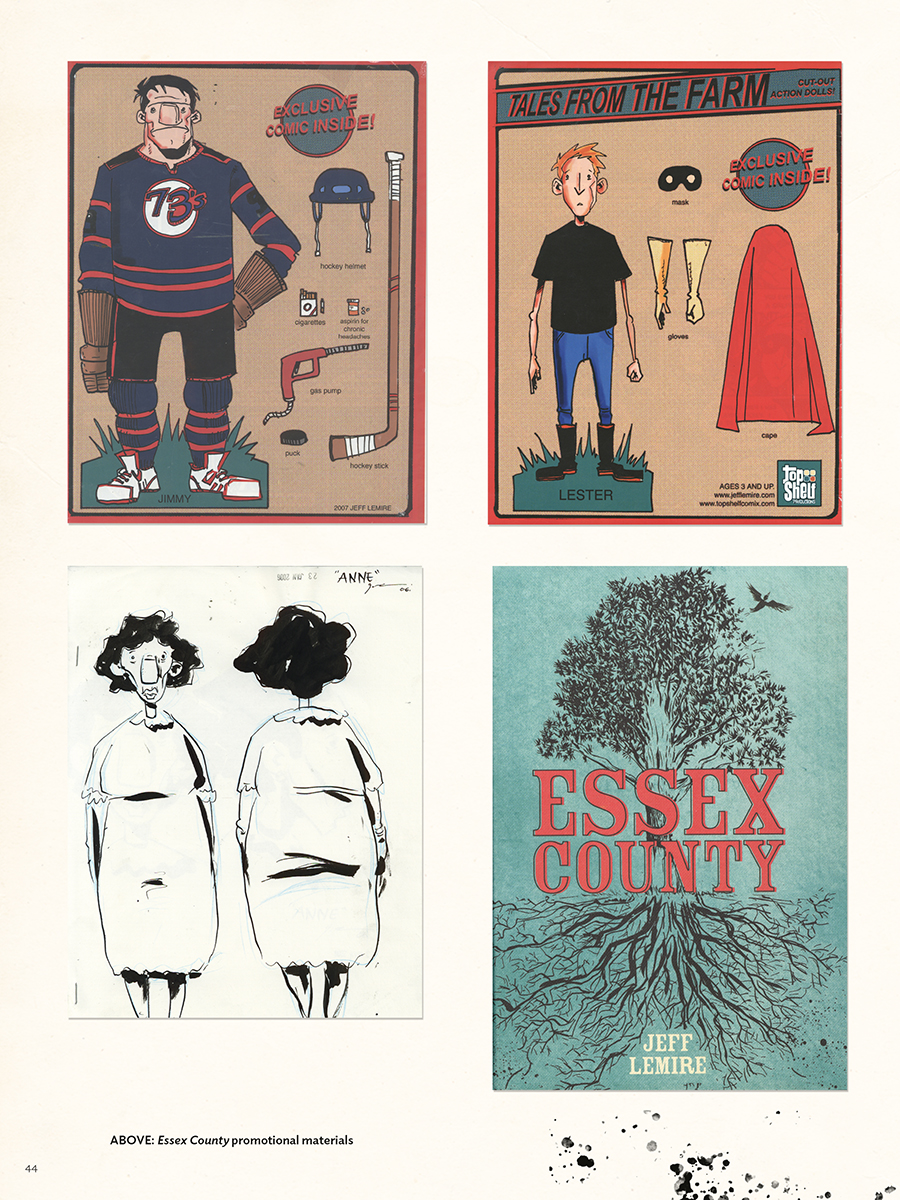
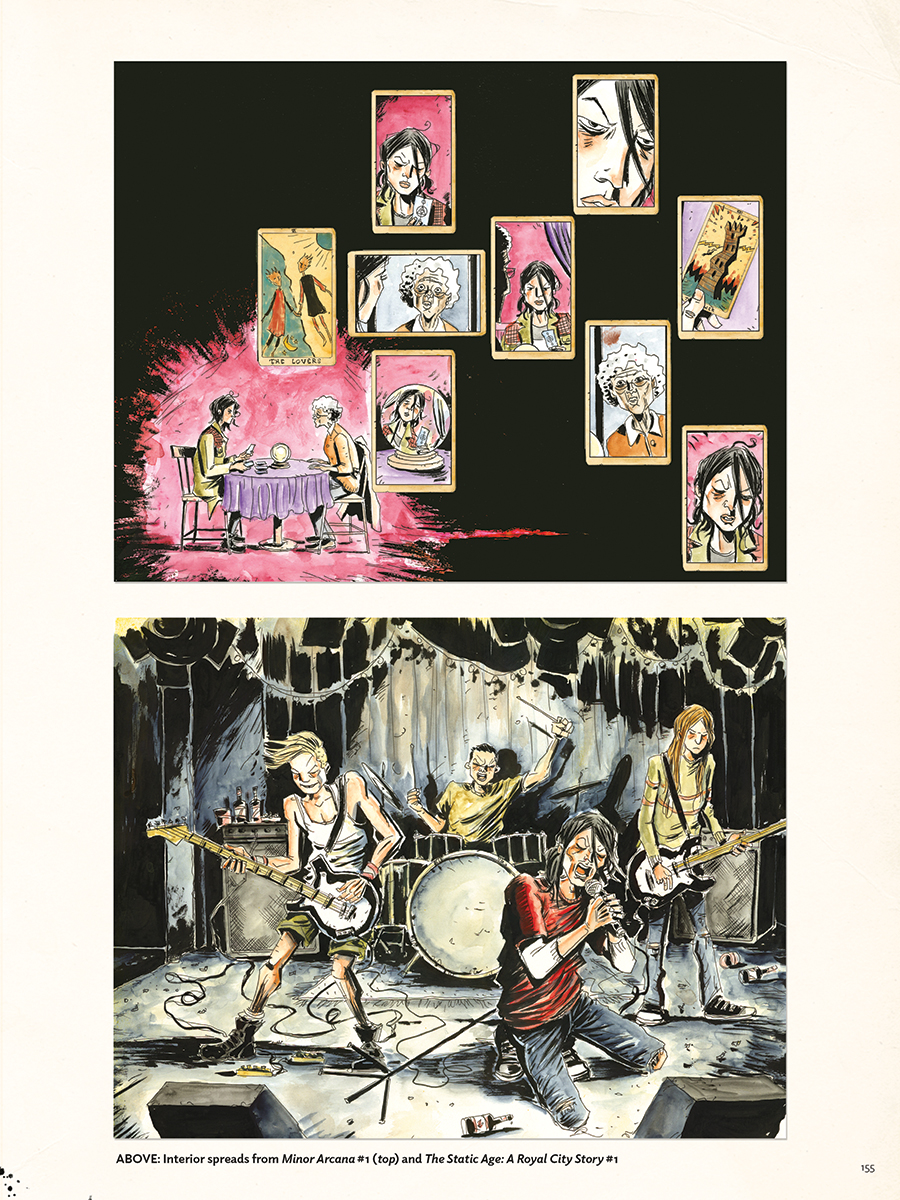
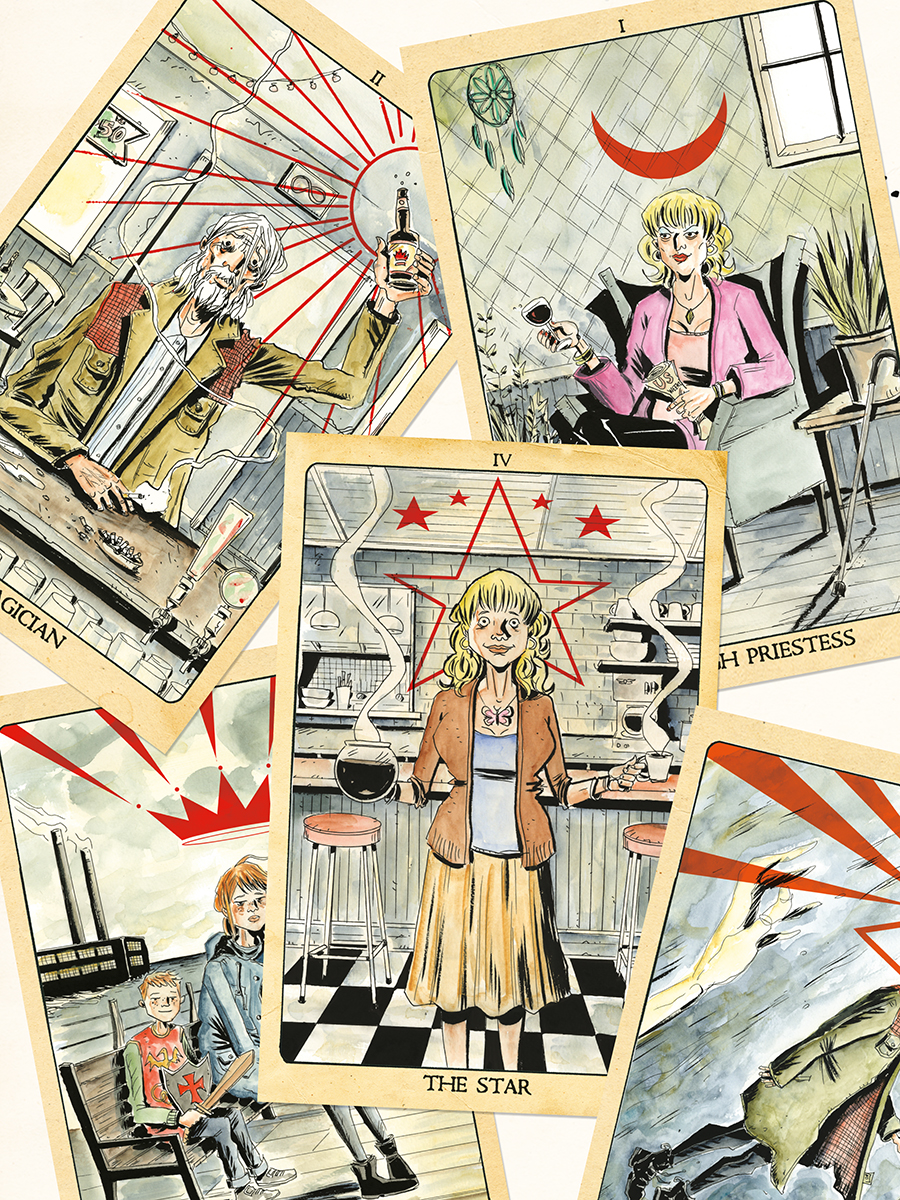
What was the experience like sharing so much early unpublished work, and delving into the past for someone who is usually so focused on the present?
“Once you commit to doing this, you have to go through with it,” Jeff says with a laugh. “As for sharing, my work is personal, so I’m already pretty vulnerable. I’m used to putting myself out there, and letting it go out in the world and then moving on.”
He continues: “The thing with this book, it allowed me to put all the unpublished work in context. It wasn’t like posting it on social media where it just pops up. It really freed me.”
There were deeper motivations for Jeff to write this memoir.
“One, to have a testament for my son to read,” he says. “And there a few other things I wanted to touch on, like my ongoing struggles with mental health issues—particularly depression and anxiety. I want to show that you can live with those things and still build a life. You don’t have to let it win. You can push through, find a healthy outlet, and have a productive, successful life and career.”
He goes on: “I also wanted to demystify the creative process. A lot of people think it’s a magical thing, but it’s really just process and hard work. The more you do it, the better you get.”
Jeff Lemire is a prolific graphic novelist. Learn more about the sprawling catalogue of his work on his blog, Tales From the Farm: jefflemire.substack.com.
Published in the May/June 2026 Edition.

Add comment