

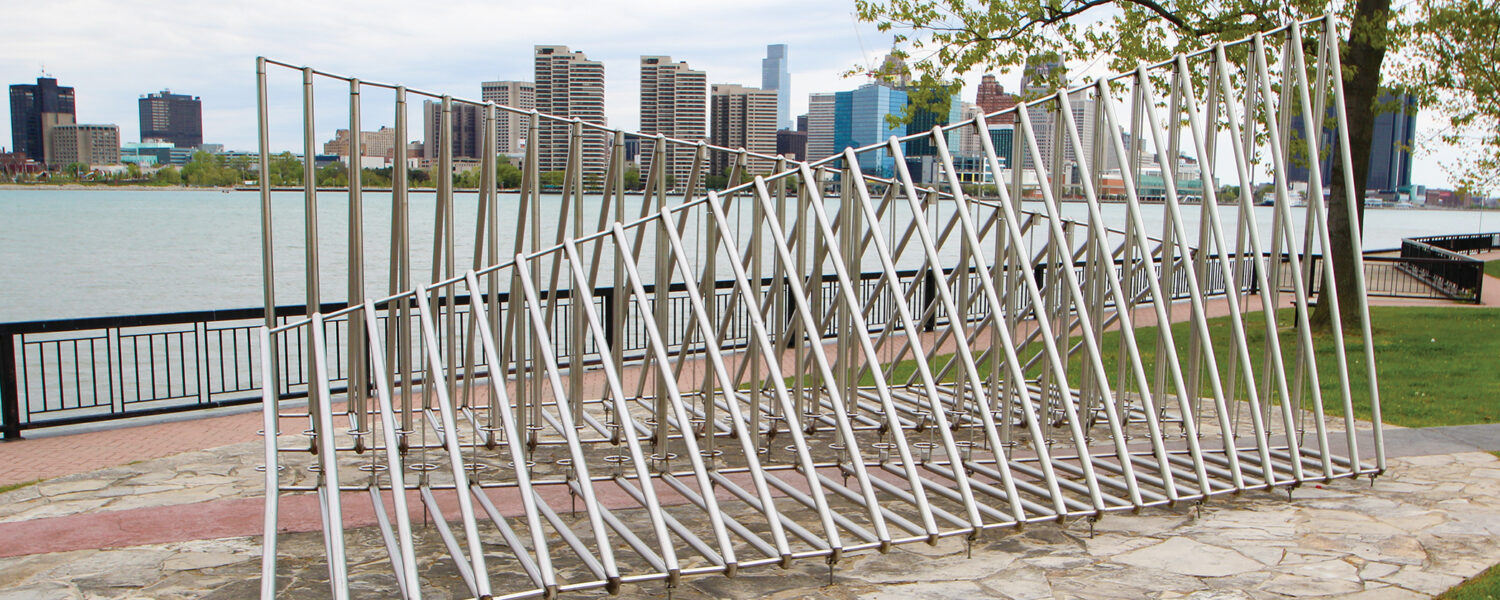
Exploring Windsor Sculpture Park
Story by Paula Just
Photography by Michael Pietrangelo
Nestled along the Detroit River, the Windsor Sculpture Park offers visitors the opportunity to experience contemporary art while enjoying stunning waterfront views. The outdoor gallery, open year-round and free to the public, features more than 30 large-scale sculptures by internationally acclaimed artists. The Windsor Sculpture Park was made possible through the generosity of Louis and Joan Odette and the P & L Odette Foundation, whose vision helped transform the city’s riverfront into a vibrant artistic destination. Stretching between the Ambassador Bridge and Festival Plaza, the space is one of the city’s most distinctive cultural attractions, often described as Windsor’s “Museum Without Walls”. The collection continues to grow, reflecting the commitment to public art and its belief that it should be accessible to everyone. Here are eight of the pieces on display.
Eve’s Apple (1998)
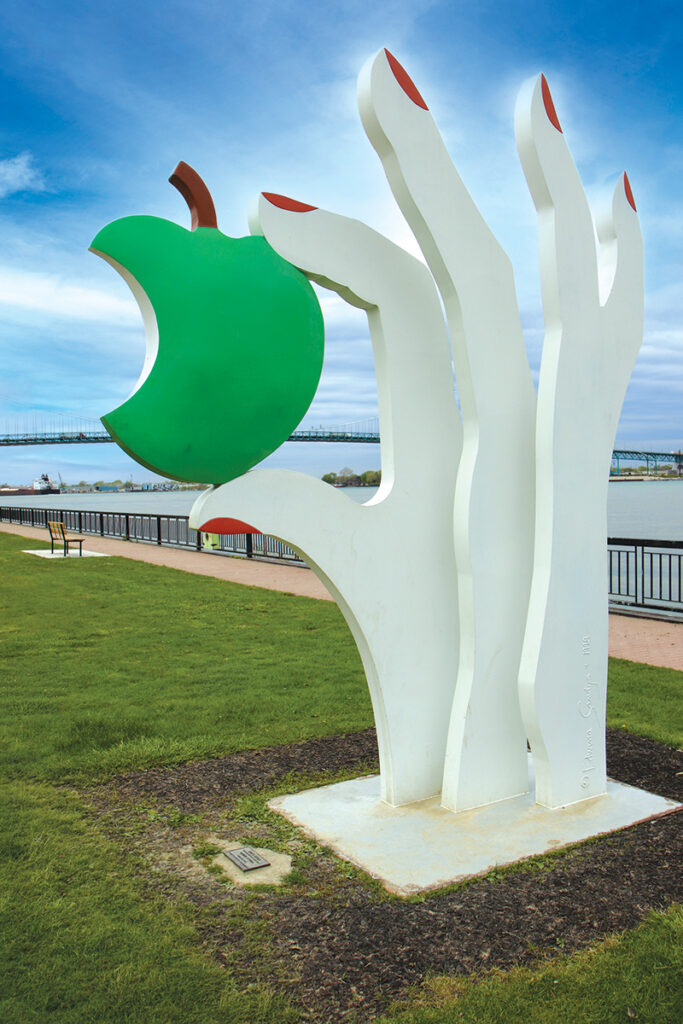
The sculpture was created by British sculptor Edwina Sandys, granddaughter of Winston Churchill. Made of painted steel, the artwork depicts a feminine hand holding the bitten apple at the pivotal moment in the biblical story, just after Eve has taken a bite from the fruit of knowledge. Constructed from three steel planes, the sculpture creates ever-changing patterns of light and shadow, inviting viewers to experience it from multiple perspectives.
Tembo (2001)
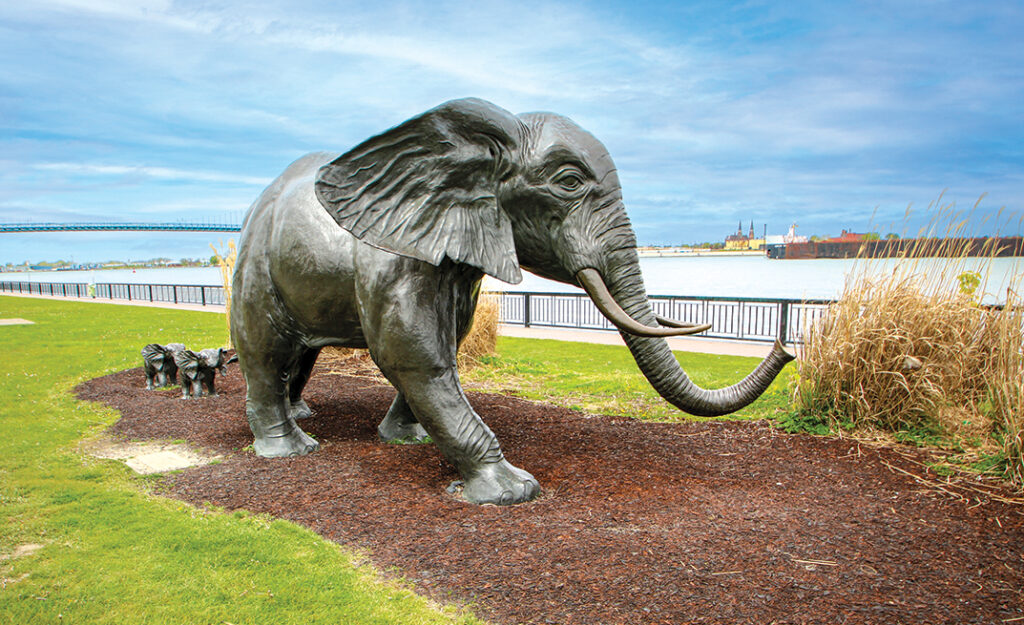
Representing a family of African elephants, the creation of Canadian sculptor Derrick Stephan Hudson highlights themes of strength, protection and maternal care, with the large female elephant standing guard over her young. With a height of three meters and a weight comparable to that of 80 people or six cars, the monumental mother elephant ranks among the largest bronze elephants in the world.
Consolation (1997)
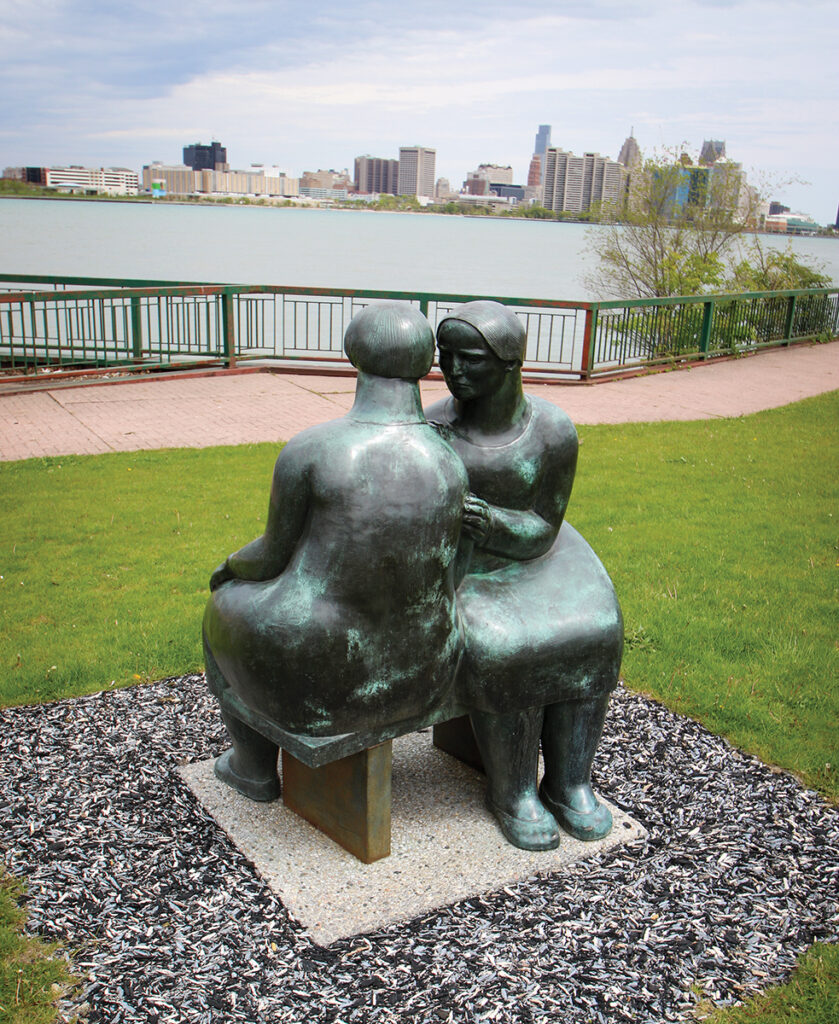
This bronze sculpture by Canadian artist Joe Rosenthal highlights the strength and physical presence of the human figure. With its solid, rounded shapes, the artist aims to express a sense of inner strength and stability, often described as “enduring universal toughness.” Instead of portraying the human body as fragile, the piece presents it as grounded and capable of withstanding both physical and emotional challenges.
Morning Flight (1997)
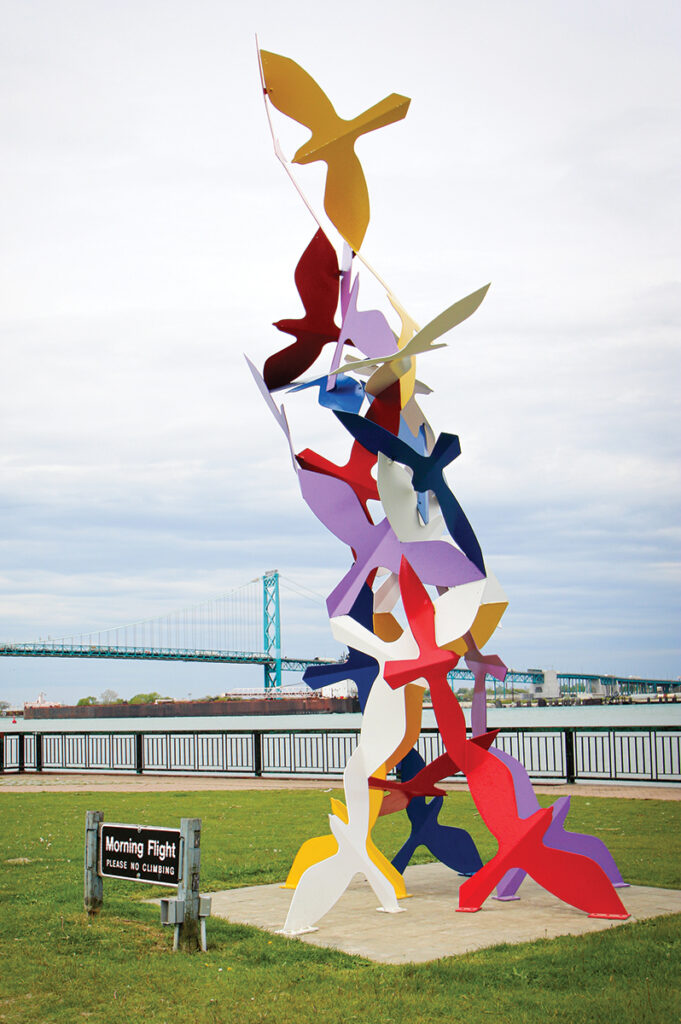
The large painted steel sculpture depicts a formation of birds rendered in abstract geometric shapes, capturing a sense of movement and collective flight. The Canadian artist Gerald Gladstone wanted to reflect a sense of interdependence, suggesting that humanity is both a small and essential part of a greater natural system.
A Butterfly’s Wings (2014)
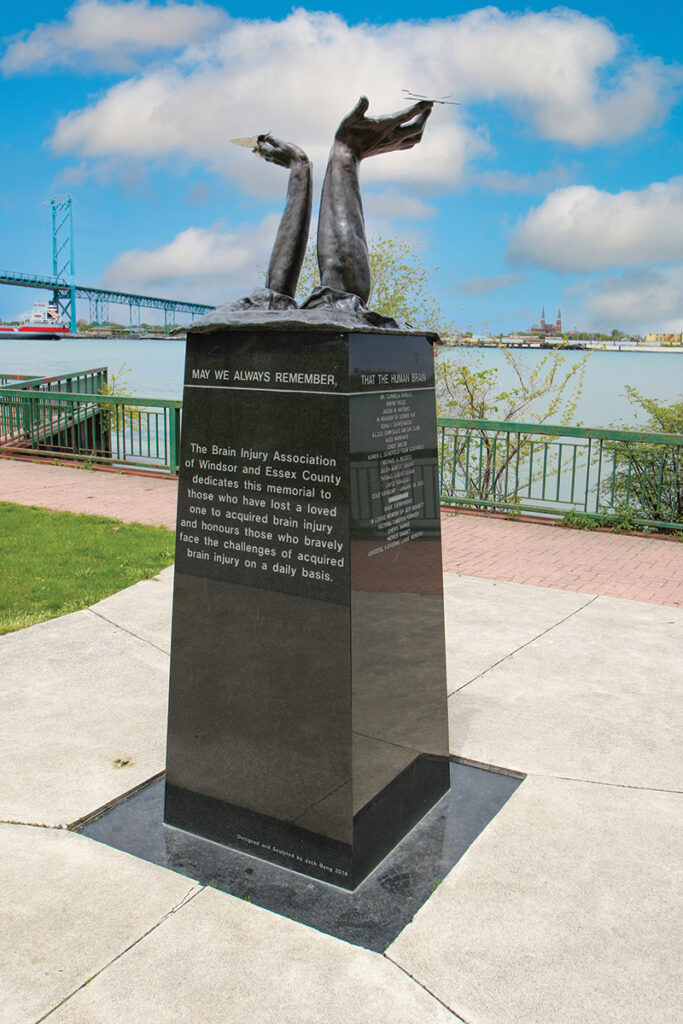
The work, made of granite, bronze and stainless steel, features arms gently releasing two butterflies into the air. Commissioned by the Brain Injury Association of Windsor & Essex County, the piece serves as a tribute to individuals affected by brain injuries. The creation of Canadian artist Jack Byng draws a symbolic parallel between recovery and transformation, using the butterfly as a metaphor for resilience and personal rebirth.
Union 6 (1978)
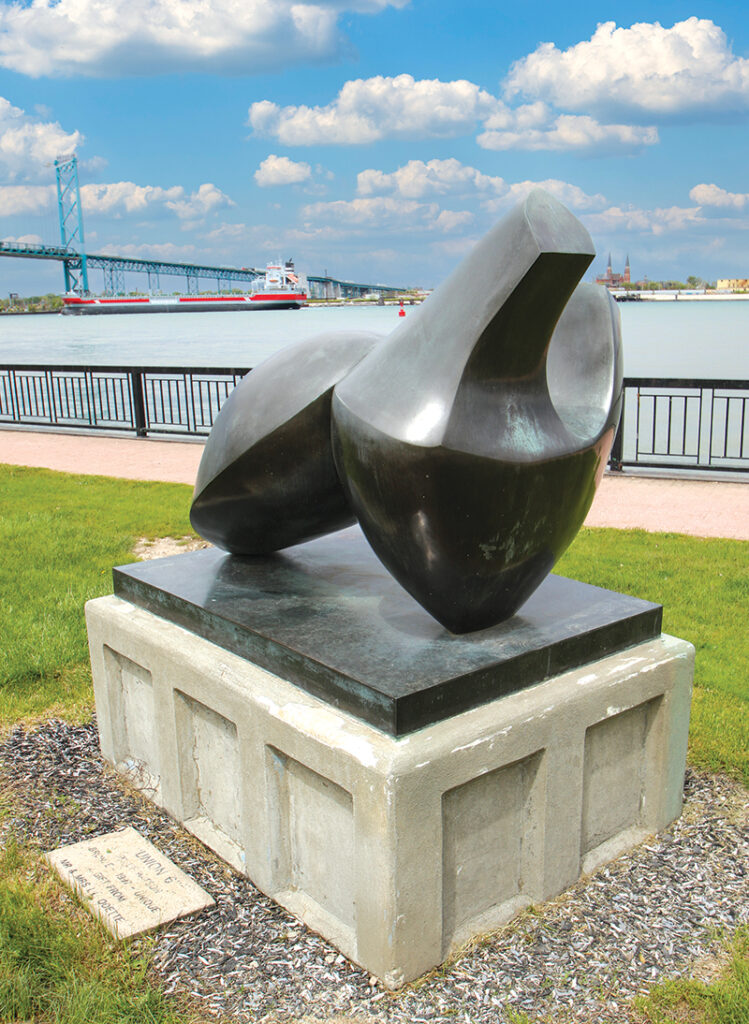
The bronze piece, designed by Canadian sculptor Bruce Watson, explores fluid forms and shifting shapes. The artist invites viewers to walk around it and form their own interpretations. Rather than imposing a fixed meaning, Watson emphasizes the open-ended nature of perception, allowing the work to speak for itself and evolve through the person’s experience.
Billy Goat Spring Lublin Goat Fountain (2008)
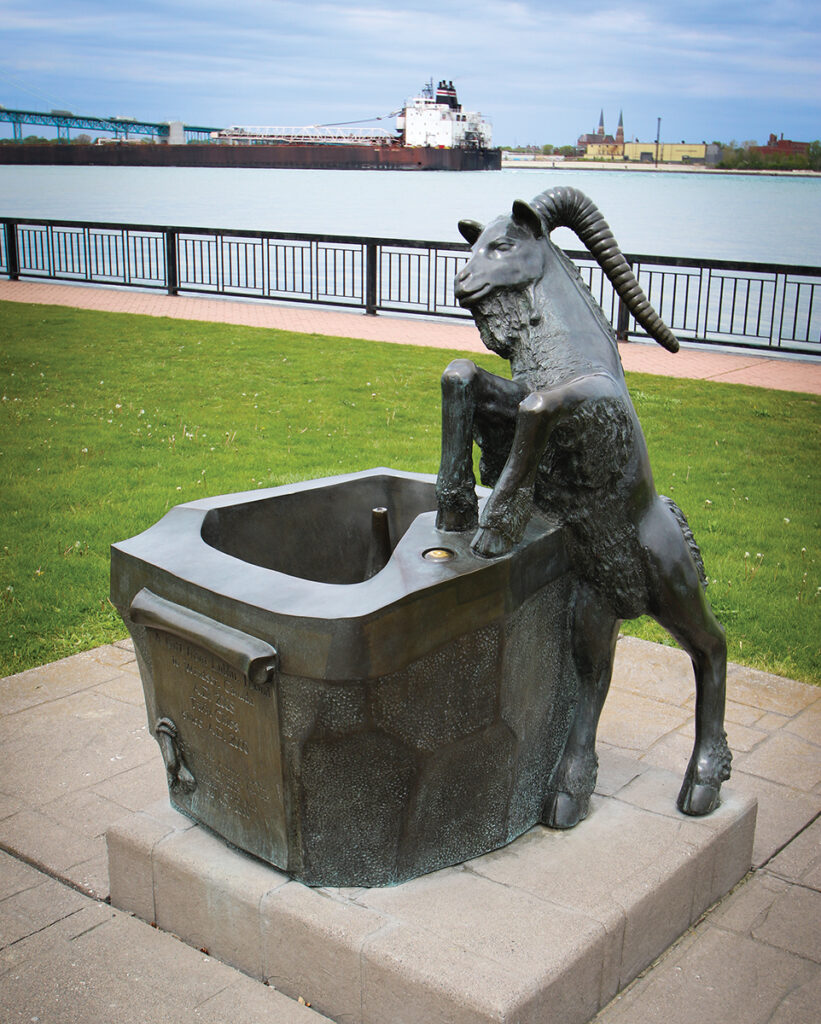
The sculpture is inspired by a fountain located in Lublin, Poland, Windsor’s twin city. The artwork, made by Polish artist Leszek Rymczuk, was given as a gift to mark the centenary of the Polish community in Windsor. Featuring a bronze playful billy goat from Lublin’s coat of arms, it symbolizes cultural exchange and friendship between the two cities, with bilingual inscriptions that reinforce its commemorative and cross-cultural significance.
Tower Song (1997)
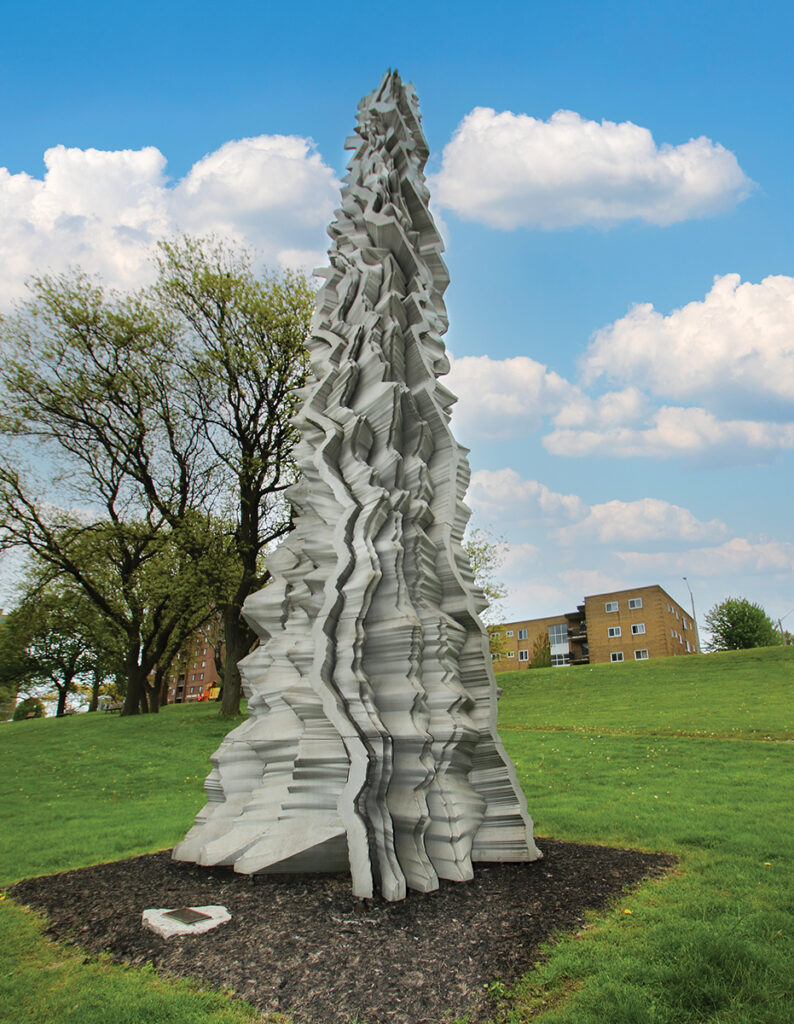
Standing over two meters tall, the aluminum work references life cycles found in nature—plant, mineral and animal—suggesting endless progression. The creator, Canadian sculptor Ted Bieler, is known for his interest in abstract forms inspired by ancient civilizations, particularly Mayan and Incan monuments. In this piece, he made freehand-like linear shapes that spiral within a cruciform obelisk, evoking the idea of continuous transformation.
Published in the Summer 2026 Edition.

Add comment